


Skid Steer Pallet Fork Attachment Reviews: Compare
Get the Attachment Your Project Needs
Shop proven, work-ready attachments that help you tackle any task with confidence.
LEARN MOREThe best pallet fork is not automatically the one with the highest capacity. A sound buying decision matches the fork frame, tine length, load center, attachment weight, and quick-attach interface to the skid steer and the material you actually move. These skid steer pallet fork attachment reviews compare five current product options using published specifications, then explain which details deserve the most weight before you order.
Compare skid steer pallet forks at eSkidSteer
What Should Skid Steer Pallet Fork Attachment Reviews Measure?
A useful review measures the complete working setup, not just the largest number in a product title. Compare capacity, load center, tine length, frame width, attachment weight, mounting interface, guard design, and adjustment range against the loader manual and the loads you move.
A useful review separates verifiable product specifications from operator preferences. Start with the exact listing for the selected configuration. Record its capacity, tine length, frame dimensions, mounting interface, guard or backrest design, adjustment range, and attachment weight when provided. Then evaluate those details against the loader manual and your normal loads. This method produces a practical comparison instead of a generic ranking.
Begin with the load, not the headline rating
Write down the loads you handle most often, including weight, width, depth, height, center of gravity, and the height at which you need to place them. Include unusual loads such as bundled landscape material, construction supplies, panels, or machinery components. A fork that works well for compact pallets may be awkward for long or unstable material.
Next, check the skid steer's rated operating capacity, rated tipping load, lift height, hydraulic configuration, and quick-attach standard in the current machine documentation. The attachment's published rating does not increase the loader's limit. The fork frame itself also consumes part of the machine's available capacity. When a product lists separate frame and tine ratings, keep those figures separate in your review.
Judge control and visibility together
Operators generally value a clear view of the tine tips, positive tine locks, and predictable handling. An open frame can improve sightlines, while a backrest or guard can add support for loads that could move toward the operator. Neither layout is best for every job. The review should explain the tradeoff and connect it to the load shape and work area.
Load center is another deciding factor. Material positioned farther forward creates more leverage and reduces practical lifting capacity. Keep the load as close to the backrest as the work allows, center it across the tines, and follow the machine and attachment instructions. If a listing does not state the conditions behind a rating, mark that information as unverified instead of treating the largest number as a guarantee.
How Do These Pallet Fork Attachment Options Compare?
These options differ most in capacity class, frame and guard design, tine range, and intended load profile. Use the table as a shortlist, then open the exact product configuration and confirm its current specifications and loader fit before purchase.
| Option | Published capacity | Published tine or frame detail | Review priority |
|---|---|---|---|
| Digga PF-001130-4000 | 4,000 lb | 48-inch floating tines and folding safety guard | Load control and guard design |
| Star Industries 110EC | 3,700 lb frame; 5,500 lb tine rating on listed assemblies | 42- or 48-inch Class 2 tines and open frame | Visibility and tine interchangeability |
| Haugen MPF/MHPF | 5,000 or 6,000 lb class | 42- to 72-inch tines and 0-45-inch adjustment | Reinforcement and configuration range |
| Blue Diamond Class 3 | 10,000 lb | 48- to 96-inch tines on a 50-inch frame | Heavy-load and reach comparison |
| Blue Diamond wide frame | 6,000 lb | 60- or 72-inch tines on a 72-inch frame | Wide or awkward loads |
The table shows why a capacity-only ranking is incomplete. A smaller loader may benefit from a lighter, more visible fork rather than a heavy-duty frame it cannot use to its full rating. A wide load may need more frame width, while a standard pallet application may reward compact dimensions and easier maneuvering. Compare the complete setup, not an isolated specification.
For consistent scoring, rate each model on the same sequence. First verify the capacity basis. Next compare tine length, frame width, backrest or guard, and tine adjustment. Then check attachment weight, connection details, and the working clearance around the loader. This gives practical features the right context and reduces the chance that one impressive number will dominate the decision.
Which Fork Model Fits Your Work?
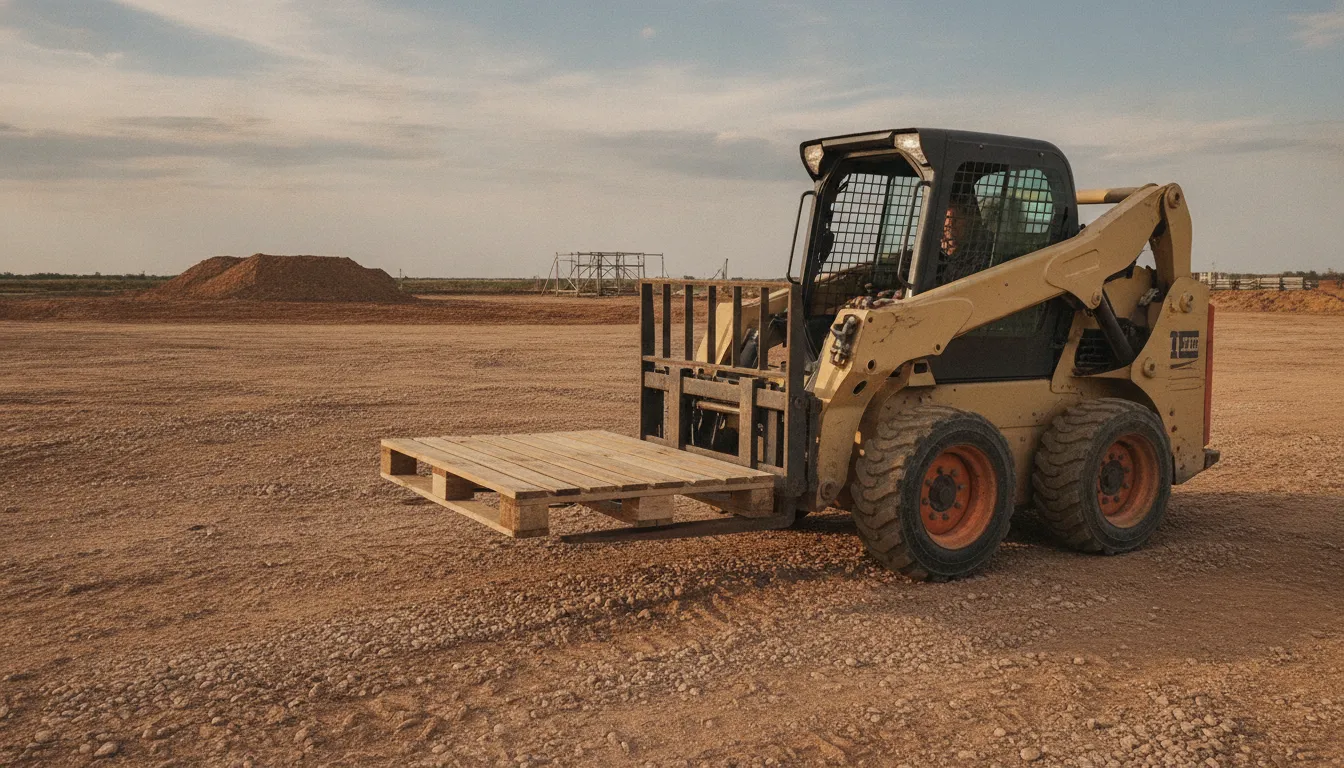
Model fit depends on the loader, load shape, and handling priorities. Digga is a useful guard and floating-tine comparison, Star emphasizes visibility and a standard interface, Haugen offers configuration range, and Blue Diamond covers heavy or wide-frame applications.
Digga: floating tines and a folding guard
The Digga skid steer pallet fork is listed with a 4,000 lb capacity, 48-inch tines, a universal skid steer mounting plate, and a folding safety guard. Its floating tine design gives it a different review angle from a conventional rigid fork. Evaluate how that design affects load control and tine behavior for the work you perform.
Digga is a logical comparison for buyers whose normal loads fit a 4,000 lb class and who value the listed guard and floating tine features. It is not a reason to exceed the loader's rating. Confirm the quick-attach interface, machine capacity, and selected configuration before ordering.
Star Industries: visibility and standard interface
The Star Industries 110EC pallet forks are listed with an open, clear-view frame and an ITA Category 2 interface. The frame-only listing is rated at 3,700 lb, while listed 42- and 48-inch assemblies use Class 2 tines with a 5,500 lb tine rating. This distinction matters because the tine figure should not be presented as the capacity of every frame configuration.
Star deserves attention when forward visibility, standard tine interchangeability, and a choice of tine lengths are important. The 42-inch option may suit compact pallet handling, while 48 inches can provide more insertion depth for compatible loads. Match the assembly rating and dimensions to the machine rather than evaluating the frame and tines as unrelated parts.
Haugen: reinforcement and adjustment range
The Haugen pallet fork attachment is listed in 5,000 lb MPF and 6,000 lb MHPF capacity classes. The listing describes reinforced top and bottom rails, a 10-degree brick guard, flush tines, and adjustable tine spacing from 0 to 45 inches. Tine lengths range from 42 to 72 inches, with standard and walk-through frame styles.
Haugen is a strong comparison for buyers with changing load widths or a work mix that benefits from multiple configurations. The practical question is which exact frame style, capacity class, and tine length fit the loader and the loads. A configurable attachment can be useful, but each added reach or heavier frame should still be checked against the machine's capacity chart.
Blue Diamond: high-capacity and wide-frame choices
The Blue Diamond Class 3 pallet forks are listed at 10,000 lb capacity on a 50-inch frame, with tine lengths from 48 to 96 inches. This is the highest-capacity comparison point in the group. It may suit demanding material handling only when the loader, load center, lift height, and operating documentation support the complete setup.
The Blue Diamond 72-inch wide-frame pallet forks are listed at 6,000 lb, with 60- and 72-inch tine choices and an open profile without a back guard. Its wide stance is the central review factor for trusses, panels, wide pallets, and other material that can overhang a standard frame. The open profile may improve access and visibility, but it changes how the load is supported. Confirm that the load shape and site conditions suit it.
Which Specs Matter Beyond Capacity and Tine Length?
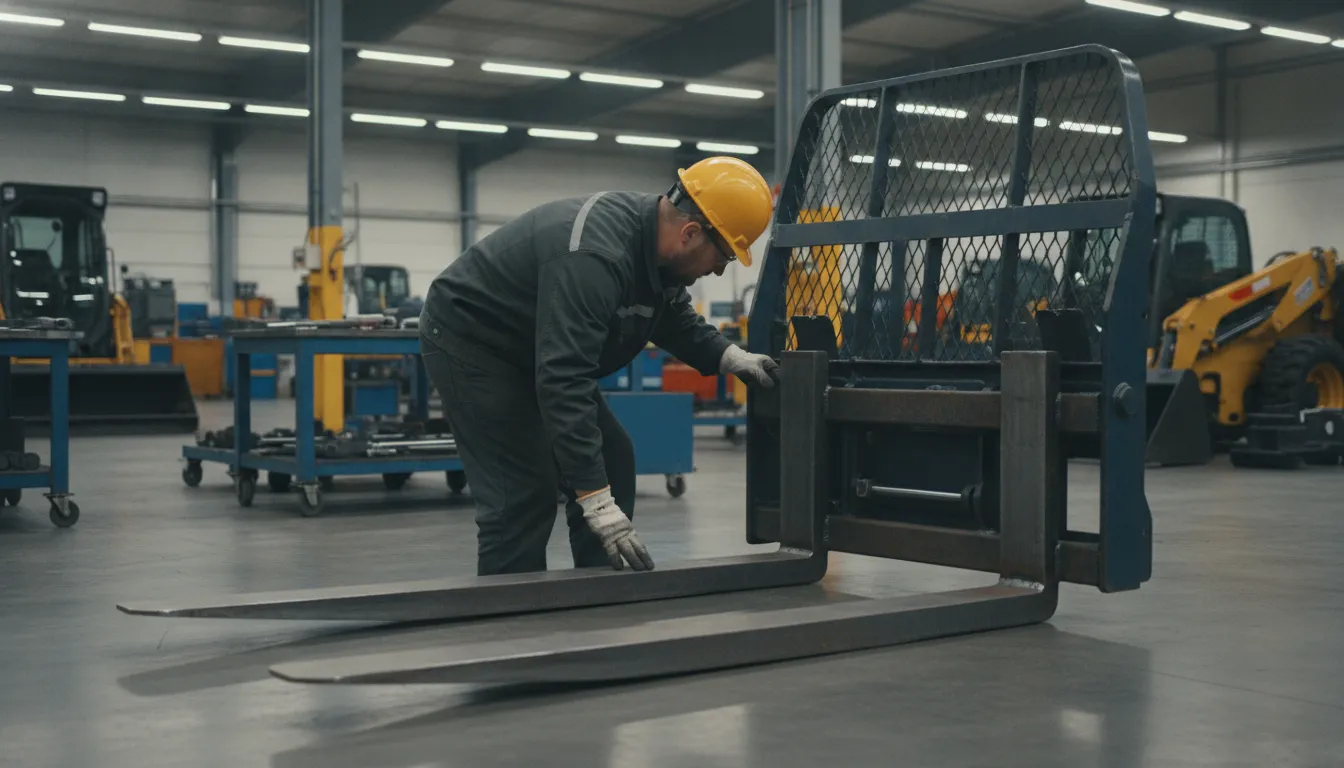
Capacity and tine length are essential filters, but they do not establish a safe or efficient match alone. A detailed review also considers load center, frame width, attachment weight, backrest geometry, tine adjustment, visibility, locking points, and the quick-attach interface. These factors influence stability, maneuverability, and how confidently an operator can place a load.
Frame type and backrest
Open frames can give the operator a clearer view of the load and tine tips. A backrest or guard can provide support when a load could shift rearward. Compare the protection offered by the design with the visibility required in the application. Look at the actual frame style for the selected product, because one product family may include both open and guarded configurations.
Fork length and adjustment
Forty-two- and 48-inch tines are useful starting points for many pallet tasks, but the load should determine the final choice. Tines that are too short may not support enough of the pallet. Tines that are longer than necessary can reduce maneuverability and increase the forward load center. Adjustable tine spacing is valuable when load widths vary, provided the locks hold securely and the selected position remains within the manufacturer's guidance.
Connection and operating fit
Confirm that the mounting plate matches the skid steer quick-attach system. Also compare attachment weight with the loader's available capacity and the lift height required at the jobsite. For additional attachment categories after you establish your fork requirements, browse eSkidSteer's skid steer attachment collection. Keep the final selection tied to the exact product configuration and machine documentation.
Connection fit should be confirmed before you compare convenience features. A fork that cannot lock securely to the loader is not a workable option, even if its frame and tine specifications look attractive. Check the attachment plate, locking points, hydraulic requirements if applicable, and the space needed to approach and place loads. When the product page leaves a machine-specific detail open, use the current loader manual and the product listing together before ordering.
How Should Safety Be Included in a Fork Review?
A safe review turns specifications into checks without implying that a product listing replaces training or operating instructions. Confirm the connection, inspect the fork, keep the load centered and low, and stay within the loader and attachment limits for the complete setup.
A product review should help buyers identify checks, not imply that a listing replaces training or operating instructions. OSHA's fork guidance emphasizes inspection and proper fork positioning. Skid steer operators should also follow the loader and attachment manuals, site training requirements, and applicable safety procedures.
- Confirm the quick-attach connection and locking points before lifting.
- Inspect tines, heels, shanks, welds, rails, backrests, and guards for damage or deformation.
- Keep the load centered, close to the backrest when practical, and within the loader and attachment limits.
- Travel with the load low enough to preserve stability and visibility, following the machine manual.
- Stop using a fork with a suspected crack or serious defect until a qualified person evaluates it.
These checks also improve the quality of a comparison. A model with a useful guard, clear sightlines, or adjustable tines should be judged by how those features support the intended work. No design overrides a loader rating, an attachment rating, a load-center limit, or a site safety rule.
Compare verified pallet fork specifications and order the right configuration
Frequently Asked Questions
What are the best skid steer pallet forks?
The best pallet forks are the ones whose capacity, load center, tine length, frame design, and quick-attach interface match the loader and the work. Digga emphasizes floating tines and a folding guard, Star emphasizes open visibility and an ITA interface. Haugen offers multiple configuration classes, and Blue Diamond provides heavy and wide-frame options.
How much capacity do skid steer pallet forks need?
Choose capacity from the actual loader and load requirements, not from the largest number available. Check the skid steer's rated operating capacity, load center, lift height, attachment weight, and current capacity chart. A fork rating does not increase the loader's safe lifting limit.
What tine length should I choose?
Measure the loads you handle most often. Forty-two- and 48-inch tines can suit many pallet applications, while 60-, 72-, or 96-inch options may fit wider or longer material. Longer tines add reach and can affect maneuverability and load center, so verify the complete setup first.
Are open-frame pallet forks better?
Open frames can provide useful visibility to the load and tine tips. A frame with a backrest or guard may provide additional support for loads that could shift backward. The better choice depends on the load shape, visibility needs, and the operator's ability to keep the load stable within rated limits.
Shop Pallet Fork Attachments
Use the criteria in this guide to narrow the capacity, frame, tine length, and connection type that fit your work. Review the current listing for the exact configuration before ordering from eSkidSteer.