


Excavator Shear Attachment Selection Guide
Get the Attachment Your Project Needs
Shop proven, work-ready attachments that help you tackle any task with confidence.
LEARN MORE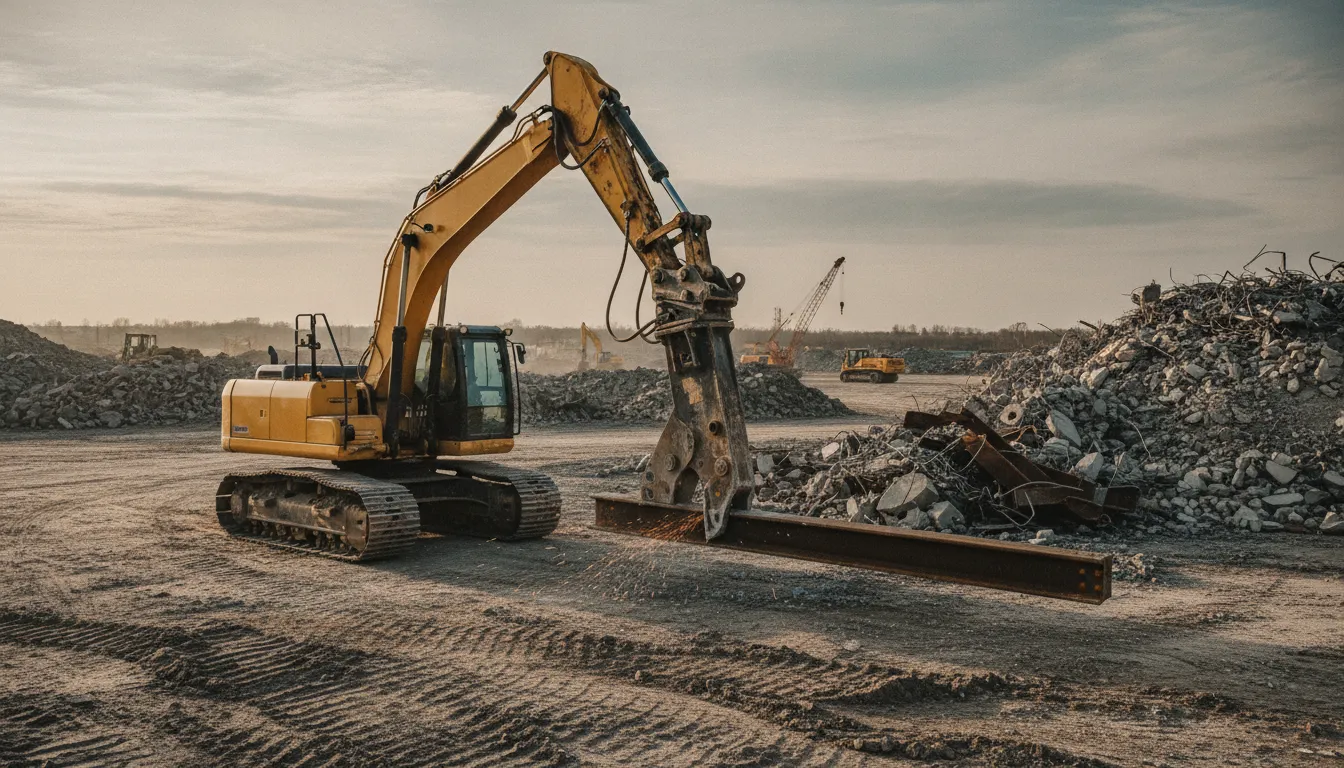
Demolition work rarely rewards a one-size-fits-all attachment decision. The carrier, mounting interface, hydraulic circuit, material, and available work envelope all affect whether a shear can perform the intended cut safely and efficiently.
Browse eSkidSteer's excavator attachments to compare options for your machine and demolition work.
Answer: An excavator shear attachment is a hydraulically powered cutting tool used to process selected demolition materials, including relatively thin reinforced-concrete elements in documented bridge-deck removal work. The right model depends on the excavator's mount and hydraulic requirements, the material being handled, and whether fixed positioning or rotation improves access.
That makes attachment selection more than a question of jaw size or advertised cutting force. Start by identifying what the shear is designed to cut and how its configuration supports the demolition sequence. Then verify the carrier and circuit against the selected model's current documentation.
Those checks begin with the attachment's basic function and the job conditions it is meant to address.
What Is an Excavator Shear Attachment?
An excavator shear attachment is a hydraulically powered cutting tool mounted to an excavator for controlled demolition, dismantling, and material processing. Instead of striking material repeatedly, the shear closes opposing jaws around a target and applies concentrated cutting force. That makes it useful when the work calls for separating material into manageable sections rather than simply breaking it apart.
In demolition, a shear may be used to cut structural steel, process scrap, or perform selective removal where the operator needs to work along a defined cut line. The exact application depends on the attachment design, jaw geometry, carrier, hydraulic circuit, and material. A shear listing may mention features such as jaw opening, rotation, or a particular carrier range, but those details are model-specific. They do not establish universal compatibility or a safe capacity for every excavator.
Hydraulic shears can also be used in reinforced-concrete removal. A Florida International University transportation specification defines hydraulic shear as a machine process that cuts through relatively thin reinforced-concrete elements. That is a useful description of one documented demolition use case, not a blanket statement that every shear can process every concrete member. Review the selected model's current manufacturer documentation before treating it as suitable for a particular material or thickness.
How a shear differs from an impact attachment
A shear cuts through material with closing jaws. An impact tool, such as a hydraulic breaker, uses repeated blows to fracture or pulverize material. The distinction matters when planning the work: cutting can support dismantling and size reduction, while impact tools are intended for breaking resistant material. Neither description replaces a check of the machine's mount, hydraulic requirements, work envelope, and the attachment's stated application.
When comparing options, start with the job and the excavator rather than the attachment name alone. Review the available excavator attachments, then confirm the selected shear's mounting arrangement, operating requirements, and intended material use against the manufacturer's current specifications.
Which Excavator Shear Type Fits the Material?
Fixed and rotary, sometimes called rotative, shears solve different positioning problems. The cutting principle may be similar, but the configuration affects how easily the operator can align the jaws, maintain a useful work angle, and place processed material. Choose based on the material and demolition sequence rather than treating rotation as proof that one excavator shear attachment is suitable for every job.
| Selection factor | Fixed shear | Rotary or rotative shear |
|---|---|---|
| Orientation | Uses the carrier and boom to establish the cutting angle. | Allows the jaw assembly to be positioned around the work area, subject to the model's operating requirements. |
| Access | Can suit straightforward cuts where the excavator can approach the material directly. | Can help when the operator needs more control over alignment around beams, sections, or awkward demolition positions. |
| Material handling | Works as a focused cutting tool; the operator should plan separate handling or sorting steps when needed. | Supports positioning during cutting, but rotation does not establish a material thickness, jaw-opening, or capacity rating. |
| Selection question | Is the carrier's reach and geometry enough to keep the jaws aligned with the planned cuts? | Will the added positioning function fit the carrier, hydraulic circuit, work envelope, and demolition sequence? |
For either configuration, identify the dominant material first. Steel sections, reinforced concrete elements, and mixed demolition debris place different demands on jaw design and operating technique. Confirm the selected model's weight, opening, mount, flow, pressure, and carrier requirements in current manufacturer documentation. Those details are model-specific, so a configuration label alone is not a compatibility check.
Do not confuse demolition shears with tree shears used for land-clearing work. The cutting objective, attachment geometry, and material assumptions differ. This tree-shear comparison provides separate context for that application, while a demolition shear should be evaluated against the structure and material being removed.
How Do You Match a Shear to the Excavator Carrier?
Start with the excavator, not the attachment catalog. The carrier must have the operating weight, boom and arm geometry, mounting interface, hydraulic circuit, and stability characteristics needed for the selected shear. A model that appears suitable by tonnage alone may still be wrong for the machine if its mount, dimensions, or hydraulic requirements do not align.
Check carrier class and attachment weight
Use the shear manufacturer's stated carrier range as an initial screening step, then verify the complete attachment weight against the excavator's approved operating configuration. Competitor research illustrates why broad assumptions are risky: one listing shows separate boom-installation ranges from 15 to 40 tons. Arm-installation ranges from 20 to 55 tons, and attachment weights from 2,350 to 4,700 kilograms. Those figures describe that listing's models only. They are not eSkidSteer specifications or universal fitment guidance.
Weight also affects balance as the attachment reaches away from the machine. Consider the shear's center of gravity, the carrier's counterweight configuration, and the loads created while opening, closing, or repositioning the jaws. Confirm the manufacturer's limits for the actual excavator and attachment combination rather than relying on a nominal carrier class.
Verify mount, geometry, and work envelope
Confirm whether the shear is designed for the carrier's pin-on mount, quick coupler, or another interface. Compare pin dimensions, spacing, bracket geometry, hydraulic hose routing, and available clearance through the full range of boom and arm movement. The attachment's overall length and jaw opening also matter. A published listing, for example, shows model lengths of 3,080, 4,000, and 5,000 millimeters and openings of 510, 660, and 800 millimeters. These examples demonstrate specification variation, not a recommendation for any excavator.
Finally, assess the work envelope. The shear should reach the material without forcing the carrier into an unstable position or limiting visibility and control. If the job also involves sorting or repositioning debris, compare the cutting tool with purpose-built excavator material-handling attachments and review excavator grapple material handling options. Before ordering, have the selected model's current data sheet checked against the excavator's mount, geometry, operating weight, and complete hydraulic requirements.
What Hydraulic Requirements Should You Verify?
Hydraulic compatibility is a system check, not a single flow-rate lookup. Before ordering an excavator shear attachment, compare the attachment documentation with the exact carrier, auxiliary circuit, and intended work. Use this sequence:
- Identify the auxiliary circuit. Confirm which excavator circuit will power the shear, whether it is configured for one-way or two-way operation, and whether the circuit supports any separate rotation function. Do not assume that a machine's available auxiliary plumbing matches every shear configuration.
- Verify the required flow. Check the selected model's manufacturer data against the carrier's measured or documented auxiliary flow. Published examples show why this matters: one listing gives different driving-flow ranges across its configurations, while another separates the main working flow from the rotation flow. Those figures are model-specific evidence of variability, not recommendations for your machine. Confirm the acceptable range for the exact attachment and circuit.
- Verify operating pressure. Compare the attachment's required and maximum operating pressure with the excavator's auxiliary pressure. A pump that can reach a pressure value does not automatically make the setup suitable. Check the limits for the attachment, hoses, valve block, and carrier together. The same published examples list pressure requirements that vary by configuration, reinforcing the need to use current manufacturer documentation.
- Check return and drain requirements. Determine whether the shear requires a dedicated case drain, a low-pressure return, or a particular return path. Confirm where each line connects and whether the carrier's circuit meets the attachment's back-pressure limits. This check is especially important for attachments with hydraulic rotation or other auxiliary functions.
- Match couplers and hose routing. Confirm port sizes, coupler style, hose length, routing clearance, and protection from pinch or abrasion throughout the work envelope. The mount and hydraulic interfaces must match the selected carrier rather than being treated as interchangeable parts. eSkidSteer's equipment attachments catalog can help you review related equipment categories, but the product documentation controls final fitment.
- Read the complete manufacturer documentation. Review the current specification sheet, hydraulic schematic, installation requirements, and carrier restrictions for the exact excavator shear attachment. Record the carrier model, auxiliary flow, pressure, return or drain needs, couplers, and any rotation circuit requirements. If the documents conflict, pause the order until the manufacturer or seller confirms which requirements apply to your configuration.
How Should You Handle Different Demolition Materials?
Material type should determine the attachment strategy, work sequence, and staging plan. An excavator shear attachment may be appropriate for cutting selected steel or reinforced-concrete elements. But the selected model's published limits must be matched to the carrier and the material. Do not treat one shear configuration as suitable for every demolition task.
Steel and reinforced concrete
Steel demolition requires attention to member size, thickness, orientation, and how the piece will move after it is cut. Jaw opening and cutting capability are model-specific, so confirm them in the current manufacturer documentation rather than relying on a general category description. For reinforced concrete, a public bridge-deck specification defines hydraulic shearing as cutting relatively thin reinforced-concrete elements. That is a documented use case, not a universal capacity claim. For heavier or impact-oriented concrete work, compare the requirements of hydraulic demolition attachment types before choosing a cutting tool.
Mixed debris and material staging
Mixed debris complicates both cutting and sorting. Separate steel, concrete, masonry, and other materials where the site plan allows. And stage pieces where they can be handled without obstructing the excavator's travel path or exposing adjacent areas to avoidable risk. An excavator bucket for debris sorting can provide useful context when the job requires separating broken material after primary demolition. The right follow-up attachment depends on the material, carrier, and handling method.
Selective demolition and site controls
Selective removal demands more than a suitable jaw. Plan the work around utilities, adjacent travelways, property, drainage, and structures that remain. A documented demolition plan should identify the proposed method and the written sequence of removal steps. The work-area plan should also show overhead and below-grade utilities and protective measures. Near structural members or joints that remain, define the removal method and work envelope before cutting. Review the applicable OSHA demolition standards and site-specific requirements; the citation does not endorse any particular attachment. Confirm the sequence and staging plan with the responsible project professionals before ordering equipment.
What Should Be on Your Final Selection Checklist?
Before ordering an excavator shear attachment, turn the product page and your machine documentation into one fitment check. eSkidSteer does not publish universal fitment. So confirm the exact attachment and carrier combination rather than assuming that a shear will transfer between excavator models or machine families.
- Carrier and mount: Record the excavator class, operating configuration, coupler or direct-mount arrangement, pin dimensions, mounting geometry, and any adapter requirements.
- Weight and work envelope: Compare attachment weight with the carrier's approved limits, then consider boom reach, balance, lift capacity, jaw position, and available working clearance. The shear must remain controllable throughout the intended envelope, not only at the machine's closest position.
- Hydraulic circuit: Confirm the required circuit, operating flow range, pressure range, coupler configuration, return-line requirements, and whether a case drain or dedicated drain is specified. Do not infer shear requirements from another attachment.
- Cutting configuration: Check jaw opening, rotation or fixed mounting, throat geometry, blade arrangement, and the material types and thicknesses identified in the current model documentation. Material, opening, and rotation features should match the work, not just the catalog photograph.
- Job and site plan: Define the work envelope, access, travelways, utilities, drainage, adjacent structures, exclusion areas, and removal sequence. OSHA's demolition standards provide a useful starting point for reviewing applicable requirements and controls.
- Final confirmation: Keep the excavator model and serial details, mount measurements, hydraulic data, and the selected shear's current manufacturer documentation together. Confirm every requirement with the product documentation and supplier before purchase. eSkidSteer's attachment parts and components catalog can help you identify related fitment hardware, but it does not replace model-specific verification.
Browse equipment attachments at eSkidSteer to compare options for your machine and project.
Frequently Asked Questions
What is an excavator shear?
An excavator shear is a hydraulic cutting attachment used to process selected demolition materials, such as structural steel, reinforced concrete elements, and mixed construction material. Fixed models prioritize a stable cutting orientation, while rotative models add positioning control. The correct choice depends on the material, carrier, attachment weight, hydraulic circuit, jaw opening, and work envelope. Confirm every specification against the current manufacturer documentation before ordering.
What is the best tree shear attachment for an excavator?
A tree shear is designed for land-clearing and vegetation work, while a demolition shear is intended for cutting and processing construction materials. Neither is automatically the best choice for every excavator or job. Select the attachment according to the material being cut, required reach and positioning, carrier capacity, mount, and hydraulic requirements. Do not assume that a tree shear and demolition shear are interchangeable.
What are excavator attachments called?
Excavator attachments are commonly named for their function, including hydraulic shears, grapples, thumbs, buckets, breakers, augers, and couplers. Some names describe the operating feature, such as fixed or rotative shear, while others describe the material-handling task. When comparing products, use the attachment name together with the carrier class, mount type, hydraulic circuit, and intended material so similar-sounding tools are not treated as equivalent.
Where can I find excavator shears for sale?
Start with a reputable equipment-attachment dealer that provides the selected model's fitment and hydraulic information. Review the carrier class, attachment weight, mount dimensions, flow, pressure, jaw opening, rotation requirements, and material application before purchase. eSkidSteer lists excavator attachments online. But product availability and specifications should be confirmed on the current product page and manufacturer documentation before ordering.
Ready to Browse Excavator Attachments?
Browse eSkidSteer's excavator attachments to compare options for your machine, hydraulic setup, and demolition workflow.