


Trenching Bucket Guide for Excavators and Skid Steers
Get the Attachment Your Project Needs
Shop proven, work-ready attachments that help you tackle any task with confidence.
LEARN MOREA trenching bucket is a narrow digging attachment used when the job calls for a controlled trench rather than a wide excavation. The right choice depends on the required trench profile, finished width and depth, soil conditions, carrier class, mounting method, and the attachment's teeth or cutting edge. Excavator operators usually compare trenching and V-bottom buckets, while skid steer operators may need a purpose-built hydraulic trencher instead.
Shop excavator attachments at eSkidSteer to compare trenching buckets, digging buckets, and related tools.
What Is a Trenching Bucket?
A trenching bucket is a narrow excavator bucket designed to remove a controlled strip of soil for drainage, cable routes, utility work, irrigation, and similar narrow excavations. Its narrower profile can reduce unnecessary spoil, but it must still match the excavator's mounting system, rated machine class, pin dimensions, lifting limits, and job requirements.
The term can describe more than one attachment shape. A straight-bottom trenching bucket is intended to cut a relatively consistent trench profile. A V-bottom trenching bucket forms a V-shaped section during the digging pass. A hydraulic chain trencher, by comparison, uses a digging chain and boom to cut a narrow, continuous slot. These tools should not be treated as interchangeable.
- Trenching bucket: A bucket-style attachment for controlled excavation, often selected by width, teeth, mounting, and carrier class.
- V-bottom bucket: A specialized bucket that forms a V profile for jobs where the trench shape matters.
- Hydraulic trencher: A powered attachment that uses a chain and boom, usually with a specified auxiliary hydraulic flow range.
Before shopping, define the actual work. If the project requires a short excavation with a specific bucket profile, a trenching bucket may be the better match. If it requires repeated narrow utility runs over a long distance, a hydraulic trencher may offer a more suitable workflow.
Which Jobs Are Trenching Buckets Used For?
Trenching buckets are used for narrow excavation where width control and trench shape matter more than moving the largest possible volume of soil per cycle. Common applications include drainage runs, cable trenches, irrigation work, pipe-related excavation, landscaping infrastructure, and utility preparation, subject to the job plan and local requirements.
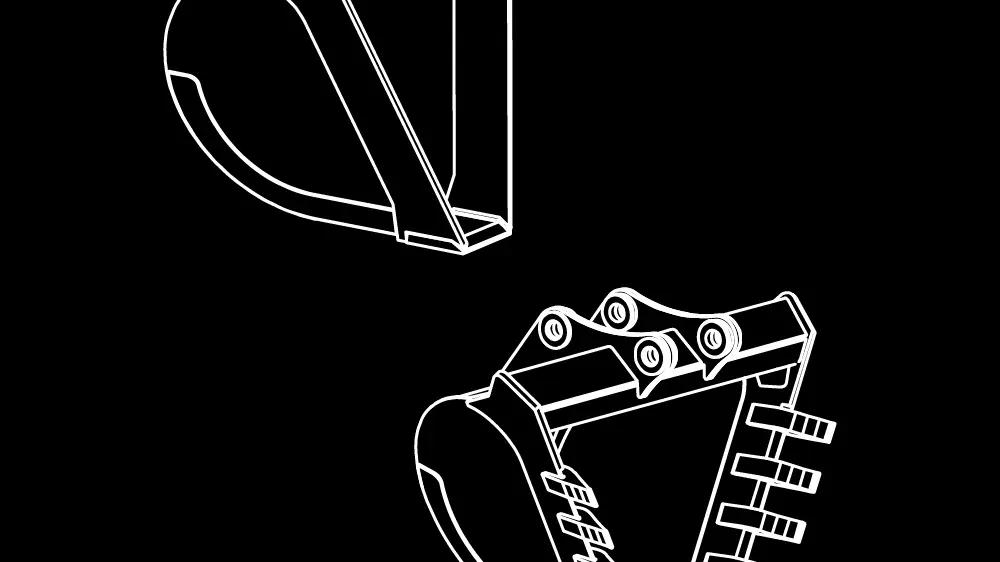
Drainage and irrigation runs
A controlled trench can make it easier to place drainage components or irrigation lines along a planned route. The bucket should be selected around the required trench section, not simply the widest bucket the excavator can lift. Width that exceeds the project need creates more spoil and may require additional backfill material.
Cable and utility preparation
Narrow digging attachments are commonly considered for cable routes and utility preparation because they focus excavation on a defined line. The equipment choice does not replace project planning, utility locating, or site-specific requirements. Confirm the planned width and depth with the project documentation before ordering an attachment.
Landscaping and site work
Landscapers may use narrow digging tools for drainage improvements, edging-related excavation, irrigation preparation, and other site work. For broader grading or material handling, a general-purpose bucket or grading attachment may be more appropriate. A trenching bucket is a focused tool, not a substitute for every excavator bucket profile.
How Do You Choose Trenching Bucket Width?
Choose trenching bucket width from the required finished trench, the material or installation that must fit inside it, and the amount of clearance needed for the work. Start with the project specification, then confirm the attachment's actual cut width, outside dimensions, and available variants rather than relying only on a rounded name.
Nominal width and actual cut width can differ. The eSkidSteer Star Industries 910 Series Mini Excavator Buckets, for example, are listed in several nominal widths, including 10, 12, 18, 24, and 36 inches. The product information notes that the bucket cut is 1 inch narrower than the nominal width. That distinction matters when a trench must meet a precise requirement.
| Selection factor | What to verify | Why it matters |
|---|---|---|
| Finished trench width | Required internal width from the project plan | Prevents over-excavation and fit problems |
| Actual cut width | Product specification, not just the rounded listing name | Bucket names can differ from the cutting width |
| Clearance | Room needed for the pipe, cable, drainage material, or installation work | A tight trench may not provide enough working room |
| Soil and spoil | Whether the shape and side profile suit the material | Profile affects excavation and cleanup |
Do not select a narrow bucket only because it appears efficient. A trench that is too narrow can slow installation, limit bedding or placement work, and force rework. A trench that is too wide increases excavation volume. The best width is the one that satisfies the job requirement while preserving enough working clearance.
For a broader comparison of equipment options, review eSkidSteer's excavator attachment collection and compare the listed dimensions and mounting information for the specific attachment.
What Trenching Bucket Depth and Profile Should You Use?
Bucket depth and profile should follow the required trench geometry, the excavator's working range, and the installation plan. A trenching bucket's listed width does not automatically establish how deep the machine can dig. Confirm the attachment dimensions and the excavator's operating envelope together before ordering or starting work.
Depth is a machine and attachment question
Actual digging depth depends on the carrier, boom and arm configuration, ground conditions, bucket geometry, and the required working position. Avoid promising a finished depth from the attachment name alone. Use the machine manual, project plan, and current product specifications to confirm whether the setup can reach the required depth.
Choose the profile for the finished trench
A straight-sided trenching bucket and a V-bottom trenching bucket create different results. The eSkidSteer Wain Roy V Bottom Trenching Bucket for Excavators is described as cutting a V profile in one pass. Its product information identifies drainage runs and cable trenches as relevant applications, and it lists pin-on or quick coupler mounting across multiple variants.
A V profile can be useful when the shape itself is part of the project requirement. It is not the right choice when the project calls for a square-sided trench or when the attachment will mainly be used for general excavation. Review the finished profile before comparing prices or brands.
How Do You Check Excavator Compatibility?
Check compatibility by matching the attachment to the excavator's rated machine class, mounting method, pin or coupler dimensions, hydraulic requirements if applicable, lift capacity, and physical clearance. A product that looks close in size may still be unsuitable if its mounting geometry, weight, or carrier range does not match the excavator.
- Identify the excavator: Record the make, model, operating class, and current coupler or pin-on setup.
- Confirm the mount: Compare the attachment's pin-on or quick coupler requirements with the machine's actual configuration.
- Check dimensions: Verify pin diameter, pin center spacing, ear width, bucket width, and any required adapter dimensions.
- Review weight: Confirm that the excavator can lift and control the attachment through the intended working range.
- Check hydraulics: A conventional bucket may not require auxiliary hydraulics, while powered trenchers and other hydraulic attachments have specific flow requirements.
- Confirm the job profile: Match the bucket shape, teeth, and cutting width to the trench specification.
The Wain Roy product page illustrates why a model-by-model check matters. Its listed V-bottom trenching bucket range includes multiple variants and mounting options, with weights shown across the range. Use the exact variant row and current product specifications for the excavator you intend to use. Do not assume that one variant's dimensions apply to every other option.
For additional equipment options, compare the Star Industries Mini Excavator Bucket details, including available widths and tooth configurations, with the requirements for the machine and trench.
Can a Skid Steer Use a Trenching Bucket?
A skid steer can use a trenching attachment, but buyers should distinguish a bucket-style excavator attachment from a hydraulic skid steer trencher. The correct choice depends on the machine's quick-attach interface, auxiliary hydraulic flow, trench dimensions, and the attachment's approved carrier requirements. Do not assume an excavator bucket will fit a skid steer simply because both machines use attachments.
For recurring narrow trench work, eSkidSteer lists the Star Industries X-Treme Skid Steer Trencher. The product page identifies a 48-inch trench width, three chain configurations, a 15-inch auger, crumber bar and blade, full rock guard, universal quick-attach mounting, and a required auxiliary flow range of 20 to 30 GPM.
| Tool type | Primary mechanism | Best comparison points |
|---|---|---|
| Excavator trenching bucket | Bucket cuts and lifts soil | Width, profile, teeth, pins, coupler, machine class |
| Excavator V-bottom bucket | Bucket forms a V trench profile | Profile, variant, mounting, weight, excavator class |
| Skid steer hydraulic trencher | Powered chain and boom cut the trench | Flow, chain type, quick attach, depth, ground conditions |
The X-Treme trencher's chain options are matched to different ground conditions: the 131-48D dirt chain is for ordinary soil, the 131-48C combo chain is for mixed dirt and stone, and the 131-48R rock and frost chain is for hard, rocky, or frozen ground. Select the chain and hydraulic range from the machine and site requirements shown on the current product page.
What Should You Compare Before Ordering?
Compare the attachment's working result first, then confirm fit and ownership details. A useful comparison records the finished trench profile, actual width, expected depth, carrier and mount, attachment weight, teeth or chain configuration, hydraulic flow, and included components. This approach prevents a low price or familiar product name from replacing a proper fit check.
- Trench profile: Straight-sided, V-bottom, or a powered chain cut.
- Actual width: Required finished width compared with the product's listed cut width.
- Carrier: Excavator, mini excavator, skid steer, or compact track loader, as applicable to the product.
- Mounting: Pin-on, a rated quick coupler, or universal quick attach for the specific attachment.
- Weight: Attachment weight compared with the carrier's lifting and control capability.
- Cutting system: Smooth edge, teeth, bucket profile, chain type, or included spoil-management components.
- Hydraulic requirements: Required only where the attachment is powered, but critical when it applies.
- Replacement parts: Confirm the availability and identity of compatible teeth, chains, or wear components if the job will be recurring.
Use eSkidSteer's full attachments collection to compare the broader product range, then narrow the decision to the product pages that match your carrier and job. You can also review skid steer attachments or mini skid steer attachments when the carrier is not a conventional excavator.
For a final check, write down the exact machine model, attachment type, required width and depth, mount dimensions, and hydraulic specifications. Use those details when reviewing product variants or contacting the seller about a fit question. Avoid ordering from a generic machine category alone.
Shop excavator trenching and digging attachments at eSkidSteer after confirming the required width, profile, mounting, and carrier class.
Frequently Asked Questions
What is the difference between a trenching bucket and a trencher?
A trenching bucket is a bucket-style excavation attachment, while a trencher uses a powered chain and boom to cut a continuous narrow trench. Compare the required workflow, trench profile, machine interface, and hydraulic requirements before choosing between them.
What width trenching bucket should I buy?
Choose a width that meets the finished trench specification and provides enough clearance for the material or installation work. Confirm the actual cut width because a nominal product width may not equal the cutting width. Also verify that the width is available for your carrier class and mounting configuration.
Can I use an excavator trenching bucket on a skid steer?
Do not assume that an excavator trenching bucket will fit a skid steer. Verify the carrier rating, mounting interface, pin or coupler dimensions, attachment weight, and intended use. A skid steer hydraulic trencher may be the more appropriate option for repeated narrow trenching.
Does a trenching bucket need auxiliary hydraulics?
A conventional bucket-style trenching attachment may not require auxiliary hydraulics, but a powered hydraulic trencher does. Check the exact product requirements. The eSkidSteer Star Industries X-Treme Skid Steer Trencher is listed with a 20 to 30 GPM auxiliary hydraulic flow requirement.
What is a V-bottom trenching bucket used for?
A V-bottom trenching bucket forms a V-shaped trench profile as it digs. It is considered for drainage and cable trenches where the profile matters. It is not a universal replacement for a straight-sided trenching bucket or a ditching and grading bucket.
What information do I need before ordering?
Have the machine make and model, carrier class, mount type, pin or coupler dimensions, required trench width and depth, soil conditions, and any hydraulic flow information available. These details make it easier to compare the correct attachment variant instead of relying on a general category name.
Browse eSkidSteer's attachment collection to compare the right trenching, excavator, and skid steer tools for your next project.