

Skid Steer Root Grapple vs Rock Grapple Guide
Get the Attachment Your Project Needs
Shop proven, work-ready attachments that help you tackle any task with confidence.
LEARN MORESkid steer root grapple vs rock grapple selection starts with the material you handle most often. This guide compares tine layout, jaw opening, frame construction, hydraulic needs, and machine capacity so you can narrow the choice before ordering.
Browse skid steer attachments to compare grapple options for your machine and material-handling needs.
Grapple selection should follow the material you handle most often, not a generic heavy-duty label. Brush, roots, logs, and irregular debris need room to settle into a grapple. Loose rock and excavation spoil call for a design that retains stone while allowing some soil to pass. The decision becomes easier when you compare tine layout, material profile, frame construction, and machine fit together.
The goal is to match attachment geometry to the work, then verify the details that determine whether it can be mounted and operated safely. That approach helps contractors clearing lots, landscapers moving stone, and agricultural operators handling storm debris.
How Does a Skid Steer Root Grapple vs Rock Grapple Comparison Work?
The primary difference is how each attachment manages material between its tines. A root grapple generally uses wider openings for bulky brush, roots, logs, and tangled debris. A rock grapple generally uses tighter spacing to retain smaller stones and broken material during cleanup or sorting. Actual spacing, tine profiles, jaw openings, and capacities vary by model, so confirm current product specifications before ordering.
| Consideration | Root grapple | Rock grapple |
|---|---|---|
| Tine layout | Open geometry for bulky, irregular debris. | Tighter geometry for retaining rock and smaller material. |
| Typical material | Brush, roots, logs, and land-clearing debris. | Rocks, broken material, and dense cleanup loads. |
| Soil separation | Loose soil and fines can fall through, depending on the model. | Rock is retained while more soil passes through the openings. |
| Common use | Land clearing, brush removal, and debris piling. | Excavation cleanup, hardscaping, and site preparation. |
Choose a root grapple when gathering long, tangled, or bulky organic material is the priority. Choose a rock grapple when the load is dominated by stone and retention during sorting matters more. Both designs can handle mixed work, but matching the attachment to the dominant material can reduce repeated passes and unwanted soil in the load.
Compare the mounting interface, machine capacity, weight distribution, and hydraulic requirements before selecting a model. Review skid steer root grapples and the extreme-duty root rake grapple for root-focused work. For rock-focused work, compare the skid steer rock grapple and rock bucket grapple listings against your machine requirements.
When Should You Choose a Root Grapple for a Skid Steer?
Choose a root grapple when the job involves irregular organic material rather than a clean load of loose rock. Its open frame and upper clamp can gather brush, branches, tangled roots, logs, and similar material while allowing some loose soil to fall through. This style is useful after tree clearing, lot preparation, storm cleanup, and reclamation work where woody material must be collected and moved.
A root grapple is practical for land clearing because it can grip material that is long, bulky, or interlocked. It can consolidate brush piles and move logs without requiring the operator to reposition each piece. The right model still depends on debris size, jaw opening, tine layout, loader capacity, and attachment weight. Do not treat one product's dimensions as universal for every root grapple.
Applications that favor a root grapple
- Collecting brush, branches, and storm debris after tree or lot clearing.
- Pulling and consolidating roots, vines, and tangled vegetation.
- Moving logs, slash, and irregular pieces that are difficult to retain in a standard bucket.
- Sorting organic debris from soil while leaving finer material on the site.
Before ordering, inspect dimensions, jaw opening, tine layout, mounting interface, and rated capacity. Confirm that attachment weight and load position suit the skid steer. If the grapple is hydraulically powered, verify auxiliary flow, hose routing, and coupler requirements. Review the frame, gussets, tines, cylinders, and fittings rather than relying only on a heavy-duty label.
Think about the load after the grapple closes. Brush and roots need a clamp that can settle over uneven material without forcing every piece into a flat layer. Logs also require enough opening and control to remain stable while they are carried. If the job includes repeated soil separation, note how much loose material you want to leave behind. This work profile gives you a more useful starting point than choosing by attachment name alone. It also helps you compare models consistently when the property includes several material types.
For another root-grapple option, compare the Star Industries root grapple buckets with the live specifications for your loader. During use, keep people clear of the work area, follow the loader and attachment instructions, and inspect hydraulic lines and cylinders before operation.
When Is a Rock Grapple the Better Choice?
A rock grapple is generally the more practical choice when the job centers on collecting, sorting, and moving stone rather than pulling out brush and root systems. Its working geometry is intended to retain larger rocks and dense debris while allowing soil and smaller loose material to fall through. This can help with excavation cleanup, hardscaping preparation, foundation work, grading support, and clearing rocky areas after site work.
Consider the material profile before choosing a rock grapple. Larger, irregular stones may need a wide jaw opening and a strong frame. Smaller rock and mixed spoil may call for closer tine spacing so the load stays in the attachment during transport. Neither tine spacing nor rock retention is universal. Compare product drawings, opening dimensions, steel construction, and capacity rather than applying a figure from another model.
Rock grapples are not a universal substitute for root grapples. They may move brush, but a root-focused design is usually more efficient when the load is long, tangled, and primarily organic. If work alternates between stone and vegetation, identify the dominant task and decide whether changing attachments is more efficient than compromising on one design.
Before ordering, confirm the mounting interface, machine capacity, attachment weight, weight distribution, and hydraulic flow requirements. Then browse attachment options and compare each candidate's current specifications against your skid steer.
When a single grapple must handle mixed material
Rank the work by frequency and by the material that creates the greatest control problem. A root-oriented grapple may be sensible when logs and roots make up most loads, even if occasional rocks are present. A rock-oriented model may be better when stone sorting and excavation cleanup account for most passes. List the typical load, the smallest material you need to retain, and the heaviest material the machine can safely lift. Use those observations with product-page specifications instead of choosing from the attachment name alone.
How Do Tine Spacing and Durability Affect Performance?
Tine spacing controls what the grapple holds, what it releases, and how much sorting occurs during each pass. Tighter spacing can retain smaller debris and rock. Wider spacing can make it easier to gather larger material and let more soil or fines fall through. These are operating tendencies, not guarantees. Jaw geometry, tine thickness, frame design, and load position also affect performance.
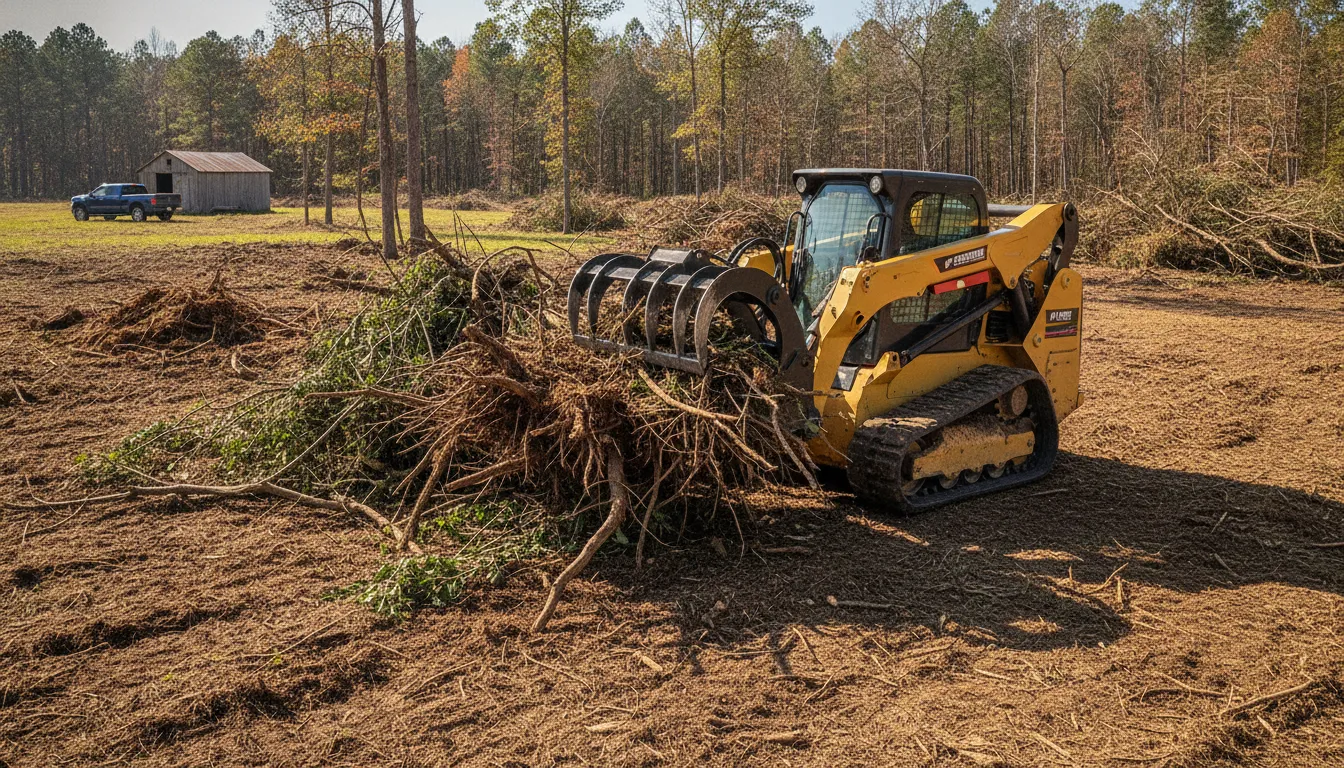
Durability depends on more than a heavy-duty label. Inspect steel thickness, tine shape, welds, gussets, and reinforcement at high-load points. Hydraulic cylinders and mounting points should suit the attachment's intended work. For demanding rock cleanup, pay particular attention to the structure around tines, hinge points, and cylinder mounts. The McLaren heavy-duty root grapple is one option to evaluate, but confirm its dimensions, capacity, interface, and hydraulic requirements on the live product page.
Maintenance also affects control and service life. Before operation, inspect tines, pins, hoses, fittings, cylinders, and welds for damage, looseness, or leaks. Shut down and secure the equipment before inspection or servicing. Never reach near moving attachment parts to adjust material, and keep people clear while the grapple is moving.
How Do You Match a Grapple to Your Skid Steer?
Use this checklist when comparing a skid steer root grapple vs rock grapple. Product dimensions and hydraulic requirements vary by model, so confirm current specifications for both the attachment and your loader.
- Confirm rated operating capacity. Start with the skid steer's rated operating capacity and lift limitations in the operator's manual. Account for grapple weight, material load, and how far the load sits forward of the mounting plate. A heavy grapple can reduce usable capacity before material is added. Penn State Extension's skid steer safety guidance emphasizes using the correct attachment and understanding machine limitations.
- Match attachment weight to the material. Select enough frame strength for the material profile without adding unnecessary front-end weight. Review steel thickness, reinforced gussets, tine design, and cylinder construction instead of relying on a general heavy-duty label.
- Verify hydraulic flow and connections. Compare auxiliary hydraulic flow in gallons per minute with the grapple's requirements. Confirm hose routing, coupler type, and whether an adapter or additional connection is required.
- Check the mounting interface and dimensions. Confirm the grapple uses the skid steer's quick-attach standard. Compare overall width, jaw opening, tine spacing, and cylinder clearance with the loader and work area.
- Plan safe operation and inspection. Use the attachment for its intended material. Keep people clear, and follow the loader manufacturer's procedures. Inspect hydraulic lines, cylinders, pins, and welds before use. Never reach into moving linkage to adjust debris. The Michigan State University skid steer safety alert documents crushing hazards around moving equipment.
After confirming these points, review skid steer attachment selection and compare each candidate's live specifications.
Shop skid steer grapples and attachments to find the right fit for your machine.
Frequently Asked Questions
Which grapple is better for brush, roots, and logs?
A root grapple is generally the better starting point for land clearing and irregular organic debris. Its open design is intended to secure brush, roots, logs, and similar material while allowing some loose soil to fall through. Confirm tine opening and jaw capacity against the size and density of the debris.
When should I choose a rock grapple instead?
Choose a rock grapple when the primary job is collecting rocks, dense debris, or mixed material during excavation, hardscaping, or site preparation. Its geometry is commonly intended to retain larger material while allowing some soil and smaller debris to pass through. Review current specifications because spacing and capacity vary by model.
Can I use a rock grapple for moving brush?
Yes, a rock grapple can move brush, but it may be less efficient when the load is long, tangled, or mostly organic. Compare the dominant material, jaw opening, tine layout, and machine fit. If land clearing is the primary job, a root grapple may provide more suitable geometry for gathering and clamping debris.
How can I confirm a grapple will fit my skid steer?
Check the mounting interface, rated operating capacity, attachment weight, weight distribution, and hydraulic requirements before ordering. Hydraulic flow in gallons per minute must match the grapple's cylinder requirements for efficient opening and closing. Also compare width, jaw opening, hose routing, and clearance with your loader.
Shop the Right Grapple for Your Skid Steer
Choosing between a root grapple and rock grapple starts with the material you handle most often. Then compare tine spacing, attachment weight, mounting interface, jaw opening, and hydraulic requirements. Reviewing current specifications before ordering helps narrow the selection and reduce fitment surprises.
eSkidSteer offers online access to attachment options for construction, landscaping, agricultural, and land-clearing work. Use product details to compare each model's design with your machine and planned material-handling tasks.
Shop skid steer grapple and attachment options to compare equipment for your next project.