


What Can You Do with a Brush Grapple? Uses
Get the Attachment Your Project Needs
Shop proven, work-ready attachments that help you tackle any task with confidence.
LEARN MOREBrush piles, fallen limbs, logs, and storm debris are difficult to control with a standard bucket because irregular loads can shift. Roll, or spill before they reach the trailer or disposal area. A brush grapple adds a hinged jaw or independent tines that clamp material against the bucket or lower tines. Giving a skid steer more control during loading and transport.
What can you do with a brush grapple? You can grab, lift, move, load, and sort bulky organic material such as brush, branches, limbs, logs, and debris. It is especially useful for storm cleanup, fence-line maintenance, land clearing, tree removal support, and routine property cleanup, where securing irregular loads can reduce manual dragging. The attachment's capacity still depends on its design and your skid steer's hydraulic lifting specifications.
The best results come from matching the grapple's jaw style, tine spacing, and capacity to the material you handle most often. That starts with understanding which cleanup and material-handling jobs a brush grapple is built to perform.
Shop the skid steer grapples collection to compare brush, root, and multipurpose attachments that fit your loader before you plan your next cleanup job.
What Can You Do with a Brush Grapple on a Skid Steer?
A brush grapple turns a skid steer into a controlled material-handling tool for irregular organic loads. Its hinged upper jaw or independent tines clamp brush, limbs, logs, and debris against the lower bucket or tine frame. Allowing the operator to grab, lift, move, and place material without relying on chains or manual dragging. This basic function is why brush grapples are used across property maintenance, landscaping, agriculture, and light land-clearing work. Fecon describes the attachment as designed to grab, lift, and move brush, limbs, logs, and debris.
The attachment is most useful when material is bulky, tangled, or too irregular for a standard bucket. Close the jaw around a branch pile, carry it to a staging area, then release it precisely where it belongs. Operators can also reposition cut limbs, gather vegetation along a work path, and consolidate scattered debris into manageable piles. The grapple provides control over material that would otherwise roll, slide, or spill from the attachment.
Handling Loose and Bulky Material
Grapple design determines how much material the attachment can retain. A grapple bucket with a solid floor and sides can hold loose material such as mulch while its upper arms secure branches and other bulky items. This combination makes it more versatile than an open tine frame when a job includes both small debris and larger pieces. Equipment Solutions Outdoors explains how a closed-bottom grapple bucket holds loose and grabbable material together.
That versatility supports cleanup after pruning, hedge removal, and routine grounds work. Instead of making repeated passes with a bucket that cannot retain limbs. The operator can collect a mixed load and transport it to a burn pile, dump area, trailer, or processing location selected for the project. Disposal requirements vary by location, so organic material should be handled according to applicable local rules.
Common Skid Steer Grapple Jobs
- Gathering brush and tree limbs after trimming or clearing.
- Moving logs, cut rounds, and larger branches from a work area.
- Loading storm debris into a trailer or consolidating it into a pile.
- Maintaining overgrown fence lines, access paths, and field edges.
- Handling bulky landscape debris that is difficult to retain in a conventional bucket.
For buyers comparing attachment styles, the right choice depends on the material profile and the skid steer's rated capacity and hydraulic specifications. A brush grapple is well suited to lighter, bulky organic material, while heavier rock, root, or demolition work may call for a different grapple design. Review the available skid steer grapples and match the jaw configuration, frame, and loader requirements to the work you perform most often.
Clearing Brush and Overgrown Lots
Brush grapples are well suited to the first pass on properties where vegetation, fallen limbs, and loose organic debris have made access difficult. The grapple jaws clamp around irregular loads that would be awkward to carry in a standard bucket, allowing the skid steer operator to gather material. Lift it clear of the ground, and move it to a burn pile, trailer, staging area, or other approved destination. This is especially useful when clearing storm debris, hedge growth, and accumulated brush without relying on manual dragging. Equipment Solutions Outdoors describes brush grapples as a way to move and clear large volumes of brush, limbs, and debris more efficiently than hand cleanup.
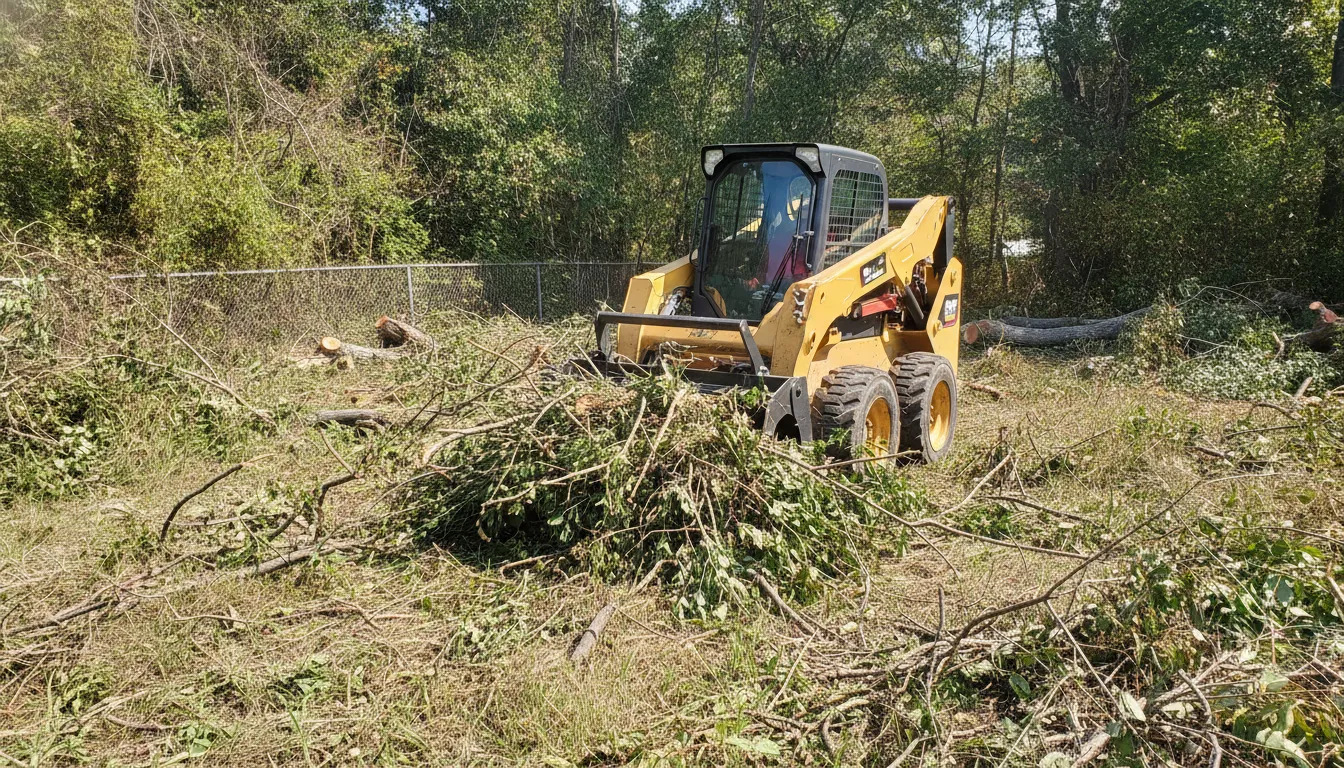
On an overgrown lot, work typically begins by opening a travel path and exposing the ground beneath the vegetation. The operator can clamp larger branches and tangled brush, carry them away, then return for smaller piles. A grapple bucket with a closed bottom can also retain loose organic material while the upper jaw secures bulkier branches. That combination is valuable when a job includes both scattered brush and concentrated piles rather than one uniform material type.
- Storm and property cleanup: Collect limbs, hedge trimmings, and brush piles after severe weather or routine tree work, reducing the need to drag each piece manually.
- Lot preparation: Clear vegetation from access routes, building areas, pasture edges, and equipment paths before grading or other site work begins.
- Fence-line maintenance: Remove encroaching brush and woody growth along agricultural boundaries, where vegetation can obstruct inspection and maintenance. The University of Minnesota Extension identifies pasture and fence-line weed management as an important agricultural maintenance concern.
Fence-line clearing requires more than simply pulling everything within reach. Mark the boundary, identify utility hazards, and work in a controlled direction so removed material does not obstruct the line you still need to inspect. The grapple is most effective when the load stays within the loader's rated capacity and the operator avoids forcing the attachment into buried stumps or large fixed roots. For heavier root extraction or repeated handling of rocks, a root grapple may be a better match than a brush-focused model.
When vegetation is too dense to collect efficiently, a mulching attachment can reduce standing growth before the grapple handles the remaining debris. Compare the available forestry mulchers for jobs where cutting and material reduction are part of the clearing plan. For gathering and transporting the resulting brush, choose a grapple with a jaw configuration, tine spacing, and capacity suited to the skid steer and the material on site.
Moving Logs, Limbs, and Storm Debris
After a tree comes down, the difficult part is often not the cut. It is moving the tangled material left across the work area. A brush grapple gives a skid steer a practical way to grab, lift, and transport branches. Limbs, logs, and other irregular debris without relying on chains, forks, or repeated manual dragging. This makes it useful for cleanup after tree removal, seasonal pruning, and storm damage.
The grapple arms clamp material against the bucket or lower tines. Helping keep uneven loads together while the loader travels to a burn pile, staging area, trailer, or other approved disposal point. A grapple bucket with a solid floor and sides can also retain loose material alongside larger pieces. That combination is useful when a cleanup load includes both branches and smaller organic debris. The exact load size depends on the attachment design and the skid steer's rated lifting capacity. So operators should follow the manufacturer's specifications for both the grapple and the loader.
Common cleanup jobs
- Collecting limbs and brush after tree trimming or storm damage.
- Moving cut logs and rounds to a staging area or firewood-processing location.
- Loading tangled debris for transport instead of dragging individual pieces by hand.
- Cleaning around stumps, fence lines, access roads, and work zones after removal operations.
For tree removal work, the skid steer may provide ground support by handling log transport, debris removal, and stump cleanup. A grapple is especially useful when the material is too awkward for a standard bucket but does not require a specialized log fork. Operators can approach a pile, close the upper jaw around a manageable section, lift only as high as necessary, and travel slowly over the work surface. Keeping the load low improves visibility and stability. Avoid exceeding the machine's rated capacity, and account for shifting limbs or protruding branches before moving.
Storm cleanup requires additional attention to hidden hazards. Inspect piles for wire, fencing, nails, concrete, and other objects mixed into the vegetation. Separate material when the disposal site or local rules require different handling for wood, green waste, or construction debris. Organic landscape debris may be subject to disposal restrictions in some jurisdictions, so confirm the applicable local requirements before hauling it away. The grapple improves handling efficiency, but it does not replace site inspection or safe load planning.
When this work is a regular part of your operation, compare the jaw design, tine spacing, attachment weight, and machine compatibility before buying. The skid steer brush grapple bucket is one option to evaluate for collecting and transporting irregular organic loads. Choose a configuration that matches your loader's hydraulic and lifting specifications, then use the grapple within those limits for controlled, repeatable cleanup.
Land Clearing and Demolition Hauling
Land clearing and demolition work create irregular loads that are difficult to manage with a standard bucket. A brush grapple gives the skid steer a way to clamp, lift, and position tangled vegetation. Branches, small logs, and other loose material while keeping the load under control during transport. That makes it useful for preparing a site, consolidating debris, and loading material into a trailer, dumpster, or designated processing area.
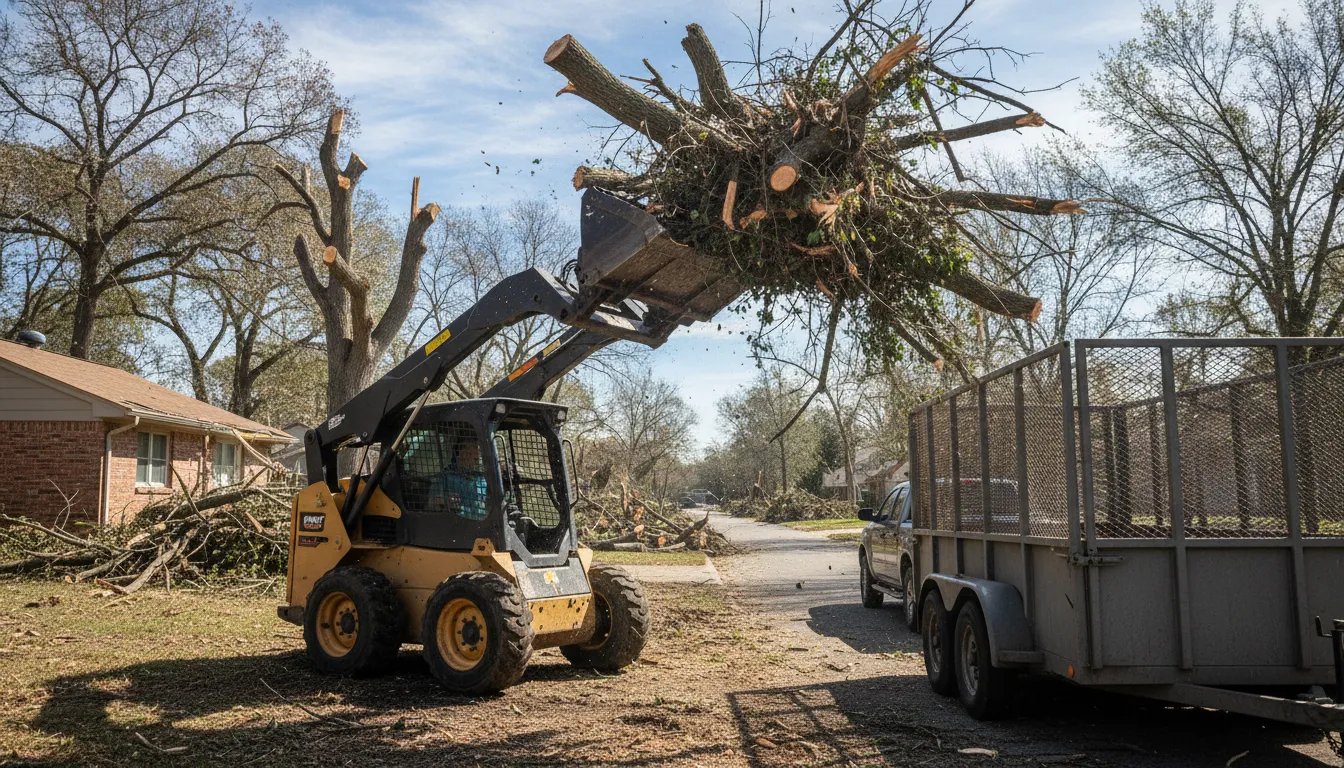
Consolidate organic debris before disposal
On a clearing project, the first pass may involve gathering brush, limbs, roots, and trimmings into organized piles. The grapple jaw holds material against the lower tines or bucket floor. So the operator can collect more irregular debris in fewer passes than with a conventional bucket alone. It can also separate larger pieces from loose material as the load is positioned for chipping, mulching, composting, or another approved handling method.
Disposal planning matters because organic landscape debris is not universally handled like ordinary refuse. For example, University of Georgia Extension explains that Georgia legislation banned certain organic plant materials from disposal facilities with liners and collection systems requiring vertical expansion. Requirements vary by jurisdiction, so confirm local rules before hauling trimmings or vegetation from a job site. Review organic debris management guidance and use the grapple to keep material sorted for the destination you select.
Support invasive-plant and site-restoration work
A brush grapple can also support land managers working to remove unwanted woody growth and invasive plants. The U.S. Forest Service has documented the use of attachments to improve tamarisk removal, showing how specialized equipment can contribute to invasive-species management. Read the Forest Service tamarisk-removal study for context on this application.
In practice, the attachment may help pull, gather, and stage removed vegetation after the primary cutting or extraction work. Operators should still follow the project's environmental plan. Avoid spreading viable plant material to clean areas, inspect the attachment between work zones, and route debris according to local requirements. For larger-scale vegetation processing, compare a grapple with forestry mulchers, which are designed for reducing standing or cut vegetation rather than hauling it intact.
Handle demolition cleanup with control
During light demolition cleanup, the grapple can move awkward pieces that do not settle reliably in an open bucket. Use deliberate loading techniques, keep the load within the skid steer and attachment specifications. And avoid treating a brush grapple as a substitute for a dedicated demolition grapple when the work involves heavy concrete, structural steel, or other high-impact material. The appropriate tool depends on the debris, machine capacity, hydraulic system, and site conditions.
To compare jaw styles and attachment options for land clearing or cleanup, browse skid steer grapples and match the grapple's construction to the material you need to handle.
Rock and Root Work: Where a Brush Grapple Fits
A brush grapple can help with light root exposure, loose stones, and cleanup around a recently cleared area. But it should not be treated as a dedicated rock or stump-removal attachment. The difference is the type of load and force involved. Brush grapples are generally intended for lighter, bulky organic material, while root grapples are built for heavier debris and more demanding ground-contact work. Root grapples are typically better suited for heavy stone and the impact stress associated with moving it.
That makes a brush grapple useful after the primary digging or extraction work is complete. For example, an operator can gather exposed roots, smaller rocks, branches, and other loose material into a manageable pile. The grapple arms help clamp irregular loads against the lower tines, reducing the need to repeatedly reposition material by hand or with a standard bucket. This is a handling and cleanup role, not a substitute for a digging bucket. Rock bucket, or root grapple when the attachment must pry against embedded stone or pull substantial stumps.
Use a brush grapple for cleanup around roots
When clearing a fence line, pasture edge, or wooded lot, roots and small stones often remain mixed with brush. A brush grapple can separate and move the above-ground material while allowing some soil and smaller debris to fall between the tines, depending on the attachment design. It can also help consolidate material after a stump has already been loosened by another tool. Operators should avoid forcing the jaws into the ground or using the attachment as a pry bar, since those actions create stresses beyond normal brush-handling work.
Load size and machine capability still matter. Before moving rocks, confirm the grapple's rated capacity and the skid steer's hydraulic lifting specifications. A load that fits inside the jaw may still exceed the loader's safe operating limits, particularly when it is dense, uneven, or carried at full reach.
When a root grapple is the better choice
Choose a root grapple when the job centers on heavy rocks, buried roots, compacted debris, or small stumps that must be wrestled from the ground. Root grapples are generally stronger than brush grapples and better suited to high-impact loads. If the work regularly combines land clearing with rock handling. Compare an attachment designed for both use cases rather than expecting a lighter brush grapple to perform every task.
For mixed cleanup where loose stone and brush are both part of the workload, review the rock and brush grapple tool and verify its specifications against the loader. The right fit depends on the material, the ground conditions, and how much digging or prying the job requires.
How Do You Choose the Right Brush Grapple?
Start with the material you handle most often, then match the grapple to your skid steer's hydraulic system, attachment interface, and rated lifting capability. Brush, root, rock, and multipurpose grapples serve different workloads, so the most rugged-looking option is not automatically the best fit. A brush grapple is generally intended for lighter, bulky organic material such as limbs, brush. And logs, while a root grapple is better suited to heavier debris and high-impact rock work.
Review the specifications for both the attachment and your loader before ordering. Grapple capacity depends on the model's design and the machine's hydraulic lifting specifications, so confirm the manufacturer's requirements for your specific skid steer. Hydraulic flow, operating pressure, lift capacity, and the attachment's own weight all affect how effectively the machine can clamp, carry, and place a load. See the skid steer grapples collection to compare attachment types and configurations.
Match tine spacing and jaw style to the load
Tine spacing controls what the grapple retains and what it lets fall through. Narrower spacing can help hold smaller branches, tangled brush, and mixed organic debris. Wider spacing may allow loose dirt and smaller material to sift through while the attachment secures larger limbs and logs. Consider whether you need a solid-bottom grapple bucket or an open tine design. A bucket with a closed floor and sides can hold loose material as well as bulky objects. Whereas an open grapple is often better for sorting, lifting, and shaking soil from irregular loads.
Jaw style also matters. A single upper jaw provides broad clamping action for brush piles and awkward loads. Independent tines can conform to uneven material and improve control when the load is irregular. For repeated brush clearing, select a configuration that closes securely without requiring the operator to force the attachment into the pile.
| Attachment type | Best fit | Selection focus |
|---|---|---|
| Brush grapple | Branches, limbs, brush piles, and other bulky organic material | Tine spacing, jaw coverage, and manageable attachment weight |
| Root grapple | Roots, stumps, rocks, and heavier debris | Impact resistance, structural strength, and loader lift capacity |
Verify quick attach compatibility and operating limits
Confirm that the mounting plate matches your skid steer's quick attach system and that the hydraulic couplers, hose routing, and auxiliary circuit are compatible. Do not assume that a grapple will operate correctly because it fits the loader plate. Compare the attachment's required hydraulic flow and pressure with the machine's auxiliary specifications, then account for the grapple's weight before estimating the remaining payload.
For buyers who need both containment and clamping, an HD brush bucket with grapple may be a practical configuration to evaluate. Choose based on your normal material, not an occasional outlier job, and confirm all dimensions and specifications before purchase.
Browse skid steer grapples at eSkidSteer to find the jaw style, tine spacing, and capacity that match the cleanup work you handle most often.
Frequently Asked Questions
What is the difference between a root grapple and a brush grapple?
A brush grapple is generally suited to lighter, bulky organic material such as branches, limbs, and brush. A root grapple is typically stronger and better suited to heavy debris, rocks, and demanding root or stump work. Choose based on the material, impact level, and lifting requirements of the job.
Can you use a brush grapple for picking up rocks?
Some brush grapples can handle limited rock work, but a root grapple is usually the better choice for heavy stone and repeated impact. Check the attachment and skid steer manufacturer's specifications before lifting rocks or boulders, and keep the load within the machine's rated capacity.
How much weight can a brush grapple handle?
There is no single capacity rating for every brush grapple. The safe working load depends on the grapple model, its design, and the skid steer's hydraulic and lifting specifications. Match the attachment to your machine and verify the manufacturer's specifications before moving heavy logs or debris.
Is a brush grapple useful for residential cleanup?
It can be useful when a property regularly has large volumes of tree trimmings, hedge growth, storm debris, or brush piles. The grapple clamps irregular material so the skid steer can move, load, and clear it without relying on manual dragging. For occasional light cleanup, a standard bucket may be sufficient.
Ready to Browse Skid Steer Grapples?
The right grapple can make brush handling, debris removal, and material sorting more controlled on your skid steer. Compare grapple styles and choose an attachment that fits the work ahead. Browse a full lineup of skid steer grapples online to review your options.