


Telehandler Truss Jibs: Selection and Safety Guide
Get the Attachment Your Project Needs
Shop proven, work-ready attachments that help you tackle any task with confidence.
LEARN MOREBrowse our full selection of telehandler truss jibs -- find the right length, capacity, and mount type for your machine.
Telehandler truss jibs are tough tools built to extend the reach and lifting power of your machine for hung loads like roof trusses. Unlike standard crane jibs, these tools are made to work with the exact mounts and systems on your telehandler. Picking the right jib needs a careful look at your machine's lift limits and the reach needed for the job. Every lift made below the tines is a big task that needs a clear safety plan to keep your crew safe. Safety rules for telehandler hoisting tasks state that you must check your load chart and make sure the mount is locked. The right jib stops your machine from tipping and keeps heavy loads steady during high lifts.
What Are Telehandler Truss Jibs?
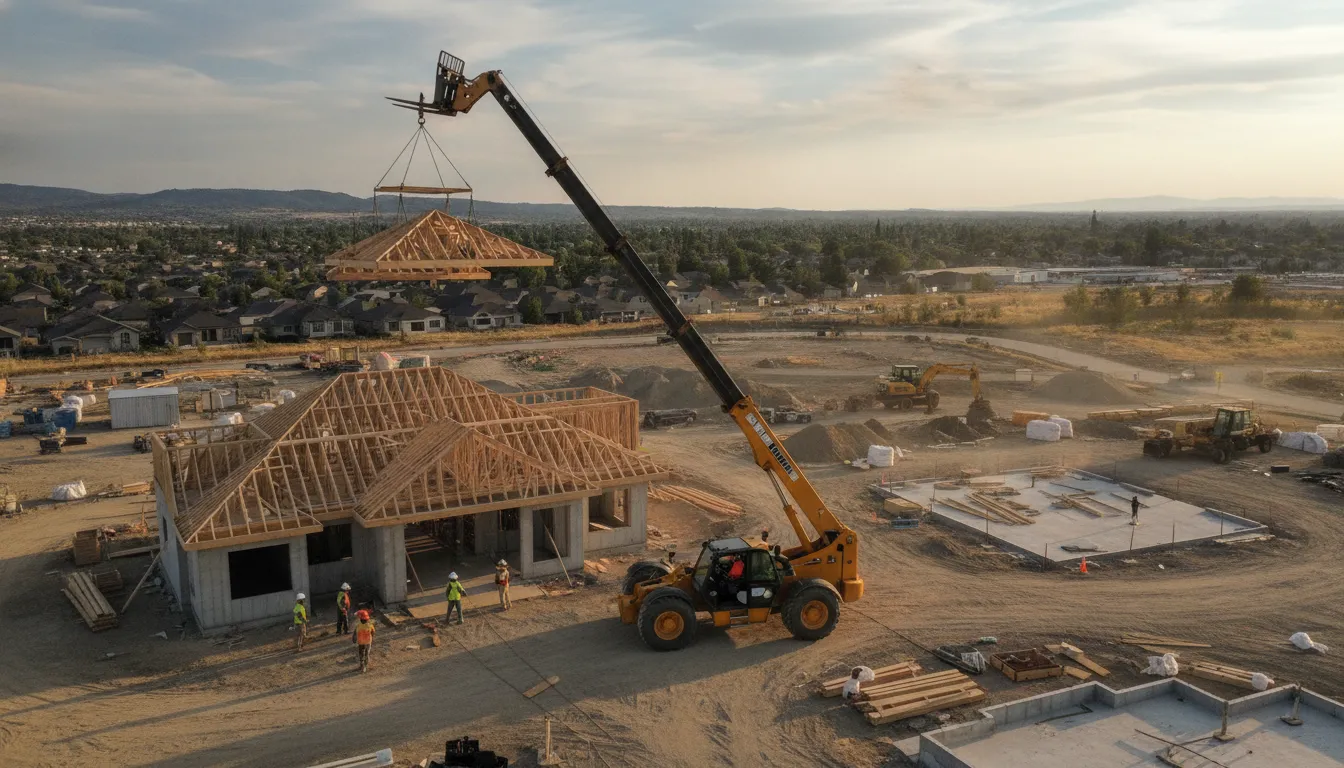
A telehandler truss jib is a specialized boom tool that turns a standard telehandler into a small mobile crane for lifting and placing heavy long items like roof trusses and steel beams. It extends the machine's reach while keeping loads secure below the tines.
A telehandler truss jib is a specialized boom tool built to lift and move long or heavy items. These tools turn a standard telehandler into a small mobile crane. They are common on job sites for tasks like setting roof trusses or placing steel beams. By adding length to the arm, these jibs help you reach over walls. They also lift parts to high spots that a standard fork set cannot reach safely.
How Truss Jibs Differ from Standard Booms
A standard jib boom is often a single straight arm, but a truss jib uses a frame for extra strength. Most models have a fixed length or use a sliding inner beam to change your reach. Unlike simple crane jibs, telehandler attachments like the truss jib are built to handle the high stress of lifting loads. They often use a hook or a pintle hitch to keep the load steady during the lift.
Primary Uses on the Job Site
The main job of this tool is to place building parts in hard-to-reach areas. This includes moving wood trusses into place on a new roof or lifting HVAC units. These tools lift from a point below the arm. This style gives you more control for hanging loads than forks can give. Per safety rules from Stanford University, any lift done below the level of the tines needs a clear plan to keep the load steady.
Selection and Capacity Basics
Choosing the right jib depends on the lift capacity of your machine and the reach you need. You must also make sure the unit uses a mount that fits your machine. Some models slide onto your forks, while others use a direct plate. Top units like the Haugen fork-slotted booms are certified for a 2,000-pound lift limit. They come in 12-foot or 15-foot lengths to match different job needs.
How to Select the Right Telehandler Truss Jib
Choosing the right telehandler truss jib comes down to three factors. Your machine's mount type, the weight of your heaviest load, and the reach distance needed on your job site. Matching all three ensures safe and efficient lifting.
Choosing the best tool for your job site helps you work fast and stay safe. To pick the right telehandler truss jibs, you must check three main things. You need to know your machine's mount type, how much weight you will lift, and how far you need to reach.
Check your machine mount
You must first find out how the jib connects to your machine. Some jibs use standard fork slots that measure 3.5 inches by 7.5 inches. These models slide onto your existing forks and use pins or chains to stay in place. Other telehandler attachments connect to the quick-attach plate on your boom. These must match the exact quick-attach system of your telehandler to work well. This match ensures the tool locks tight before you start any lift.
Match capacity to your load
Each jib has a set weight limit that you must follow. For example, some fork-slot booms can lift up to 2,000 lbs. You should pick a jib that can lift your heaviest truss or beam with ease. Always check the load chart on your machine before you buy a new tool. This chart tells you how much weight you can lift at different heights and angles. Using a jib that fits your machine's rating is a key step to keep your crew safe on the job.
Balance length and reach
The length of the jib affects how much you can lift and how far you can reach. Jibs often come in lengths from 2 feet up to 15 feet. A short jib is great for heavy lifting in tight spots. A long jib helps you reach across a roof or over a wall. Keep in mind that longer reach often means a lower weight limit. For more details on safe lifting, you can read the safety rules from OSHA about boom use. Pick the length that fits the most common tasks at your work site.
How Does Extension Impact Lift Capacity?
Every telehandler has a rated lift capacity, but adding a truss jib changes the math. As the jib extends further from the machine, the leverage on the boom increases, lowering the weight the machine can safely hold. Operators must check the specific load chart before any lift.
Every telehandler has a rated lift capacity, but adding a truss jib changes the math. As the jib extends further from the machine, the leverage on the boom increases. This extra leverage lowers the weight the machine can safely hold. Operators must check the specific load chart for their unit before any lift to ensure they stay within safe limits.
How Extension Impacts Capacity
The length of your telehandler attachments plays a big role in safety. A short two foot jib can often hold much more weight than a long fifteen foot boom. For example, some units lose more than half their rated capacity when fully extended. This happens because the center of gravity shifts further out. To stay safe, always follow the load chart ratings found on your specific machine.
Choosing the Right Model
Matching the tool to the task is key. Haugen MTJ models offer seven distinct lengths to fit varied site needs. If you need to move very heavy loads in tight spots, a low profile Star Industries QT boom might be the best pick. These heavy duty tools can handle up to 22,000 pounds when retracted. Always verify that your chosen jib fits your quick attach system to prevent shifts during a lift.
| Model Brand | Length Options | Rated Capacity | Key Features |
|---|---|---|---|
| Haugen MTJ | 2 to 15 ft | 1,000 - 2,000 lbs | Direct quick attach with varied end fittings. |
| Star Industries QT (Low Profile) | Short reach | Up to 22,000 lbs | Best for heavy loads at close range. |
| Star Industries QT (Long Reach) | 10 to 15 ft | 2,000 lbs | Designed for maximum reach on high sites. |
| Haugen MFTJ | 12 to 15 ft | 2,000 lbs | Fork slot mount fits standard 3.5 x 7.5 inch forks. |
Load Chart Verification
Never guess when it comes to lift safety. The OSHA rules require a qualified person to oversee the lift. This person must check that the rigging and the jib both meet the needs of the load. They also ensure the machine stays stable on the ground. Using a tag line can help keep the load steady as it moves through the air.
What Mounting Styles Are Available for Truss Jibs?
Telehandler truss jibs connect using two main mounting styles. Direct quick-attach plates replace your forks with a custom fitted mount, and universal fork slot mounting slides onto your existing forks using standard 3.5 x 7.5 inch pockets.
The way your boom connects to your machine is a vital part of the setup. You can choose from two main mounting styles for telehandler truss jibs. Each method has its own pros based on how often you swap tools and how your machine is built. You must always ensure the pins and safety chains are set up right before you start any lift.
Direct quick attach plates
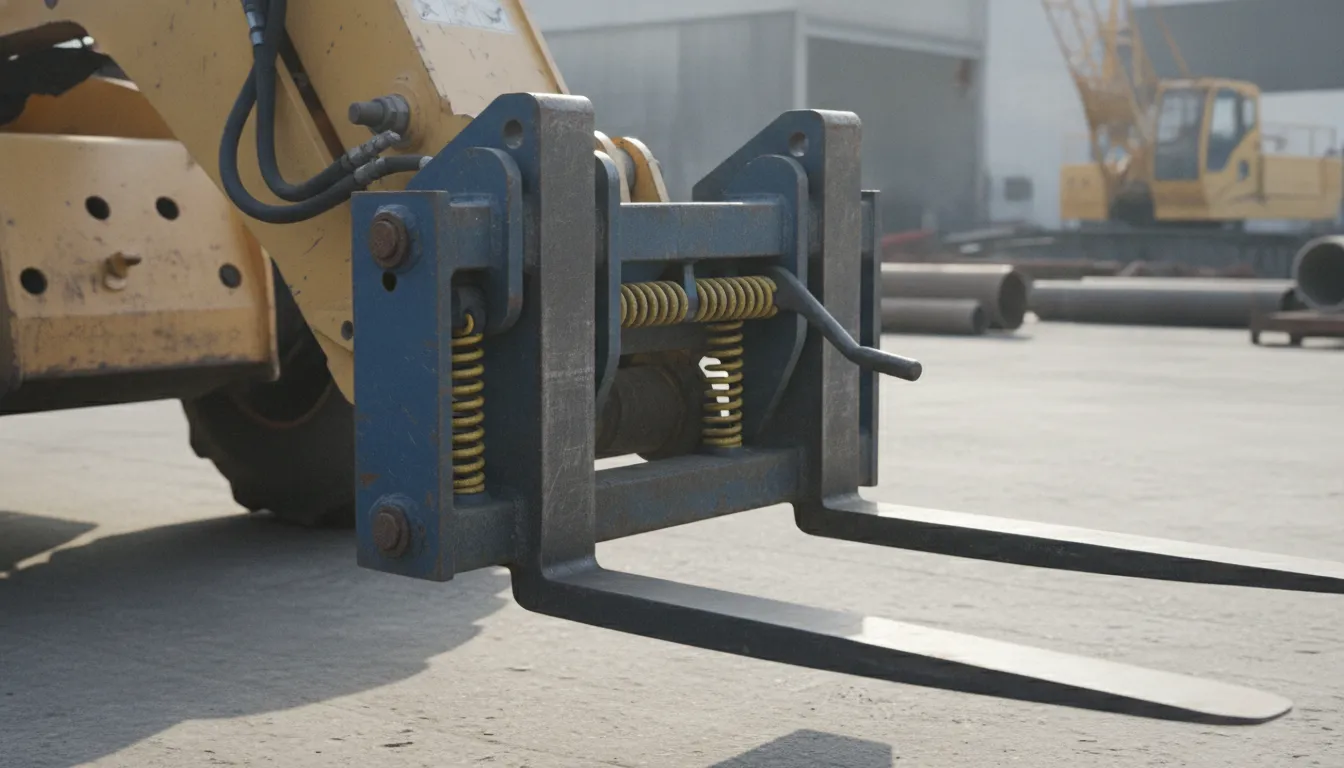
Direct mount jibs connect to your machine in place of your forks. This system uses a plate that matches the coupler on your telehandler. Models like the Haugen MTJ or the Star Industries Quick-Tach work this way. Because they do not need forks, they are lighter and often let you reach further. They offer a secure fit because they match your brand of machine. These units are often CNC machined to provide a custom fit that prevents extra movement during a lift.
Universal fork slot mounting
Fork-slot jibs are a common choice because they work with most machines that have forks. You simply slide your fork tines into the pockets on the jib. Most of these tools use standard fork slots that measure 3.5 inches by 7.5 inches. You then secure the boom with pins or chains behind the fork frame. This Haugen fork-slot truss jib is a top pick for crews who need to switch from moving pallets to lifting trusses in just a few minutes.
Check for machine fit
Not every jib fits every telehandler. You must make sure the tool matches the quick-attach system on your exact unit. Some brands use a unique hook and pin setup, while others use a standard style. Always look at your machine's manual to find the right coupler type. Using the wrong plate can lead to a loose fit or even a dropped load. If you are not sure which mount you need, check the specs on your machine before you buy.
Haugen and Star Industries Truss Jib Solutions at eSkidSteer
eSkidSteer carries professional truss jibs from Haugen Attachments and Star Industries. Haugen offers the MTJ direct-mount series (2 to 15 ft, 1,000-2,000 lbs) and MFTJ fork-slot series. Star Industries offers Quick-Tach booms including low-profile models rated up to 22,000 lbs for heavy loads.
Finding the right telehandler truss jibs for your job site means choosing tools that match your machine and your load. At eSkidSteer, we offer professional gear from two top brands, Haugen Attachments and Star Industries. These brands build jibs for many tasks like building and farming. Each brand has models that help you reach far and lift safely.
Haugen MTJ and MFTJ Series
Haugen Attachments makes the MTJ series for machines with a quick-attach mount. These units use a custom mount to fit your specific telehandler. They come in seven lengths from 2 feet up to 15 feet. These jibs do not use hydraulics, so they are easy to keep up. They meet OSHA standards and are made in the USA (F009). Most models can lift 1,000 to 2,000 pounds and have a 1-year warranty.
If you want to use your current forks, the Haugen MFTJ series is a smart pick. This Haugen fork-slot truss jib slides right onto your forks. These models come in 12-foot and 15-foot lengths. They have a certified lift limit of 2,000 pounds. These jibs include a pintle hitch and weigh about 525 to 575 pounds.
Star Industries Quick-Tach Booms
Star Industries provides the Quick-Tach line for heavy work. Their low-profile models can handle big loads up to 22,000 pounds. For jobs that need more reach, their fixed models come in lengths of 10 to 15 feet. These long booms can lift 2,000 pounds and give up to 15 feet of vertical reach. You can find these in our Star Industries Quick-Tach truss boom list.
When you use these jibs, safety comes first. Expert rules from OSHA say a skilled person must lead the setup. Always check the load chart for your machine before you start. This shows if your telehandler can handle the weight at that reach. Using a good jib from Haugen or Star Industries helps you finish the job while you keep your crew safe.
Critical Safety Protocols for Truss Jib Operations
Operating a telehandler with a truss jib requires strict safety rules. Check the load chart before every lift, create a lift plan for below-the-tines operations, do a dry run, lock all pins and chains, keep loads low during travel, and use tag lines to control swinging.
Operating a telehandler with a hanging load brings risks that standard fork work does not. To keep your site safe, every operator must follow strict rules when using telehandler attachments like truss jibs. These rules help the machine stay stable and keep the load secure during the lift.
Pre-lift checks and plans
Safety starts before you start the engine. Every operator must check the load chart and manual for the exact machine they use. This is a key step because lift limits change when you add a jib. Since truss jibs create a below-the-tines lift, you also need a set lift plan. This plan lists the weight, the reach, and any site risks.
Before moving a hanging load, do a dry run of the path. This check helps you find soft dirt, tight turns, or wires that could cause a crash. Check that all pins, chains, and locks are in place. Never start a lift if the tool is not locked to the machine as the maker says.
Safe travel and load control
Moving with a truss jib takes extra care to stop the load from swinging. Keep the load as close to the ground as you can while the machine moves. Only drive on flat ground or slopes of less than 4% to keep the weight low. If the machine does not need to move during the lift, put the outriggers down for a wide, firm base.
Ground control is as vital as the work in the cab. Use tag lines to stop the load from spinning or swaying during the lift. Keep clear talk with the ground crew at all times with hand signs or radios. This work helps the operator know where the load is and keeps people out of the fall zone.
OSHA rules for setup
The OSHA 1926.1404 standard says a skilled person must lead the setup of any jib. This person must know the steps and watch each part to stop mistakes. One big rule is that no one should ever be under the boom while pins are being pulled out or put in.
- Check the load chart: Look at the manual and chart before every lift to see how the jib changes the reach and weight.
- Make a lift plan: Draft a plan for all below-the-tines lifts to meet site safety rules.
- Do a dry run: Walk or drive the path without a load to find bumps or soft spots before you lift.
- Check locking pins: Make sure all pins and chains are locked in place as the maker specs.
- Keep the load low: Hold hanging loads near the ground while you move to stay stable.
- Use tag lines: Tie lines to the load so the ground crew can stop it from swinging.
- Follow OSHA rules: Make sure a skilled person leads all setup work as per OSHA 1926.1404 and 1926.1405 codes.
Frequently Asked Questions
Can you set trusses with a telehandler?
Yes, you can set trusses with a telehandler by using a truss jib tool. This tool helps reach over walls or other items on the job site. Since this is a below-the-tines lift, you must have an approved lift plan before you start the work. Users must also review the load chart for the specific machine and tool being used.
What is the difference between a truss jib and a crane jib?
A telehandler truss jib is a light tool built to lift and place roof trusses or other long items. It is not the same as a crane jib, which is made for much heavier lifting tasks. You should choose a truss jib based on the lift limit and reach needs of your machine. Common models can handle up to 2,000 pounds and come in lengths of 12 or 15 feet.
Are telehandler truss jibs universal?
No, truss jibs are not universal. Each tool must match the specific quick-attach system of the machine you use. Some jibs mount directly to the boom, while others slide onto the forks. If you use a fork-slotted jib, you must ensure the fork slots match your forks. Most standard fork slots measure about 3.5 inches by 7.5 inches. Always check that the OSHA safety pins and chains are properly installed.
Can a truss jib be used on standard forklift forks?
Yes, many truss jibs are made to slide directly onto standard forklift forks. These are called fork-slotted truss booms. They use pins and safety chains to stay in place during a lift. You must make sure your forks fit the slots, which are often 3.5 inches high and 7.5 inches wide. The right tool helps users move heavy farm or building items with more safety and control.
Ready to shop truss jibs and boom attachments?
Find the right telehandler truss jib for your job site at eSkidSteer. We carry Haugen MTJ and MFTJ series jibs in lengths from 2 to 15 feet and Star Industries Quick-Tach booms for heavy loads. Every tool we stock meets industry safety standards.
Browse our truss jib collection today , get the right attachment for your telehandler and keep your crew safe on every lift.