

Skid Steer Feed Pusher Attachment: 2026 Buyer's Guide
Get the Attachment Your Project Needs
Shop proven, work-ready attachments that help you tackle any task with confidence.
LEARN MOREDairy farms lose significant revenue when livestock cannot reach their rations. Using a skid steer feed pusher attachment solves this by gathering scattered feed back into the bunk with speed and precision. This simple change improves cow health and reduces the time spent on manual chores.
Need a heavy-duty feed pusher today? Shop our Skid Steer Feed Pusher collection or call our team at (972) 839-1703 for expert help choosing the right model for your livestock operations.
A skid steer feed pusher attachment is a specialized tool designed to gather scattered rations and move them back within reach of livestock at the feed bunk. This attachment uses a durable rubber edge to clean uneven barn floors without damaging concrete, which increases nutrient intake and reduces waste. According to Penn State Extension, giving prepared rations in a timely way is vital for a healthy dairy farm. Most models use a mechanical design that requires no hydraulics, making them a simple and low-maintenance solution for improving daily output and animal health across the farm.
Choosing the right model for your barn involves looking at blade width, angle settings, and how it fits your machine. Understanding how these tools improve your daily workflow is the next step. Learn more about selecting the best skid steer attachments for agricultural operations. Here is how.
Why Do Dairy and Livestock Farms Need a Skid Steer Feed Pusher Attachment?
Why do dairy farms need a feed pusher? Dairy and livestock farms use a skid steer feed pusher attachment to continuously sweep scattered rations back to the feed bunk. This keeps fresh feed within easy reach of cattle, maximizing nutrient intake and milk yield, while reducing waste and saving hours of manual labor every day.
Feeding cows in a timely way is one of the most vital jobs on a dairy farm. A skid steer feed pusher attachment helps manage this task by keeping feed within reach of the animals. Constant access to feed is key because it helps cows eat more nutrients throughout the day. When cows can reach their food easily, they stay healthy and produce more milk. To understand the broader context of machinery on dairy operations, you can read our Ultimate Guide to Skid Steer Loaders.
Maximize nutrient intake and milk yield
A skid steer feed pusher attachment helps dairy cows reach their food at all times. This constant access is vital for increasing nutrient intake in your herd. If feed stays out of reach, cows eat less, which can hurt their health and milk yield. Keeping feed pushed up ensures every cow has the fuel it needs to perform well.
Using this tool is part of a smart feeding management program. Proper nutrition leads to high-performing livestock and better farm results. By moving feed back to the bunk, you make sure no food goes to waste just because a cow could not reach it.
Reduce feed waste and save money
Feed is a big cost for any farm, so saving every bit matters. A skid steer feed pusher attachment uses a rubber edge to scrape clean paths on the floor. This stops the skid steer from driving over feed and wasting it. Many models also have extensions that push the feed past the tires of your machine.
Standard buckets often leave feed behind or mash it into the ground. A specialized pusher avoids these issues and keeps the bunk area tidy. Over time, the money you save by reducing waste can help pay for the attachment itself. Using livestock feed management equipment makes your daily chores much more cost-effective.
Save labor and time on daily chores
Pushing feed by hand is slow and hard work for any farm hand. A skid steer feed pusher attachment lets you finish the job in a fraction of the time. It is much faster and more efficient than using a standard bucket or a shovel. This time savings allows you to focus on other vital tasks like skid steer bale handling tools or maintenance.
Most of these tools are mechanical and do not need hydraulic hoses to work. This makes them easy to hook up and use with your existing equipment. Because they are simple to operate, you can train workers quickly to keep the farm running smoothly. These farm-grade skid steer attachments turn a long chore into a quick trip through the barn.
Comparing Feed Pusher Styles: Blade vs. Drum Designs , Which Is Better?
Blade vs. drum pushers: Blade-style pushers use thick steel or rubber scraper edges to push silage, which is highly effective for cleaning uneven floors. Drum or roller design pushers roll against the feed pile to gently nudge it without scraping. Making them quieter and softer on concrete floors but less effective at a deep scrape.
Choosing the right skid steer feed pusher attachment is key for any dairy farm. The goal is to keep fresh food in reach of your cows all day long. Getting feed all the time is key. It helps your cows eat more and make more milk. There are two main looks for these tools: the blade style and the drum or roller style. Each has its own perks for your farm and feed type.
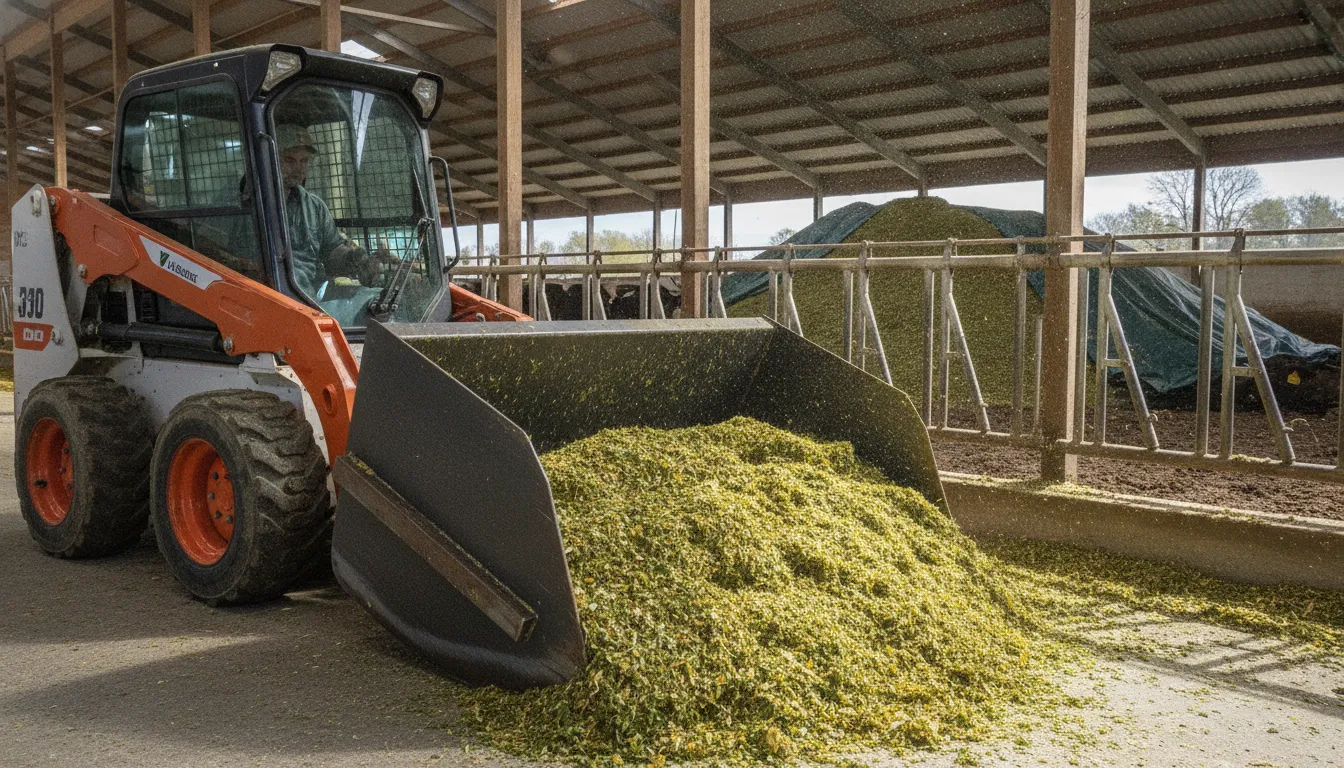
Blade style pushers
The blade style is the most common look on dairy farms now. These tools use a tough metal or rubber edge to move feed near the bunk. Many owners like blades because they are simple and strong. A good feeding management program uses tools that can do hard work every day. You can find models with 5/16-inch steel blades that push the heaviest feed with ease. These units often use a simple design. You do not need to hook up any hoses to your loader to make them work.
One of the best parts of a blade pusher is the rubber edge. Best rubber edges are great at cleaning paths on rough ground. This stops feed from getting run over by your tires. This cuts down on waste. Many models have a 1.5-inch thick rubber edge that you can flip over. This lets you use the part longer before you need a new one. These blades are also soft on your concrete floors and will not rust. For more help with your farm, check out our livestock feed management equipment to find the best tools for your needs.
Drum and roller designs
Drum or roller pushers take a new way to move feed. Instead of a flat blade, these tools use a large, rolling tube. As the skid steer moves, the drum rolls against the feed pile to nudge it toward the cows. This rolling can be softer on the feed than a scraping blade. Because the drum rolls, it may also rub the barn floors less. Some drum styles use power to spin. Others just roll as they touch the ground.
These tools work well in barns with flat floors. They are often built to be heavy so they can move big piles. But they may not scrape the floor as clean as a rubber edge. If your barn floor is not flat, a drum might miss some small bits of feed. Owners who want a simple tool often stick with blades. Those who want to save their floors may like a drum for their site. To manage other feeding chores like livestock bedding, you may also find our Manure Fork Attachment Guide highly useful.
Choosing the right style
When you pick a style, think about your daily work and your skid steer's power. You should always match your tool to the loader's rated load size to keep your gear safe. Safety is a big deal in farm work. You must also train your team on how to use new tools. Pushing up feed is one of the most important jobs on a dairy farm. It keeps your cows healthy and strong by giving them the nutrients they need all day long.
Think about the width of the tool too. Many pushers have a width of 96 inches. Some models even let you change the angle from 18 to 97 degrees to fit your bunk. Whether you choose a blade or a drum, the goal is the same. It makes feed work faster and better than using a standard bucket. Using the right tool saves time and helps your farm run at its best.
Blade and Plow Options: Single-Blade, V-Plow, and Angle Adjustments
Picking the right blade shape is the first step in setting up your skid steer feed pusher tool. Most farm owners use a single-blade design for their daily work. This flat blade is great for side-pushing feed into a neat pile along a bunk. It is a simple tool that works well on most farms. But some large dairy farms prefer a V-plow design. A V-plow has two blades that meet at a point in the center. This shape pushes feed to both sides of the machine at once. It is a good choice for wide feed alleys where you need to clear a large space in one pass. Using the right blade shape helps you keep feed fresh and easy to reach for your herd.
Single-Blade and V-Plow Designs
The single-blade pusher is a tough and simple tool. It often uses a steel blade that is 5/16-inch thick to handle heavy loads of silage. This design is best when you want to move all the feed to one side of the alley. The V-plow is built to split the pile. This is helpful if you have stalls on both sides of a narrow path. The V-shape also helps the machine stay centered in the feed pile. Using these tools offers some key benefits.
- Time efficiency: Saves hours of labor compared to pushing feed by hand.
- Improved cleanliness: Keeps feed clean, fresh, and free of dirt off the barn floor.
- Tire protection: Reduces tire wear by keeping silage away from skid steer tires.
- Herd health: Promotes consistent nutrient intake by keeping food accessible 24/7.
- Waste reduction: Lowers feed costs by preventing feed from being run over or packed down.
- Easy operation: Operates mechanically without complex hydraulic systems or hoses.
- Concrete preservation: Uses a soft rubber scraper edge that will not scratch or chip floors.
Both designs help you save time and cut the need for hand work in the barn. This makes it easier to care for a large herd without needing more staff.
Manual Angle Adjustments
To get the best results, you must set the right angle on your blade. Many models use a hitch pin and sliding shaft system to change the angle. You can often choose from a few fixed points. These points range from about 5 to 18 degrees. These changes let you control how far the feed moves as you drive. Proper feed care is a vital part of a healthy dairy farm. A steep angle works well for heavy or wet feed that is hard to move. A shallow angle is better for light, dry hay. These simple changes make the work much faster and help you save on fuel costs. For other heavy-lifting tasks, you might also compare this tool with our Compact Utility Grapple Guide.
Adjusting Push Width
Push width is one more thing to think about when you buy a pusher. Some tools let you change how wide the blade sits. This is often done with a simple two-bolt system on the frame. Changing the width helps you clear a path that is wider than your skid steer tires. This keeps your tires from driving over the feed you just pushed. Keeping feed clean and off the ground is vital for cow health. You can pair these tools with other skid steer bale handling tools to make your farm work better. Finding the right width also makes it simple to work in tight spots or narrow barns where space is tight.
What Are the Best Working Widths and Loader Sizing Choices?
Picking the best skid steer feed pusher attachment starts with a look at your loader. You need a tool that fits your machine and covers your tracks. If the tool is too small, your tires will crush the feed before the cows can eat it. A good fit keeps the ration clean and easy for your cows to reach.
Width for tire track clearance
Most feed pushers come in widths from 80 to 96 inches. The goal is to have the blade extend well past your tires. A wide mold board ensures you do not drive over the feed as you work. It keeps the path clean on bumpy ground. You want the feed pushed far enough to the side so your machine stays on clean concrete. Keeping feed away from your machine is vital for a dairy farm. When tires roll over the ration, they pack it down. This makes the feed hard for cows to eat and creates a big mess. A tool with the right width keeps your feed fresh. You can find models with many width settings. These help you get the best tire clearance for your exact skid steer. They save time and reduce waste.
Loader size and tool weight
You must match your new tool to the work size of your loader. These tools can weigh between 500 and 700 pounds. If the pusher is too heavy, it can shift the center of weight and cause the machine to tip. Proper sizing is a key part of skid steer safety on the farm. A loader that is too small will struggle to lift and push a large blade. Using a tool that fits your loader helps you work better. It protects tools from damage and keeps the job moving fast. A well-matched unit will handle heavy feed with ease. This is true whether you use a full skid steer or other livestock feed management equipment in your daily job. Always check your loader book to find the max lift weight before you buy. To learn how to select proper lifting capacity for other front-end tasks, see our guide on How to Choose Heavy Duty Pallet Forks.
Compact tractor and quick-tach fit
Many feed pushers work well with compact tractors too. You just need to ensure your tractor has a quick-tach system. Most designs are simple, so they do not need hydraulic hoses to work. This makes them easy to use. Simple tools last for many years. Check the lift limits of your tractor before you buy. Even a simple tool adds weight to the front of your loader. Ensuring a proper fit will help you keep your concrete floors in good shape. A handy tool saves time and money for any farm owner. It lets you move feed and keep your cows healthy without a large tractor.
Rubber Edges vs. Steel: Which is Best for Your Concrete Feed Bunk?
Rubber vs. steel edges: Reversible rubber scraper edges are optimal for concrete feed bunks because they clean uneven surfaces thoroughly without scratching, chipping, or rusting. Steel edges are highly durable and best for packed silage, but carry a high risk of concrete wear and structural bunk damage over time.
Choosing the right edge for your skid steer feed pusher attachment is a key step for your farm. The edge touches your concrete bunk every day. Most farmers pick between rubber and steel. Each type has its own pros and cons.
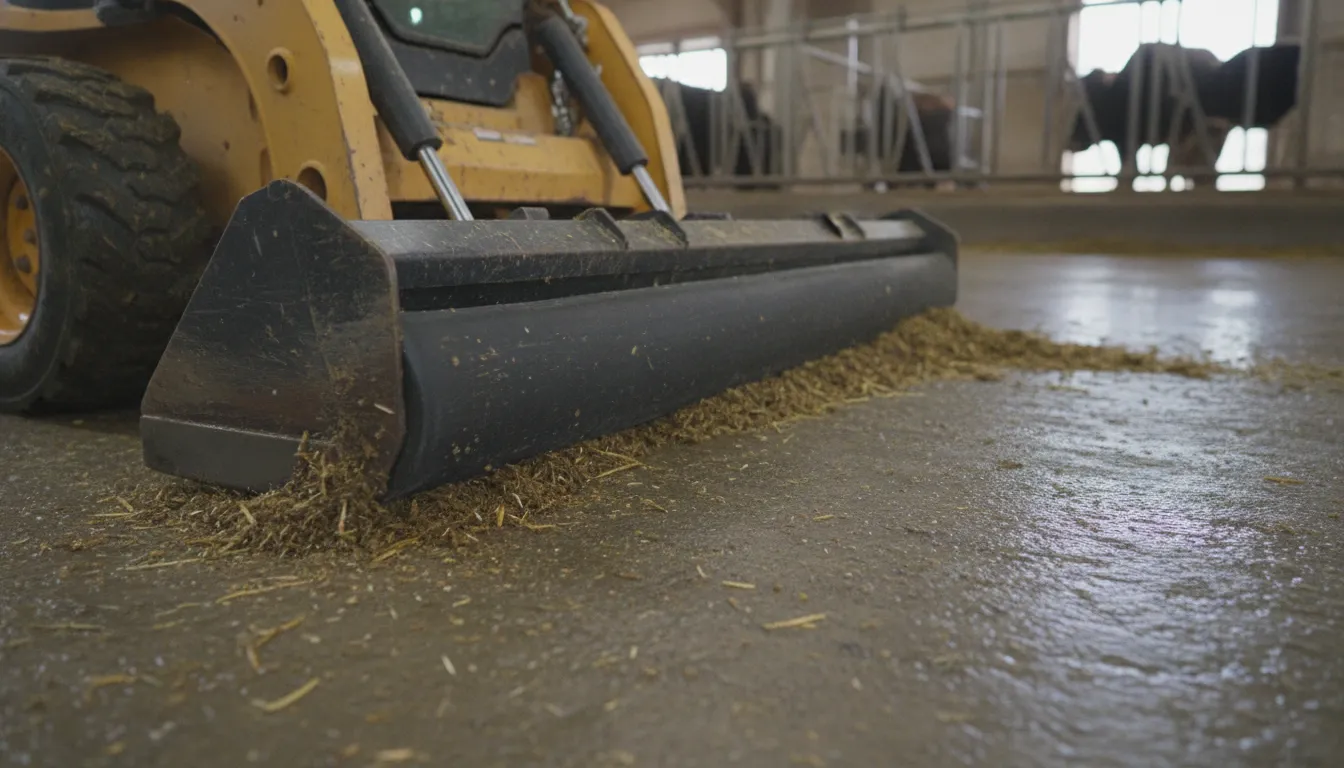
Rubber is often the top choice for concrete bunks because it is soft. Steel is strong but can be harsh on your floors. Picking the right one helps your bunks last for many years.
Farmers often find that rubber edges save them money on bunk repairs. Over a few years, steel edges can wear down the top layer of concrete. This creates rough spots where feed can get stuck and rot. Switching to a soft edge stops this wear and keeps your bunks smooth.
Benefits of rubber edges
Rubber edges are a great fit for dairy farms. They are gentle on concrete floors and do not cause chips or cracks. Rubber also cleans uneven paths well. It can scrape up feed without missing spots.
This keeps your bunk clean and cuts down on waste. Another big plus is that rubber does not rust. It also helps to stop noise and shaking. This makes the work much better for the person driving the loader.
Some designs use a swinging plate to shield the rubber. This lets the edge wear down up to 6 inches before you need a new one. Many rubber edges can also flip. You can turn them over when one side wears down to get more use from one part.
Performance in cold weather
Freezing weather can make some parts weak. But high-grade rubber stays soft in the cold. Some edges can handle cold down to -30 degrees Fahrenheit. This is vital for farms in cold areas.
A soft edge will not crack when it hits a hard spot in the ice. It keeps working well even in the middle of a hard winter. Winter tasks can be hard on gear. Moving feed in the snow requires a tool that can take the hit.
Rubber edges stay soft and soak up the shock of hitting ice. This protects both the attachment and your skid steer. Using the right livestock feed management equipment helps keep your farm moving all year long.
When to use steel edges
Steel edges are very tough. They work well if you have to move very heavy or packed feed. Some blades use thick steel to handle big loads with ease.
But steel can scrape and hurt concrete over time. It can also rust if you do not care for it. For most concrete bunks, rubber is the safer bet. It keeps the feed moving without hurting the bunk.
Good feeding management is key to a healthy herd. Keeping feed within reach is a big part of that goal. Proper care of your skid steer feed pusher attachment ensures it stays in good shape for a long time. Simple checks on the edge and pivot points will keep it ready for work.
| Criteria. | Rubber Edge. | Steel Edge. |
|---|---|---|
| Concrete Wear. | Very Low and Gentle. | High Risk of Scrapes. |
| Rust Risk. | None. | High. |
| Noise Level. | Quiet. | Loud. |
| Cold Use (-30 F). | Stays Flexible. | Stays Rigid. |
| Life Span. | High (Reversible). | High. |
Is Your Feed Pusher Safe? Best Practices for Maintenance and Operator Safety
Keeping your gear in top shape helps you work fast and stay safe. A skid steer feed pusher attachment is a simple tool, but it needs care to last. Regular checks stop small issues from turning into big repairs. Following a set plan for care and safe use will help your farm run well.
Maximize Your Feed Bunk Efficiency Today
Don't let wasted silage and hours of manual labor cut into your dairy profits. Learn how the right attachment can transform your daily agricultural chores.
Browse Skid Steer Feed Pushers or Call (972) 839-1703 to speak with our attachments specialist.
Routine maintenance tasks
Most feed pushers use a mechanical design that does not need hydraulic hoses. This makes daily care quick and easy. You should check the tool before and after each use to find loose bolts or bent parts. Clean off any old feed or dirt that gets stuck to the frame. This keeps the unit light and easy to move.
- Inspect scraper edge: Check the rubber edge for signs of wear, tears, or cracking. Many models use a reversible rubber edge that you can flip to get more life out of the part.
- Grease pivot points: Grease all pivot points and hinge pins using the grease zerks once a week. Regular grease keeps parts moving smooth and stops rust from forming in wet barn settings.
- Examine weld joints: Look for cracks or stress in the weld points and the mounting plate. Heavy use on concrete can stress the steel over time, so early fixes are key to safety.
- Adjust blade angle: Set the right angle of the blade (such as 18 degrees) if your model allows adjustments, helping move feed with less effort from your machine.
- Replace worn edges: Replace the edge when it gets too thin to clean the floor. A good edge helps with livestock feed management equipment by keeping the bunk area tidy.
Safe operation on the farm
Operating a skid steer in tight barn spaces needs your full focus. These machines can be dangerous due to their short wheelbase and quick turns. A sudden turn can shift the center of gravity and cause the loader to tip over. This is a big risk when you carry a heavy load or work on uneven dirt floors.
Always keep the attachment low to the ground while you move. This keeps the machine stable and gives you a clear view of what is ahead. Avoid sharp turns at high speeds, as this is the most common way to tip a skid steer. Make sure you match your attachment to the loader's rated capacity to avoid damage and stay safe while you work.
Cleaning and storage tips
Clean your tool often to stop acids in the feed from eating the steel. This is vital for dairy farms where wet feed is common. After you finish for the day, park the loader on a flat spot. Lower the attachment all the way to the floor before you get out of the cab. This takes the pressure off the pins and keeps the machine from moving on its own.
Frequently Asked Questions
How does the weight of a feed pusher affect skid steer safety?
Adding a heavy tool like a feed pusher can shift the center of weight on your loader. According to experts at South Dakota State University, these machines have a short wheelbase and can tip if the load is off balance. You must ensure the pusher weight stays within the safe lift limits of your loader. Always check the rated limits of your machine to keep your workers safe while moving feed.
How do I maintain a skid steer feed pusher attachment?
Care for a feed pusher is simple because it has few moving parts. You should check the rubber or steel edge once a week to see if it shows signs of heavy wear. If your pusher has a rubber edge, you can often flip it over to get more use before you need a new part. If your tool has hinge points or a pivot plate, use grease on the grease zerks. This keeps the tool moving well and stops rust.
What should I do if my feed pusher is leaving feed behind?
If your tool leaves feed on the floor, you may need to change the push angle or the width. Most blades use a hitch pin and sliding shaft system to change the angle from 5 to 18 degrees. A steeper angle works best for heavy or wet feed that is hard to move. You should also check the rubber edge to ensure it is not worn down too far. Replacing a worn edge will help the tool scrape the floor clean again.
Can I use a skid steer feed pusher on a compact tractor?
Yes, many feed pushers work well with compact tractors if they have the right quick-tach system. These simple tools are great for smaller farms because they do not need hydraulic power to work. However, you must still check the lift limits of your tractor to ensure it can handle the weight of the blade. Using a well-fit tool helps you keep your barn clean and your cows healthy without needing a large, high cost loader.
Ready to find the best skid steer feed pusher for your farm?
Wasted feed and slow chores eat into your daily profits. This stops your farm from growing as fast as it should. If you wait to upgrade your gear, you will lose more time and money on manual work every week. Starting now with the right tool helps you save on costs. It keeps your livestock well-fed without the extra stress. You can stop spending hours pushing feed by hand. Get back to the work that matters most for your ranch today. Every day without a strong pusher is a day you spend more on labor. You also lose feed to rot and waste. Buying a good tool now means you can fix your workflow fast. See the gains in your bank account before the next season starts.
Ready to explore our durable skid steer feed pusher collection? Call (972) 839-1703 to talk to a livestock equipment expert.