


Manure Fork Attachment Guide for Farm Buyers
Get the Attachment Your Project Needs
Shop proven, work-ready attachments that help you tackle any task with confidence.
LEARN MORECleaning packed bedding and manure with the wrong attachment usually means extra passes, spilled loads, and unnecessary soil loss. A manure fork attachment uses open, closely spaced tines to enter fibrous material, retain the load, and let loose fines fall through. The right purchase is not automatically the widest fork; it is the model whose mount, weight, tine arrangement, and optional grapple suit the carrier and the material handled most often.
Compare manure fork attachments available from eSkidSteer before your next barn-cleaning or acreage-maintenance job.
Key takeaway: choose a manure fork by starting with the carrier, then the load. Confirm the mounting interface, attachment weight, carrier capacity, working width, tine spacing, and auxiliary hydraulic requirements before comparing convenience features. That sequence prevents an appealing fork from becoming an awkward or unusable match.
What a manure fork attachment does
A manure fork attachment separates and moves fibrous farm material with less soil or liquid than a solid bucket may collect. Its open tines are intended for loads such as manure mixed with bedding, loose straw, compost, and light brush, not for prying rock or digging hard ground.
The working edge enters the pile while the tine spacing determines what stays on the fork and what falls through. That distinction matters on dirt-floor pens, where an operator may want to lift bedding and manure without repeatedly removing the base material. The same open design also helps when turning compost or gathering loose vegetation.
How tine spacing changes the result
Closer tine spacing retains smaller pieces and wetter bedding, while wider spacing sheds more fines and can work well with bulky straw or brush. There is no universally correct gap. Bring the dealer a clear description of the material, including whether it is long and fibrous, finely broken, wet, or packed, and ask how the candidate fork handles that load.
Replaceable or adjustable tine designs may be useful when workloads vary. For example, adjustable tine grapple forks let a buyer evaluate a configurable layout plus load retention. Confirm the approved adjustment positions and intended materials with the product documentation before use.
Why load retention matters
A standard open fork relies on tine angle and careful travel to retain material. A grapple adds an upper clamp that can control springy bedding, brush, or uneven piles. The clamp can reduce dropped material, but it also adds weight and requires compatible auxiliary hydraulics. Buyers should treat it as a workload decision, not an automatic upgrade.
Good attachment selection supports an overall waste-handling plan. The University of Georgia guide to proper manure management provides useful context for storage, nutrient use, and protecting water resources.
Manure forks vs pallet forks, hay spears, and grapples
A manure fork is the practical choice when loose or fibrous material must be scooped and separated from fines. Pallet forks support unitized loads, hay spears penetrate bales, and a grapple retains irregular material. Select the tool around the load rather than its visual similarity to another attachment.
| Tool | Best Use | Limitation |
|---|---|---|
| Manure Fork | Lifting loose waste and bedding | Loads can spill if not clamped |
| Pallet Fork | Moving flat loads and crates | Fails at holding loose debris |
| Hay Spear | Moving large round or square bales | Not made for scooping loose material |
| Grapple | Holding loads tight over rough ground | Adds weight and requires hydraulics |
When a manure bucket makes more sense
A solid-sided bucket may retain slurry or very fine material that passes through fork tines. A manure bucket for skid steers is worth comparing when containment matters more than separating the load from soil or liquid. Consider where the material begins, how far it travels, and where it will be discharged.
When to choose a grapple
Choose a grapple when the normal route is rough, the pile is uneven, or loose material tends to roll off the tines. A clamp is particularly useful for bulky bedding and brush. It does not change the carrier's limits, so include the grapple's attachment weight when checking allowable load and stability.
Where manure forks earn their keep
A manure fork earns its keep when it consistently removes the target material while leaving behind material the operator wants to keep. Common jobs include cleaning bedded areas, loading compost, relocating loose hay, and gathering light brush.
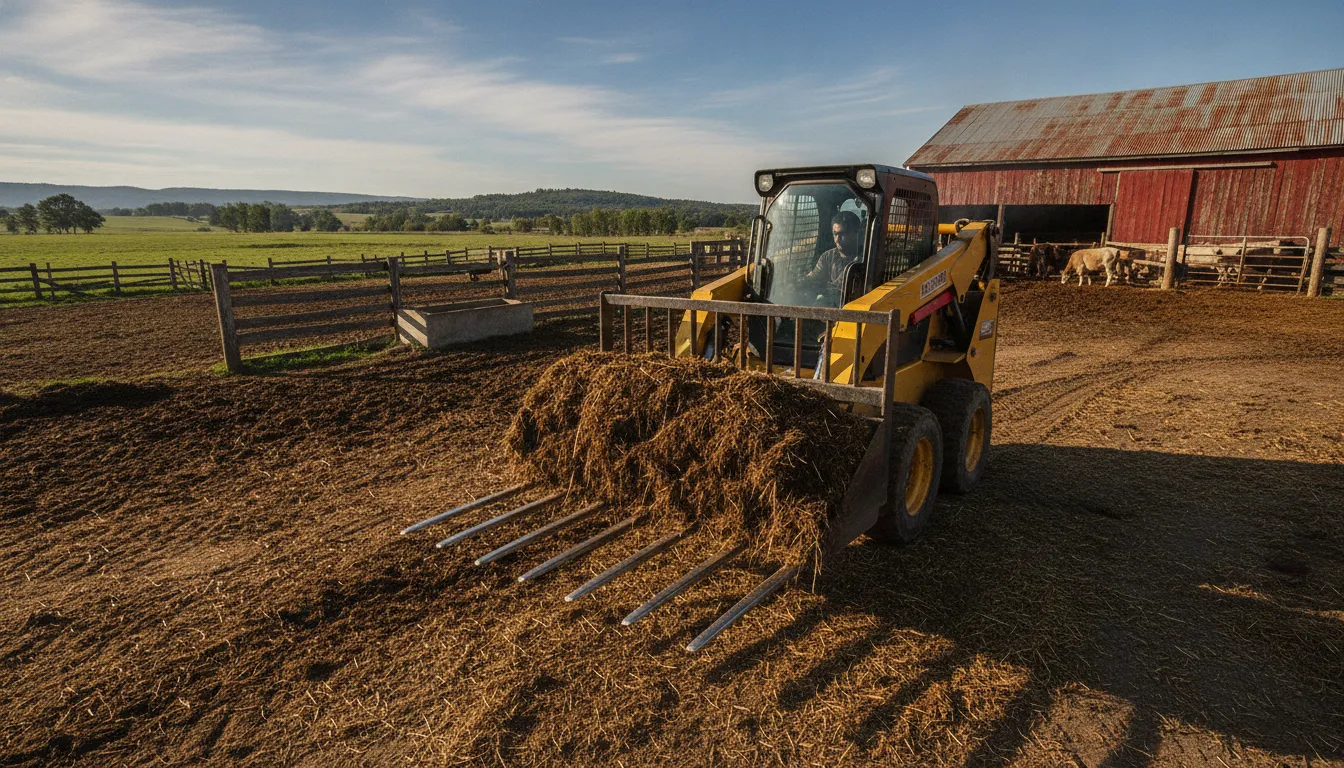
- Packed bedding: approach square to the pile, enter gradually, and avoid using the tines as pry bars.
- Loose straw or hay: assess whether an upper grapple is needed to control springy material during travel.
- Compost: use the open profile to lift and turn material without treating the attachment as a digging bucket.
- Light brush: keep irregular loads controlled and do not assume manure-fork tines are approved for rocks, stumps, or demolition debris.
Barn and pen cleanup
On a dirt or aggregate base, the operator can set the fork angle to enter the bedding layer rather than scrape deeply into the floor. Make a shallow first pass, inspect what the tines retained, and adjust the approach before continuing. That simple test reveals whether the tine spacing and angle suit the site.
Compost and light vegetation
Open tines can enter a compost pile and allow loose fines to fall as the material is lifted. For brush, check the manufacturer's approved uses and control long limbs that could shift or extend into the travel path. Buyers planning mostly brush work should compare a purpose-built grapple rather than expecting one manure fork to cover every clearing task.
How to choose the right manure fork attachment
Choose the right manure fork attachment by verifying fit and capacity first, then matching width, tine layout, and grapple configuration to the work. Use the carrier and attachment manuals as the controlling sources; product appearance alone cannot confirm a safe match.
Start with the carrier
Record the exact carrier model, mounting interface, rated operating or lift capacity, and any limits stated in its manual. Then obtain the attachment's weight and mount details. The combined weight of attachment and material must remain within the carrier manufacturer's limits throughout lifting and travel.
A skid steer plate, tractor loader mount, and mini-loader interface are not interchangeable merely because they look similar. Ask the seller to confirm the specified mount for the exact carrier. Buyers considering a severe duty grapple fork should pay particular attention to attachment weight before estimating useful payload.
Match the working width to the site
Measure the narrowest gates, alleys, doors, and storage locations on the work route. Also consider visibility at the fork corners and whether the operator can approach piles squarely. A wide fork may cover more ground per pass, but it can be a poor choice if it restricts access or encourages off-center loading.
Use a buyer checklist
Bring this checklist to the product comparison so that every candidate is evaluated on the same facts:
- Confirm the exact mounting interface for the carrier.
- Record attachment weight and verify the carrier's applicable capacity limits.
- Measure gates, aisles, doors, trailers, and storage space.
- Match tine spacing and layout to the material moved most often.
- Confirm whether tines are fixed, replaceable, or adjustable.
- For a grapple, verify auxiliary hydraulic flow, pressure, couplers, and hose routing.
- Inspect the frame, welds, tine supports, pivot points, and service access.
- Read the manuals for approved uses, inspection intervals, and operating limits.
Do not buy on fork width alone. A narrower attachment that fits every gate, stays within carrier limits, and controls the usual load can be more productive than a larger fork that is difficult to maneuver.
Do you need a manure fork grapple?
Choose a manure fork grapple when bulky, uneven, or springy loads regularly fall from open tines. Stay with a standard fork when loads are predictable, travel is controlled, and the carrier lacks the required auxiliary hydraulic setup.
A grapple's upper arm applies retention rather than adding carrier capacity. It may make long straw, mixed bedding, or brush easier to control, especially over uneven routes. Compare that benefit with the added attachment weight, hydraulic requirements, service points, and hose exposure.
Compatibility questions for a grapple
- Does the carrier supply the flow and pressure range specified for the attachment?
- Are the couplers compatible, and can hoses move through the full range without pinching?
- Does the attachment's added weight leave adequate capacity for the intended load?
- Can the clamp secure the usual material without the operator over-compressing it?
For another example of a manure-fork configuration, review this manure fork attachment, then compare its stated interface and requirements with the carrier manual. Product examples are useful for understanding options, but they are not proof of compatibility.
Operating and maintaining a manure fork
Safe operation starts with a locked mounting plate, intact tines, serviceable hydraulics, and a load carried low during travel. Inspect before each use, stay within the carrier and attachment limits, and follow both manufacturers' instructions.
Pre-use inspection
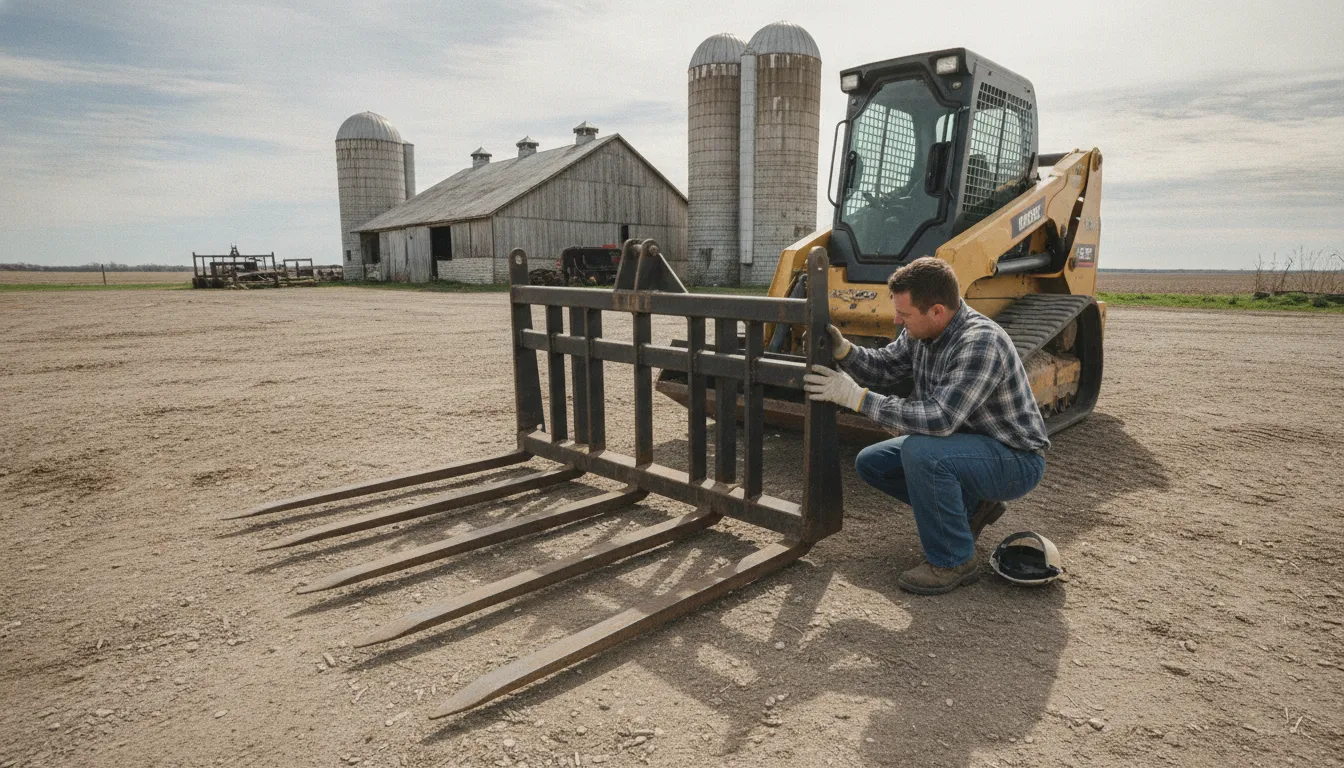
With the attachment lowered and the machine secured according to its manual, inspect locking points, the frame, welds, tine alignment, retainers, and any grapple pivots. Check hoses and fittings for abrasion, leaks, and routing problems without using a hand to search for a pressurized leak. Remove the attachment from service if damage could affect safe operation.
Travel and loading technique
Approach the pile squarely and avoid forcing a corner of the fork into packed material. Keep the load centered and low while traveling, slow down before turns, and maintain clearance from people and obstacles. If material repeatedly falls, reduce the load or reconsider whether a grapple or different attachment better suits the job.
Cleaning and storage
Remove residue after use according to the attachment manufacturer's guidance, then inspect the now-visible steel and connection points. Park on a stable surface with tines positioned away from walkways. Lubricate and service only at the intervals and locations specified in the manual.
Match the attachment to your workload
The most useful manure fork is the one suited to the farm's recurring load, route, carrier, and maintenance routine. Before purchasing, observe a normal cleanup cycle and write down the material condition, number of trips, travel surface, access constraints, and reasons loads are lost.
Use those observations to separate required features from occasional conveniences. A buyer moving packed bedding through narrow barn doors has a different priority list than one moving loose straw across an uneven yard. If several attachment types are under consideration, browse the wider skid steer attachments collection and compare each tool against the same workload notes.
For more operating and equipment-selection guidance, visit the eSkidSteer informational hub. The goal is not to make one attachment perform every chore; it is to choose a tool that handles its primary work predictably and stays within the carrier's limits.
Frequently Asked Questions
These quick answers cover the fit, configuration, and use questions farm buyers most often need to resolve before choosing a manure fork.
Are manure fork attachments compatible with all skid steers?
No. A manure fork may be offered with a commonly used skid steer mounting plate, but the buyer still must confirm the exact interface, attachment weight, carrier capacity, dimensions, and any hydraulic requirements. Some tractors and compact carriers use different mounts. This tractor manure fork example illustrates why mount style must be checked rather than assumed.
What is the difference between a manure fork and a grapple attachment?
A standard manure fork supports material on open tines. A manure fork grapple adds a hydraulic upper clamp to retain bulky or irregular loads. The grapple can improve control, but it adds weight, hydraulic requirements, and additional service points.
How do I choose the right manure fork attachment for my tractor?
Start with the tractor-loader manual and identify the mount, capacity limits, and hydraulic specifications. Then compare attachment weight, width, tine layout, and approved uses. Confirm the match with the seller or manufacturer before purchasing; a mount that appears similar is not enough.
Can I use a manure fork attachment to move debris?
A manure fork can be appropriate for light brush, bedding, compost, and similar loose material when those uses are approved by the manufacturer. Do not assume it is suitable for heavy rocks, stumps, demolition material, or digging hard ground. Use an attachment designed for the actual load.
Ready to compare manure fork attachments?
Bring your carrier model, mount type, capacity information, measurements, hydraulic details, and workload notes to the comparison. That information makes it easier to identify a manure fork attachment suited to the machine and daily chores without relying on guesswork.
Ready to shop manure fork attachments? Review the manure fork attachments collection or call +1 972-839-1703 to discuss the right tool for your farm.