


Mini Skid Steer Broom and Sweeper Buyer Guide
Get the Attachment Your Project Needs
Shop proven, work-ready attachments that help you tackle any task with confidence.
LEARN MOREKeeping job sites and paths clean with a shovel is a slow and costly way to work. A mini skid steer broom turns your compact loader into a productive cleaning tool for pavement, landscaping, job sites, and light snow. This guide helps you compare designs, confirm compatibility, and choose the right attachment for your work.
Shop mini skid steer brooms and sweepers to compare cleanup attachments for your machine.
A mini skid steer broom clears dirt, snow, or gravel from surfaces like parking lots and sidewalks. These tools use a rotating brush powered by hydraulic flow to push material away. To find the right model, you must match the attachment to your machine's flow. Most units need between 10 and 18 GPM for safe use. Choosing a broom that is wider than your loader's tires is also vital. This prevents you from driving over debris. According to Quick Attach, picking the right width and flow rate helps your loader run well without motor damage. This tool is a top choice for any crew cleaning job sites in tight spaces.
Mini skid steer broom types and how they differ
Finding the right mini skid steer broom is key for fast cleanup. These tools help you clear dirt, snow, and trash from work sites. Most owners use three main types of brooms for their loaders. Each style fits one task and helps you work better. You must match the tool to the job to save time and money.
Angle brooms for side clearing
Angle brooms are the most common style for mini loaders. They use a motor to spin a drum of bristles. You can tilt the broom to the left or right to push dirt to the side. Most mini angle brooms allow for a 25 degree turn in either way. This helps you clear a path in one pass without driving over the same spot twice. Many models let you change the angle from the seat using hydraulic controls.
These tools work well for clearing snow or light dirt from paths. You should choose a width that is wider than your loader's tracks. This ensures your mini skid steer tools cover the whole path. For the bristles, you can choose all-poly or a mix of poly and wire. Poly lasts long, but wire helps with stuck-on mud. For safety, you must have a rollover frame on your machine as per OSHA rules.
Pickup sweepers for trash collection
Pickup sweepers, also called hopper brooms, do more than just push dirt. They have a bucket that catches the trash as you sweep. This is great for parking lots where you cannot just push dirt to the side. The bristles flick the trash into the hopper, and you can dump it later. This keeps the work area clean and ready for use right away.
These tools often use a direct-drive motor for more power and fewer parts to break. You need to match the hydraulic flow of your loader to the broom's motor. Most mini units need about 10 to 18 gallons per minute of flow. If the flow is too high, you might break the motor or blow a seal. Using these tools safely helps prevent body harm on the job. Always check your hoses for leaks before you start your work.
Push brooms for simple cleanup
Push brooms are the simplest type of mini skid steer broom. They do not have a motor or any moving parts. Instead, they use several rows of stiff bristles to shove dirt forward. They are great for small spills or moving fine sand in a shop. Since they have no motors or hoses, they are very easy to care for and cost less to buy. You just hook them up and start pushing.
You can use these brooms to sweep out barns or shops where a motor might be too loud. They fit standard mounts like Toro or Bobcat systems. While they lack the power of an angle broom, they are quiet and tough. You do not have to worry about leaks or broken motors with this style. Always keep other people away when you use any tool to stay safe. Clear talk with your team helps prevent mishaps when moving large amounts of dirt.
| Broom Type | Main Use | Key Feature | Power Source |
|---|---|---|---|
| Angle Broom | Side clearing | Tilts 25 degrees | Hydraulic motor |
| Pickup Sweeper | Trash collection | Built-in hopper | Hydraulic motor |
| Push Broom | Simple spills | No moving parts | Loader motion |
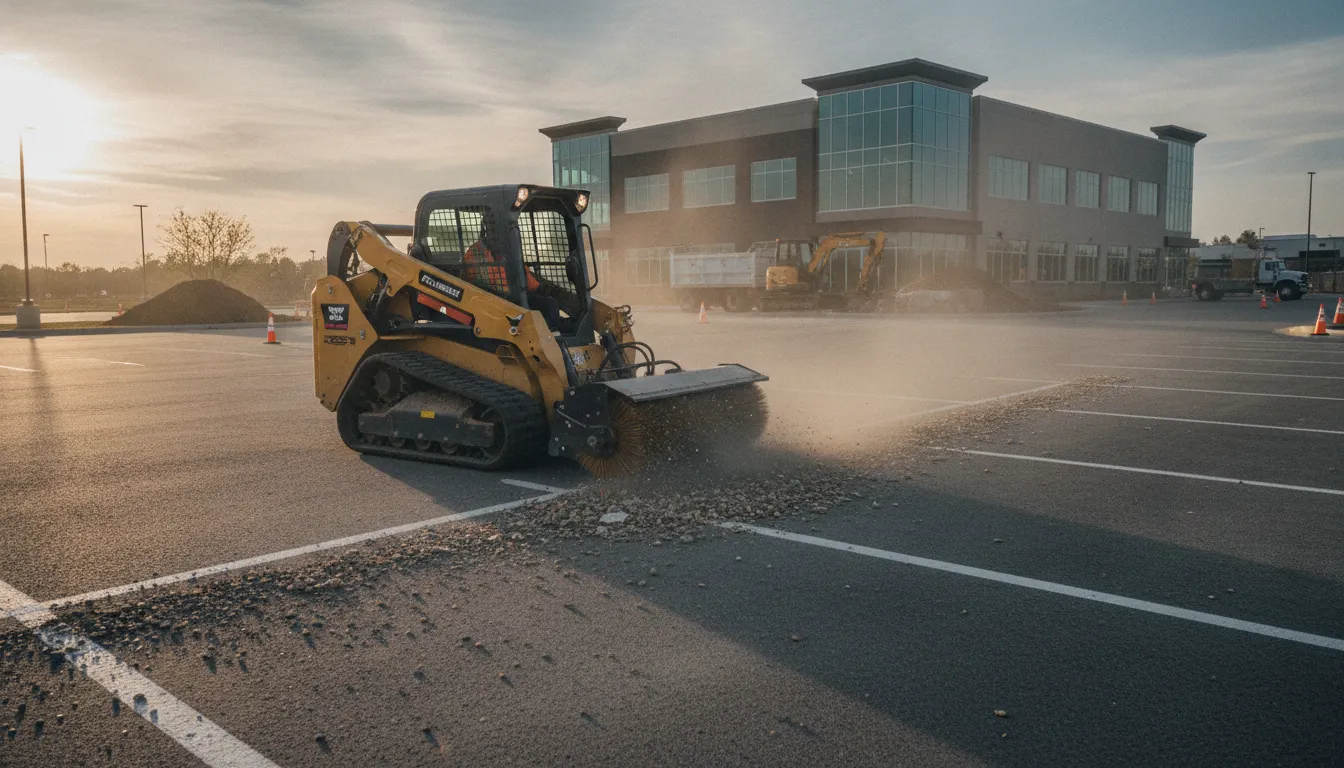
Which mini skid steer sweeper fits your cleanup job?
Matching a mini skid steer broom to your work helps you get the best results. These tools work well for many tasks on your site. You can use them on flat areas like paths or at busy work sites. Picking the right size and type of brush will make your job go fast. Most of these tools use a small motor to spin a thick brush. This brush can push dirt, leaves, and trash out of the way as you drive.
Cleaning paths and parking lots
For paths and lots, an angle broom is a top choice for most crews. Most of these tools let you angle the head 25 degrees to either side. This helps you push dirt or trash off to the edge of the road. When you clear a path, make sure the brush is wider than your loader's tracks. If the brush is too small, your tracks might drive over the mess you just tried to clear. This makes the work take more time than it should.
Parking lots often need more power for deep cleaning. Look for a broom with a mix of plastic and wire brush hairs. This combo is tougher than plain plastic alone. It can scrub away stuck mud or wet leaves from the ground. Always check that your loader has the right flow to run the tool. Most mini units need 10 to 18 gallons of fluid per minute to work well. If you push too much fluid through the motor, it could break and lead to high costs. Proper training for safe use is key for anyone using this gear.
Job site and yard work cleanup
Work sites often have heavy debris like rocks or thick dust. A direct drive broom is good for these hard jobs. These models use a motor that connects right to the brush hub. This build has fewer parts that can snap or wear out. It also gives you steady power for deep cleaning tasks. You can find these tools at shops that sell mini skid steer attachments for all types of loaders.
In yard work, you might need to sweep mulch or grass off a new driveway. A light broom with soft plastic brush hairs works best here. These hairs are soft and will not scratch the surface of the ground. They are also good for sweeping sand into the gaps of new brick paths. If you work near other people, you must be very careful. Safe use is key because people nearby can be hard to see from the seat. Data shows that young children and helpers are at high risk near these machines.
Dealing with snow and tight spaces
Mini brooms are also great for light snow. They can clear a thin layer from a walkway much faster than a hand shovel. When you sweep snow, you should keep the loader moving at a steady pace. This helps keep the brush from icing up in the cold. Since these machines are small, they can fit into tight spots that big trucks cannot reach. This makes them perfect for narrow alleys or gated areas on a farm.
If you have a very small area, the weight of the tool matters for balance. Some models weigh between 325 and 385 pounds. A light tool keeps your machine stable on hills or soft dirt. You should also check the mounting plate on your machine. Most units use the Toro or Bobcat style mount for easy hookup. Make sure your mount fits before you start your day. Buying high-quality mini skid steer attachments ensures your loader is ready for any cleanup job.
How to check broom compatibility before buying
Buying a mini skid steer broom can help you clear snow, dirt, and debris from sidewalks or job sites. But not every broom fits every machine. You must check your loader specs to ensure the tool works well and stays safe. Using the wrong tool can damage your motor or cause a risk of injury. Most new machines must follow ISO 3471:2008 standards for safety frames to protect the driver.
Verify the mount type
The first thing to check is how the broom hooks to your loader. Most mini skid steer attachments use one of a few common systems. You will likely see Toro, Mini-Universal, Bobcat, or ASV mounts. If the plate does not match, you cannot hook up the broom. Always look at your loader manual to see which mount you have before you buy. Many mini loaders use the Toro style plate, but some brands use their own design.
Check the locking pins and plate size. A mismatch here means the tool will not lock in place. This can lead to the broom falling off while you work. It can also damage the lift arms of your loader. Taking a quick look at the mount before you buy saves time and money. It ensures you can get right to work once the tool arrives.
Check the hydraulic power
Your loader must have enough power to turn the broom bristles. This power comes from the oil flow, which is measured in gallons per minute or GPM. Most mini brooms need 10 to 18 GPM to work right. If your flow is too low, the broom will turn too slow to clean well. If it is too high, you might break the motor inside the broom. You can find this rating in your loader spec sheet or on a tag near the cab.
You should also check the pressure, which is usually between 2,000 and 3,000 psi for these tools. High pressure is needed to push the bristles through heavy dirt or wet snow. If your loader lacks this pressure, the broom may stall when it hits a thick patch of debris. Matching these numbers keeps your gear in good shape for years. It prevents the motor from wearing out too soon.
Match size and weight
Size and weight matter for both safety and speed. A broom that is too heavy can make your loader tip over. Most of these brooms weigh between 325 and 385 pounds. You also want a broom that is wider than your tracks or tires. This makes sure you do not drive over the dirt you want to sweep. A width of about 48 inches is common for small loaders. It gives you enough room to clear a path in one pass.
- Check your loader load limit. Make sure your machine can handle the weight of the broom plus any debris it picks up.
- Look at the mount plate. See if your loader uses a Toro, Bobcat, or ASV style mount before you buy.
- Find your GPM rating. Ensure your loader puts out 10 to 18 GPM to avoid motor breakage or slow speeds.
- Measure your machine width. Choose a broom that clears a path wider than your tracks or tires.
- Check the hose ends. Make sure the parts on the broom match the ports on your loader to prevent leaks.
- Look at the PSI range. Make sure your loader pressure is between 2,000 and 3,000 psi for best results.
Matching your gear keeps it in good shape for years. It also makes the work go faster and keeps you safe on the job. If you need other tools for your site, you can also look at mini skid steer buckets to help with your cleanup jobs. Taking the time to check these facts now prevents a big problem later.
Features that matter on a mini skid steer broom
Choosing the right mini skid steer attachments starts with knowing which parts help you work fast and stay safe. A good mini skid steer broom must handle tough dirt while fitting the tight spots on your job site. When you look at new tools, focus on the parts that give long-term value and are easy to use.
Bristle material and width
The bristles on a mini skid steer broom show how well it cleans. Most tools use poly bristles, but you can also find poly and wire mixes for hard jobs. Choosing a sweeping width that is wider than your loader's tracks is also key for good work. This makes sure you do not drive over the dirt you just tried to clear according to industry standards.
Angle control and motors
Most angle brooms let you shift the head 25 degrees to the left or right. This helps you push dirt or snow away from your path. Some units offer hydraulic angle changes, which let you move the tool from the seat. It is vital to match your hydraulic flow, often between 10 to 18 GPM, to the broom motor. Running a loader with too much flow can lead to motor failure if the parts are not a good match.
Drive design and maintenance
A direct-drive design often improves how well the broom works by using fewer parts. These tools are built to be tough, but they still need care. Look for models with standard storage stands that make it easy to take the broom on and off. Checking your hydraulic lines and bristle wear often will help your mini skid steer attachments last for a long time.
How do you get better sweeping results?
To get the best results from your mini skid steer broom, you must start with a clean work site. Walk the area and find any large rocks, thick wire, or big chunks of metal. These items can wrap around your core or break the bristles on your mini skid steer broom. Removing them first helps you avoid down time and keeps your gear in good shape.
Set the right broom height
You do not want to use too much down pressure when you sweep. Pushing the bristles too hard against the ground causes fast wear and makes it harder for the motor to spin. Most pros find that a two-inch flick of the bristles is enough to clear away dirt. Proper setup helps you stay within the 2,000 to 3,000 psi operating range needed for most hydraulic broom motors.
You should also check that your sweeping width is right for your loader. A broom that is wider than your tires or tracks will clear a path and keep you from driving over debris. This simple choice makes your work more efficient and gives you a cleaner finish in fewer passes.
Manage your speed and path
Drive at a slow, steady pace to let the bristles work. If you go too fast, the broom will skip and leave dirt behind. Most mini angle brooms can angle up to 25 degrees to either side. Use this feature to push dirt toward the edge of your path so you do not have to sweep the same spot twice.
If you are working in dry spots, dust can be a big problem. You can add a water kit to your mini skid steer attachments to help keep the dust down. This makes it easier to see and is better for the people working around you. Keeping the work area wet prevents fine silt from blowing back onto the clean surface you just swept.
Keep the work area safe
Operator visibility is a major concern when using mini skid steer loaders on busy job sites. Always check for bystanders or coworkers before you start your sweep. The spinning broom can throw small stones at high speeds, which poses a risk to anyone nearby. Clear the area and make sure people stay a safe distance away from the machine.
Be careful when you change your broom angle or check the motor. Never try to move the controls from outside the protective frame of the machine. OSHA rules require safety frames to protect the operator during use. Staying inside the seat keeps you safe from moving parts and helps prevent serious hand or arm injuries.
Maintenance that protects your broom attachment
Caring for your mini skid steer broom is vital for its life. Daily checks stop small issues from becoming big costs. Always read your owner's manual for clear steps on your model. Proper care keeps your warranty in place and your crew safe.
Check bristle wear and patterns
The bristles on your mini skid steer broom will wear down as you sweep. Most brushes use all-poly bristles or a mix of poly and wire for tough jobs. You should check the length of these bristles before each shift. If they get too short, the broom will not clean the ground well. This puts extra strain on the motor and uses more fuel.
Watch for uneven wear on the brush head. This often means the broom is not level or the down pressure is too high. If one side wears faster than the other, you must adjust the mounting plate. Keeping the brush level helps the bristles last much longer. You can find more mini skid steer attachments that help you finish jobs on time.
Inspect hydraulic hoses and couplers
Your broom relies on hydraulic power to spin. Most mini skid steer broom models need a flow rate between 7 and 18 GPM to run well. High pressure can cause leaks or motor failure over time. Check all hoses for cracks, scuffs, or wet spots. Leaking fluid is a risk and can harm the ground.
Wipe the couplers clean before you plug them into the machine. Dirt in the hydraulic system can ruin the pump on your loader. Safety is key when you work near these parts. The risks of skid steer use include being caught in an attachment or crushed by machine parts. OSHA rules like standard 1926.1001 also cover safety frames to protect the person in the seat.
Store the attachment properly
How you store your broom matters as much as how you use it. Many models come with small storage stands to keep the brush off the ground. If the bristles sit on a hard floor for too long, they will bend and stay that way. This creates a flat spot that makes the broom bounce and skip during work.
Store the broom in a dry place out of direct sun. UV rays can make plastic bristles brittle and weak. If you must store it outside, use a tarp to cover the motor and hoses. Keeping the attachment clean and dry prevents rust on the metal frame. Check all fasteners and grease points once a week to ensure every part moves smoothly.
A practical mini skid steer broom buying checklist
Buying a mini skid steer broom is a big choice for your work. You need the right tool to clean job sites, clear snow, or sweep paths. This simple checklist will help you find the best match for your machine. Good planning helps you avoid motor failure and makes sure your crew stays safe while they work.
- Confirm the attachment mount matches your mini skid steer.
- Compare the broom's hydraulic flow range with the machine's auxiliary output.
- Choose a broom width that clears the machine's tracks at the intended angle.
- Select poly, wire, or mixed bristles for the surface and debris.
- Check attachment weight, storage needs, and routine maintenance access.
Machine fit and power
Check your machine's mount and power before you buy any tool. Most mini skid steer attachments use a Toro, Bobcat, or ASV mount system. You must match the broom's power needs to your loader's hydraulic output. Most mini brooms need a hydraulic flow between 10 and 18 GPM. Running above this range can cause the motor to fail. You should also check the pressure rating of your loader. Most models need between 2,000 and 3,000 psi to work at peak levels. A direct-drive design can also help improve how the tool works in tough cleanup jobs.
Choosing the right broom width
Pick a width that is wider than your loader's tires or tracks. This makes sure you do not drive over the dirt or snow you are trying to clear. For small spaces, a 48-inch width is often a good choice because it fits through narrow gates. You can find many choices in our collection of mini skid steer brooms and sweepers. Many of these tools allow you to angle the head 25 degrees left or right. You can choose a manual angle or an extra hydraulic angle change for better control. Choosing the right size makes your work faster and keeps your work site clean.
Bristle types and picking up debris
Choose the right bristles for your work surface and the type of dirt you move. Most brooms use all-poly bristles for general cleaning on paved paths. You can use a mix of poly and wire for more tough jobs like removing mud. This mix is great for stuck-on debris or heavy gravel on a work site. Always think about safety when you use these tools. Modern machines must have rollover protective structures to keep the user safe in a crash. Proper operator training is also needed to prevent harm during use.
Care and ease of use
Look for a broom that includes a storage stand. A stand makes it easier to attach and remove the tool when you are done. Routine care includes checking the hydraulic lines and the state of the bristles. This helps the tool last longer and work better every day. Check the weight too, as most models weigh between 325 and 385 pounds. Make sure your loader can handle this weight safely before you start a job. Using a tool that fits your machine will help you get more value from your mini skid steer attachments over time.
Compare mini skid steer broom and sweeper attachments before choosing the best fit for your cleanup work.
Frequently Asked Questions
What broom width should I purchase for my mini skid steer?
You should pick a broom width that is wider than the tires or tracks of your machine. This ensures that you can clear a path without driving over the debris you just swept. According to Quick Attach, a proper sweeping width is vital for the best results. A wider broom allows for better coverage and helps you finish the job faster on paths and sidewalks.
What is the recommended flow rate for a mini skid steer angle broom?
Most mini angle brooms need a hydraulic flow rate between 10 and 18 gallons per minute. You must match this rate to your loader to avoid damage. Running the broom above this range can lead to motor failure. As noted by Erskine Attachments, these tools are built for exact pressure and flow levels. Always check your machine manual to see if it provides enough power for the attachment to run safely.
What are the common bristle options for angle brooms?
You can often choose between two main bristle types for your broom. All-poly bristles are good for standard cleaning and are soft on surfaces. A mix of poly and wire bristles is better for heavy debris or caked-on mud. Quick Attach notes that these options help you match the tool to your task. Picking the right bristles ensures your attachment lasts longer and performs well in different work sites.
Can I use a mini skid steer broom for snow removal?
Yes, you can use these brooms to clear light snow from sidewalks and parking lots. They work well for finishing areas that a plow might miss. This tool helps you get down to the surface for a clean look. Researchers at Purdue University state that skid steer machines are often used for various cleaning tasks like ground cover removal. Just make sure to follow all safety rules when working in cold or wet conditions.
Which mini skid steer mounts are available for broom attachments?
Most broom attachments use common mounting systems like the Toro or Mini-Universal mount. Other loaders may need a Bobcat or ASV style mount to fit properly. It is important to know which system your loader uses before you buy a new broom. According to Quick Attach, these are the standard mounts for mini machines. Using the correct mount ensures the tool is secure and the hydraulic lines line up well during use.
Ready to find the best broom for your loader?
Leaving dirt and debris on your work site can lead to safety risks and costly delays for your team. A high quality sweeper helps you clear dust and grit fast so you can move to the next job sooner. You will save hours of manual labor and keep your work area clean by choosing the right tool for your loader today. Using the wrong attachment may slow you down or leave a mess that takes even more time to fix. Getting the right gear now means you can finish your project on time and keep your customers happy with the results. You can also view our full range of mini skid steer attachments to find other tools that help your business grow. Waiting to upgrade your equipment often leads to more wear on your current tools and higher costs in the long run.
Ready to shop? Call +1 972-839-1703 to shop mini skid steer brooms and sweepers.