

Skid Steer Concrete Claw Attachments: Demolition Guide
Get the Attachment Your Project Needs
Shop proven, work-ready attachments that help you tackle any task with confidence.
LEARN MORE. Breaking up old concrete driveways and foundations is one of the most punishing tasks any operator can face. A skid steer concrete claw turns that heavy demolition work into a fast, manageable process. This tool is built specifically to rip, tear, and lift slabs without the noise and maintenance of hydraulic hammers.
The skid steer concrete claw is a heavy tool built to pry up and tear through thick concrete slabs and reinforced building structures. While impact hammers smash concrete with loud blows, this claw uses strong metal teeth and machine power to rip slabs from the ground quickly. According to CID Attachments, these tools are great for pulling out rebar and metal mesh while prying large concrete sections loose. Using a claw is faster and quieter than using a breaker for slab removal and helps you clear a site by prying pieces into smaller chunks. This tool is a top choice for anyone who needs to remove old driveways, sidewalks, or building floors without the noise of hydraulic hammers.
Looking for a rugged, heavy-duty concrete claw? Shop our concrete claws collection or call our experts today to find the perfect attachment for your skid steer!
You need to know how these tools differ from other demolition gear before you buy. Understanding What is a skid steer concrete claw and how does it work? is the first step toward faster job completion. The path begins with
What is a skid steer concrete claw and how does it work?
A skid steer concrete claw is a tough tool made to rip up old pads and paths. It is a concrete claw for skid steer that helps you clear a site fast. Unlike a basic bucket, it has long, sharp teeth. These teeth slide under the slab to lift it from the ground.
This tool uses the power of your loader to pry concrete apart. It is a great choice for jobs like pulling up old driveways or sidewalks. It makes the hard work of site prep much easier for the crew. You can get the job done with less fuel and time.
How a concrete claw is built
Most of these tools use hard steel to handle the stress. You will often see a skid steer concrete claw tool made with AR400 steel. This type of steel lasts a long time and stands up to wear from rocks and grit. The sides are thick to keep the tool from bending under a heavy load.
The front edge has large teeth made to bite into the slab. These teeth are set at an angle to slide under the concrete with ease. Most units use a standard quick-link plate. This lets you hook up the tool to your loader in a few seconds.
How the tool prys and pulls
The claw works by using a simple prying motion. First, the driver tilts the tool down to push the teeth under the edge of the slab. Once the teeth are in place, the driver lifts the loader arms. This puts a lot of force on the concrete from below.
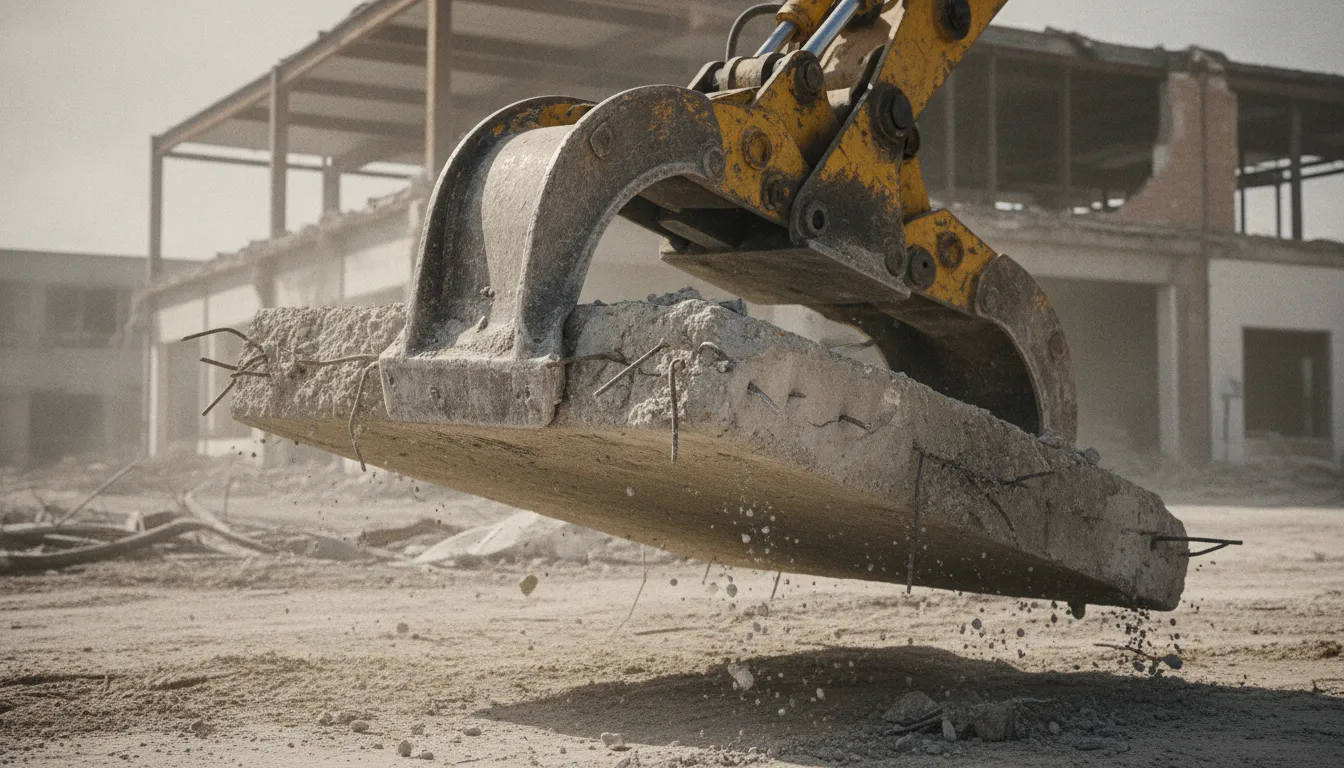
As the slab lifts, it snaps into big chunks that are easy to move. The claw is also great for pulling out old rebar or wire mesh. It can grab these metal parts and pull them clean from the debris. This keeps your pile of waste neat and easy to sort.
When to choose a claw
A claw is not the same as a breaker hammer. A breaker uses a fast hit to crush the slab into small bits. A claw is better if you want to pull up big slabs in one go. You should check other tools if you need to smash concrete into dust.
Using a claw keeps the job site safe and clean. You can lift and move the chunks as soon as they break free. Before you start, you must check your gear for any signs of wear. Proper care helps your tools last through many tough jobs. Clear steps and good tools help you stay safe while you work.
Prying force vs. impact smashing: Claws vs. breakers and thumbs
Every demo job has its own needs. Picking the right tool can make the work go fast or slow it down to a crawl. Many crews use a hammer to break up slabs, but a concrete claw for skid steer offers a new way to work. Instead of hitting the surface, it pulls it apart. This prying force often clears a site much faster than impact tools because it handles large blocks at once.
When you use the right tool, you put less stress on your machine. Ripping up a slab with a bucket can bend the frame or hurt the arm. A tool made for this work is built to take the load. It uses the power of the skid steer in a safe way. This keeps your machine running longer and prevents costly repairs on the job.
How the concrete claw works
A claw uses long steel teeth to get under a slab or wall. Once the teeth are in place, the driver tilts the bucket back to lift the block. This ripping action breaks the bond between the concrete and the dirt. It turns a large slab into big chunks that you can move right away. Most of these tools use AR400 steel for the sides to stay strong under heavy loads.
Using a skid steer concrete claw attachment keeps the job site cleaner. Since you are not smashing the concrete into tiny bits, there is less dust in the air. You can also stack the large blocks for easy moving or reuse. This saves time during the cleanup phase. It also makes it simple to load the waste into a truck without a huge mess.
Breakers and thumbs
A hydraulic breaker is built for smashing. It hits a single spot over and over with a sharp point. This is the best tool for thick concrete or hard slabs that will not move. But it leaves a mess of small rocks and dust. For surface-level asphalt and concrete milling jobs, a claw isn't the right fit; instead, read our skid steer cold planer buyer's guide to see how to grind down pavement evenly. If the slab is thin enough for a claw, the breaker is often too slow. It takes many hits to do what a claw does in one lift.
Bucket thumbs give you a way to grip debris. They work well for loading trucks or moving logs after the demo is done. But they do not have the same prying power as a claw. A thumb helps you hold onto what you have already broken. It is not the best choice for the real work of ripping up a solid driveway. You need the deep reach and thick teeth of a claw for that work.
| Tool Name | Main Action | Best Job | Chunk Size | Dust Level |
|---|---|---|---|---|
| Concrete Claw. | Prying and ripping. | Lifting large slabs. | Big blocks. | Low. |
| Hydraulic Breaker. | Impact hitting. | Thick or hard rock. | Small bits. | High. |
| Bucket Thumb. | Grabbing and holding. | Loading debris. | Mixed sizes. | Low. |
| Rock Grinder. | Grinding surfaces. | Smoothing concrete. | Fine dust. | High. |
.
Safety on the job site
.
Working with heavy tools means you must follow strict safety rules. OSHA states that loaders have safety features to stop movement when a person is not in the seat (.gov). Never try to bypass these locks or use gear that is not fit for the job. Keeping your gear in good shape helps you avoid harm and keeps the crew safe.
You should check your machine and tools every day for signs of wear. Look for cracks in the metal or leaks in the lines before you start. It is also wise to wear the right safety gear when you work near the machine. A safe job site is a good one. Using the right tool and following the rules keeps your project on track and your team out of harm's way.
Key technical specifications and AR400 steel construction
A skid steer concrete claw must handle high stress during demo work. These tools are built to rip through thick slabs and move heavy debris. The strength of the tool depends on the steel used in its frame. Most top models use heavy-duty steel to prevent bending or breaking under load. Choosing a concrete claw for skid steer ensures you have a tool made for the toughest jobs.
Durable AR400 steel build
One of the most vital parts of a concrete claw is the type of steel used. AR400 steel is a top choice for side plates and wear zones. This metal is known for its high wear strength. It can handle the constant scraping against rough concrete without wearing down fast. Many claws use 5/8 inch AR400 sides to provide a long life on harsh job sites. This thick steel keeps the tool stiff even when prying up large sections of a slab.
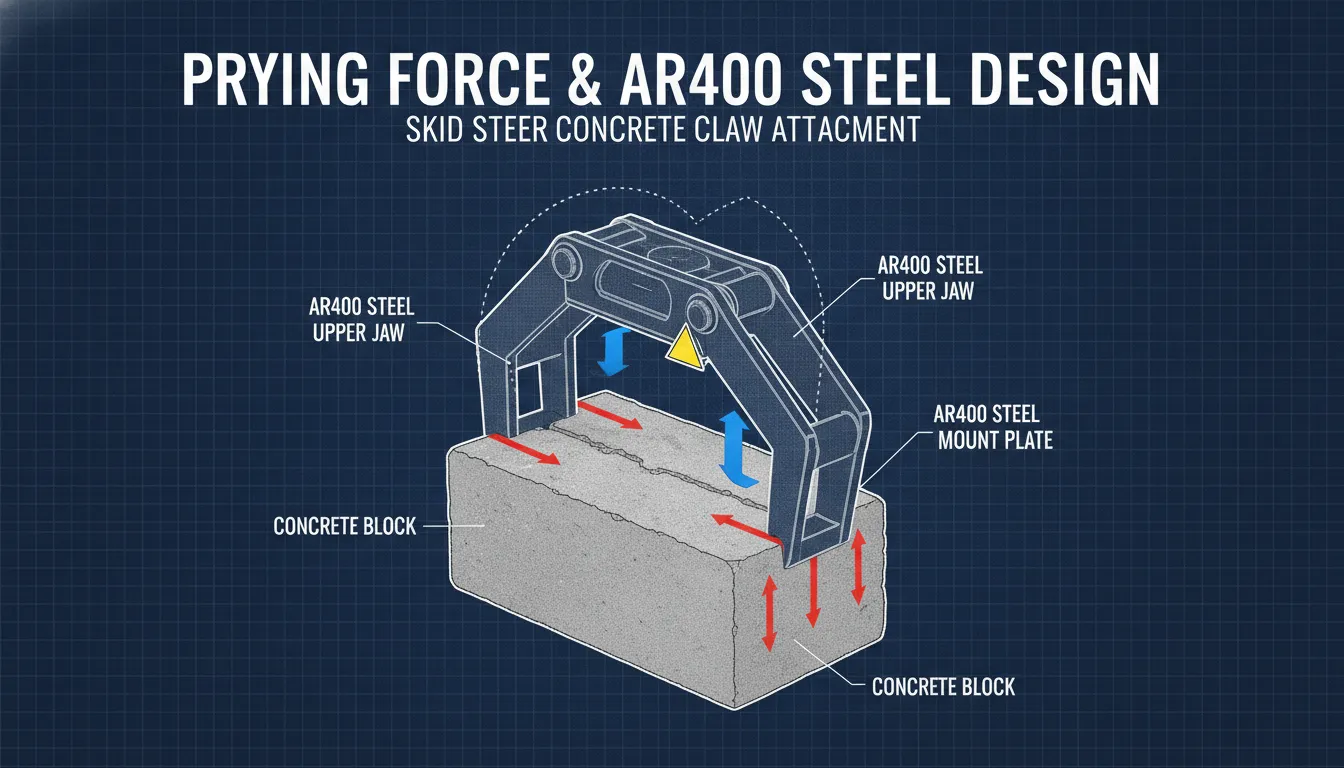
Using high-strength steel also helps keep the shape of the claw. If the metal is too soft, the sides could warp or crack. This would make the tool less useful and could lead to safety risks. Proper care of your gear is key to keeping it in good shape for years. If you need to break up extremely dense stony subgrades before using the claw, check out our comprehensive excavator ripper attachment guide to learn about deep ground penetration. You should always follow maker rules for care to keep your gear safe and working well. This helps you avoid downtime and keeps your crew safe on the job site.
Hardened tooth shanks for demo work
The teeth of a concrete claw do the hard work of digging under the slab. These shanks are usually made from hardened steel to stay sharp. They must be strong enough to dig into the surface and hook onto the concrete. A common design includes a 1 inch by 8 inch toothed edge. This size allows the claw to grab the edge of a slab with ease. The teeth work with the loader arms to tear the concrete apart rather than smashing it.
This tearing action is what sets the claw apart from other tools. While a breaker uses impact to crush metal, the claw uses lift to move and rip. This makes it a great choice for tasks like slab work. You can pull up large chunks and load them into a truck fast. If you need other tools for smashing, you might look at concrete site tools like grinders or breakers. But for clearing a site fast, the claw is hard to beat.
Strengthened end plates and side panels
The frame of the claw is strengthened with heavy end plates. Some models use T1 steel for these parts to add extra strength. This prevents the frame from twisting when you apply uneven pressure. The end plates act as a spine for the tool. They hold the teeth and the mount plate as one. Without this support, the high force of the skid steer could damage the tool.
These plates also help protect the fluid lines and parts. By keeping the frame stable, they reduce the risk of leaks or broken parts. A well-built claw will have clean welds and smooth edges. This shows that the builder took care to make a tool that lasts. When you buy a claw with these specs, you are buying a tool that can handle thousands of hours of work. It is the best way to ensure your site projects stay on schedule.
Carrier hydraulic requirements and weight capacities
Before you buy a skid steer concrete claw, you must check your machine's power and size. Most claws are static tools that do not need fluid flow to work. But you still need to match the tool to your machine's specs to keep things safe. Using the right tool for the task helps lower stress on the loader and the parts you add to it. Always read the book to see what your machine can handle before you start a demolition project.
Hydraulic flow and tool choice
Standard flow loaders work well for most simple tearing tasks. These machines often move between 15 and 25 gallons of fluid each minute. A concrete claw for skid steer users often falls into this group. You do not need a high-flow machine to use a basic hook or claw. Unlike active hydraulic attachments like post drivers which require continuous flow (as discussed in our skid steer post driver guide), the concrete claw is a static attachment that leverages the loader's purely mechanical lift capacity. This makes it a great choice for older or small loaders that lack extra power. It is a simple tool that relies on the strength of the loader arms rather than fluid pressure.
High-flow systems move more fluid, often over 30 gallons per minute. You need this extra boost for concrete demolition attachments that spin or hammer, like grinders. If you use a claw with a built-in grapple, you might need to check your machine's extra ports. Always check that your hoses and couplers match the size of the machine ports before you start a job. Using the wrong flow can lead to heat build-up or poor tool work.
Operating weight and lift limits
Your loader must be heavy enough to pull up large slabs without tipping. Every machine has a rated operating capacity (ROC). This number tells you the most weight the machine can lift safely. A heavy skid steer concrete claw attachment adds weight to the front of the arms. Add the weight of the claw and the slab to stay under the ROC limit. If the load is too big, the machine might become shaky during the lift.
Pulling large concrete slabs puts a lot of force on the loader's frame. OSHA rules say that skid steer loaders must meet safety standards to protect the person in the cab. If the slab is too heavy, the back of the loader could lift off the ground. This creates a risk of tipping or falling objects. It is vital to know the weight of the debris you plan to move. Breaking slabs into small pieces first can help you stay within safe limits.
Universal quick-attach system
Most modern skid steers use a standard mount system. This "universal quick-attach" lets you swap tools in just a few minutes. You can go from a bucket to a claw without using any special tools. This system uses two levers that lock into the bottom of the mount plate. It is a fast way to set up your machine for a demolition job. Most claws are built with this mount so they can fit on any major brand of loader.
Make sure the mount plate on your loader is clean and free of rust or dirt. If the pins do not seat all the way, the claw could fall off during a lift. Check the lock pins every time you hook up a new tool. Proper care of these locks and pins is a big part of site safety. You should also look at the mount for any cracks or bent parts. Following the maker's guide to keep these safety parts working well will help you finish tough jobs safely.
Step-by-step guide to safe and efficient concrete slab removal
Taking out old concrete slabs needs the right tools and a clear plan. A concrete claw for skid steer loaders is built to rip and tear through thick slabs. This tool makes the job much faster than using a breaker alone. By following a set process, you can clear a site while keeping your crew and tools safe.
Prepare the site and machine
Before you start, clear the work area of any loose junk or tools. Check the ground for power lines or pipes that may be buried under the concrete. You should also look at your machine and tool. OSHA safety rules state that you must check your loader and safety parts often to prevent harm. Look for cracks in the steel or wear on the teeth of the claw.
Good training is key for everyone on the job site. Make sure the driver knows how to use the exact controls for the claw. Using a machine with a Roll-Over Protective Structure (ROPS) is standard to keep the driver safe during heavy demo work. Once the machine is ready and the site is clear, you can begin the clearing task.
Break and lift the concrete
The main goal of a claw is to get under the slab and pull it up. This is different from a power breaker, which smashes the concrete into small bits. A skid steer concrete claw attachment uses its long tines to pry large parts apart. This way is often faster for big slabs with rebar or mesh inside.
- Park the machine: Drive your skid steer to the edge of the slab. Make sure the loader is on flat, solid ground before you try to lift any heavy weight.
- Slide the tines under: Lower the tool and drive the teeth under the edge of the concrete. You may need to tilt the claw a bit to find a good starting point.
- Apply prying force: Use the loader arms to lift up while you tilt the claw back. This move uses the slab's own weight and the machine's power to snap the concrete.
- Rip and tear: Pull the part away from the main slab. The hard steel teeth will help you grab and tear through any trapped rebar or wire mesh.
- Lift and move: Once the piece is free, lift it high enough to clear the ground. Move the machine slowly to avoid tipping while carrying the heavy load.
- Clear the debris: Drop the concrete pieces into a dump truck or a set pile. Breaking the slab into large, flat pieces makes it easier to stack and haul away.
Manage debris for faster cleanup
Keeping a clean work site helps you move faster and stay safe. As you pull up slabs, try to sort the pieces by size. This makes it easier to load them onto a trailer or into a bin later. Ripping the concrete into small parts also helps keep the skid steer from working too hard on a single lift.
Always watch the balance of your machine. Demo work puts a lot of stress on the loader's power system. If a piece of concrete is too big, use the claw to break it into smaller parts before you try to move it. Following these steps helps make sure your next demo job is done right and on time.
Essential demolition site safety and operator regulations
Safe work starts with a clear plan and the right gear. Demo sites are full of risks like flying debris and heavy loads. Using a skid steer concrete claw requires focus on site rules. You must keep the work area safe for both the driver and those nearby.
Body safety gear for demo work
Before starting any job, you need the right safety gear. Standard tools include a hard hat, safety glasses, and ear plugs. You should also wear heavy gloves and steel-toed boots to stay safe from sharp edges or falling slabs. Proper gear acts as your first line of defense against common job site risks.
Bystander safety is also vital during concrete clearing. You should always clear the work area of all people who are not needed for the task. Keeping a safe distance helps prevent harm from flying concrete or sudden machine shifts. A secure site ensures that everyone stays out of harm's way during the lift.
Understanding ROPS and FOPS rules
Skid steer loaders come with built-in safety frames to protect the driver. A Roll-Over Protective Structure (ROPS) is a standard frame that guards against machine tips. Per OSHA rules, these frames are needed for rubber-tired skid steer tools. They provide a safe space if the loader rolls over on uneven ground.
Falling Object Protective Structures (FOPS) are just as important for demo work. These guards protect the cab from heavy items that might fall from above. When you pull large concrete slabs, debris can shift or drop fast. Both ROPS and FOPS must be in good shape to keep you safe from overhead threats and roll risks. These steel frames must meet strict tests to ensure they do not crush during a roll.
Safe use of a skid steer concrete claw
Driver safety also relies on lock systems and seat belts. Many machines use a pull-down armrest or seat bar to lock the controls. These features stop the machine from moving unless the driver is safely in the seat. You should never skip or stop these safety tools. Per OSHA safety alerts, bypassing these systems can lead to serious harm or death.
Regular checks and care are key to keeping your gear safe. You must inspect your concrete claw for cracks or worn teeth before each use. Shop guides provide clear steps for the use and care of these tools. Checking for loose bolts and fluid leaks is part of a daily routine. A well-kept machine reduces the risk of a part failing while under load.
Get your skid steer concrete claw today! Browse our full selection of concrete claws and find the demolition tool your crew needs.
Frequently Asked Questions
How much weight can a skid steer concrete claw lift?
The lift limit of a concrete claw depends on the loader's hydraulic power and the tool's size. Most heavy-duty claws are built to handle large slabs of concrete during removal jobs. However, you must always check your machine's rated work limit to ensure safe use. Going past these limits can cause the machine to tip or damage the hydraulic system during site clearing or building tasks.
Will a concrete claw fit on any skid steer model?
Most modern concrete claws use a universal quick-attach system that fits standard skid steer loaders. According to Outdoorica, this mount lets operators switch tools fast on the job site. You should check if your loader has enough hydraulic flow to run the tool. Some heavy models need high-flow hydraulics to work right while ripping through thick concrete structures or landscape projects.
How does a concrete claw help remove buried rebar?
A concrete claw is very good for pulling out buried rebar and metal mesh when you move concrete sections. The strong teeth go into the concrete and grab the metal supports. This lets the operator rip the rebar out with the concrete slabs. This tool makes removal easier by handling both concrete and metal waste at once. It helps keep the job site clean and makes the work go much faster.
What safety gear is needed when using a concrete claw?
Operators should always wear safety gear like hard hats, safety glasses, and ear plugs during removal work. OSHA says that training on the right use of skid steer loaders is needed for safety. You must also make sure your loader has a working roll-over guard and seatbelt. Skipping these safety tools can lead to bad injury or death while working around heavy machines and falling debris.
Ready to find the right concrete claw for your skid steer?
Pulling up old concrete without the right claw attachment will slow down your work and lead to higher costs for your team on every job. You can stop wasting time and get your site cleared much faster if you pick the best tools for your skid steer right now. Getting the right gear today means you will be ready for your next project without having to deal with any more slow work or delays. Start now to make sure your crew has everything they need to finish the task and move on to the next site on time.
Ready to explore our high-quality concrete claws collection? Shop our concrete claws to talk to a pro today and find the best fit for your machine.