


Skid Steer Post Driver Attachment Guide
Get the Attachment Your Project Needs
Shop proven, work-ready attachments that help you tackle any task with confidence.
LEARN MOREFence installation slows down when every post demands hand labor, repeated repositioning, and extra crew time. A skid steer post driver turns the loader already on your property into a focused fencing tool, but only when the attachment matches the posts, soil, terrain, and hydraulic system.
Shop skid steer post drivers for your next fencing project.
A skid steer post driver uses the loader's auxiliary hydraulics to apply repeated impact or vibration and drive fence posts into the ground. Before choosing one, verify post size and material, required hydraulic flow and pressure, attachment weight, operating clearance, and the soil conditions where the fence will be installed.
This guide explains how post drivers work, which posts they can handle, what compatibility details to confirm, and how contractors, farms, and property owners can compare options.
How a skid steer post driver works
A skid steer post driver connects to the loader's auxiliary hydraulics and applies repeated impact or vibration to drive a post into the soil. The operator positions the attachment, keeps the post aligned, and controls the driving action from the loader.
A skid steer post driver uses hydraulic power to push fence posts into the ground with high force. This tool replaces the slow work of digging holes or using manual tools. By using the machine's existing power system, you can set many more posts in a single day. These tools have changed from simple tools for moving dirt to specialized gear for farm tasks.
Hydraulic power and force
The unit hooks up to the hydraulic lines on your machine. It uses the fluid flow to move a heavy hammer or a vibrating head. Many models work well with a flow rate between 11 and 30 GPM. This flow lets the skid steer post driver attachment deliver up to 900 blows per minute. This speed helps you work through hard or rocky soil without stopping. According to Purdue University, these tools now handle tasks like fence building and moving heavy objects.
Some drivers use a weight that drops from a set height. You can often add more weight to these units to hit harder. A weight kit might increase the total weight to 500 lbs. This can improve the force of each hit by as much as 60%. This extra power is helpful when you need to drive thick wood or steel posts into dry ground.
Control and precision
Modern drivers give you ways to keep your posts straight. Many designs have a tilt feature. This lets you move the driver up to 20 degrees in either direction. This is key for keeping fence lines plumb on hills or uneven ground. To keep the post from moving, the tool often has a cupped head with a lip. This small edge keeps the post in place so it does not slip while you work.
You can also control how deep each post goes. Some units have a short stroke feature. This lets you make small changes to the depth for different post types. Using a Dakota post driver can help you get the exact depth you need for a strong fence. This level of control saves time because you do not have to pull up posts that went too deep.
Benefits for fence building
Using a skid steer loaders attachment speeds up your work by a large margin. It takes the heavy lifting off the person and puts it on the machine. This reduces the risk of back strain and fatigue. Since the machine does the hard work, you can finish long fence lines fast. This makes the job much cheaper and easier for any farm or site owner.
Which post types can you drive?
Depending on the model and available guides, a skid steer post driver can install wood posts, steel T-posts, pipe, and other fence materials. Always confirm the driver's accepted post dimensions, required accessories, and the post manufacturer's installation guidance before starting.
A hydraulic post driver can handle many shapes and sizes. These tools are much more than simple hammers. They use hydraulic power to push materials into the soil. Most models can drive posts with a width of up to 10 or 12 inches. You can use them for wood, metal, and even small poles. This makes them great for farms and work sites alike.
Common post materials
Wood posts are the most popular choice for farm fences. You can drive round or square wood posts with ease. Metal T-posts are also common for quick fence lines. Some drivers work well for steel pipe or square tubing used in big gates. You should always check the driving head to make sure it fits your post type. A good fit keeps the post from leaning as it goes down.
Some tools have a cupped head with a small lip. This lip helps keep the post in place during the work. It stops the post from slipping while the machine hits it. For very large items, you might need a skid steer pole setter instead. This help keeps your job site safe and keeps the work moving fast.
Post shapes and adapters
You may need to change the tool to fit a specific shape. Many brands offer parts for round or square posts. These bolt onto the base of the driver. They make sure the force hits the top of the post evenly. Using the wrong size can damage the post or the tool itself. Most high-end skid steer loaders have enough flow to run these tools with high skill.
You must also think about the ground. Hard soil needs more force than soft mud. Some drivers can hit at speeds of up to 900 blows per minute. You can find more facts on this in safety guides for farm gear. Always wear the right gear when you run these machines.
| Post Type | Common Use | Max Width | Part Needed |
|---|---|---|---|
| Wood Round | Farm Fencing | Up to 12 inches | Often Needed |
| Steel T-Post | Field Lines | Standard T-size | Small Plate |
| Steel Pipe | Gate Posts | Up to 8 inches | Round Cup |
| Wood Square | Corner Posts | Up to 10 inches | Square Plate |
| U-Channel | Sign Posts | Standard Width | U-Slot Part |
Before you start, read the guide for your machine. Not all drivers can take the same size or weight. Check your hydraulic flow to be sure it matches the tool needs. This stops damage to your machine and the post driver. A well-matched set will last for years of hard work.
How do you verify hydraulic compatibility?
Verify compatibility by comparing the post driver's required hydraulic flow and pressure with the loader's rated auxiliary output. Also confirm coupler type, hose routing, attachment weight, operating capacity, and whether the driver requires standard-flow or high-flow hydraulics before ordering.
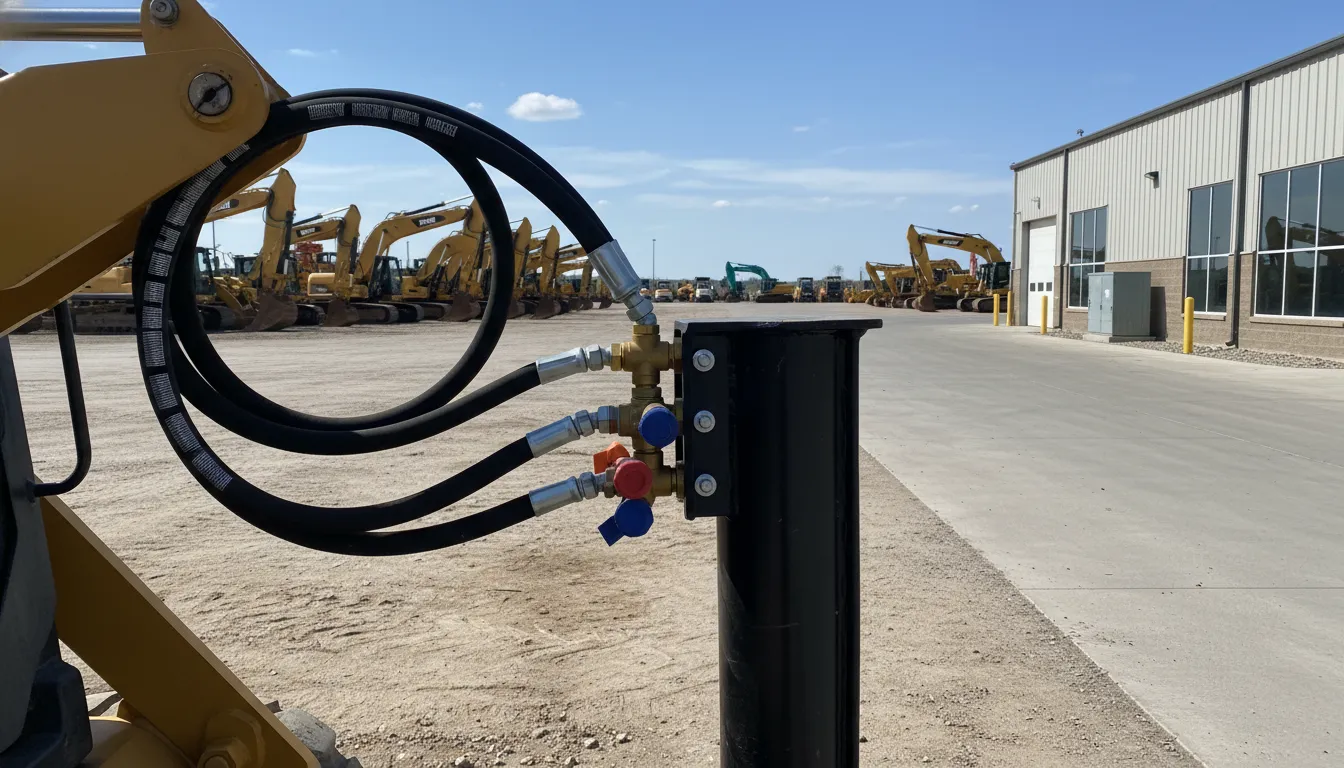
Before you buy a skid steer post driver attachment, you must check if your loader can power it. These tools use high fluid force to drive posts into hard ground. If the flow or pressure is wrong, the tool may not work well or could even break. Checking your machine specs first helps you avoid costly errors and job site delays.
Check hydraulic flow rates
Your machine has a set flow rate measured in gallons per minute (GPM). Most heavy duty post drivers need between 11 GPM and 24 GPM to run at full speed. Some models can handle up to 30 GPM for faster cycles. You can find this number in your loader manual or on the spec plate inside the cab. High flow machines may need a flow divider or a specific post driver build to prevent heat buildup in the lines.
Verify system pressure
Pressure is just as vital as flow for driving force. Post drivers usually need between 1,500 PSI and 3,000 PSI to function. If your machine pressure is too low, the hammer will not drop with enough weight to break through rock or clay. Modern hydraulic post drivers can deliver over 49,000 lbs of impact force when they have enough pressure from the host machine. Always match the peak pressure of your loader to the max rating of the driver to keep the seals from leaking.
Confirm coupler and line types
Standard skid steer couplers are common, but you should still check the size. Most post drivers use half-inch or three-quarter-inch flat-face couplers. If your loader has a case drain line, make sure the attachment supports it. A case drain helps vent back pressure and protects the hydraulic motor from damage. Also, check the length of the hoses to ensure they can reach the auxiliary ports without stretching when you tilt the frame.
Hydraulic power is the core of how these tools work. Without enough flow, you will not hit the 900 blows per minute that some units reach in tough ground. Matching these parts right makes sure you get the most work done with the least wear on your loader. Check your hose routing too, as the lift and tilt parts on skid steer loaders can create pinch points for loose lines.
- Find the GPM and PSI ratings in your machine manual or on the cab door spec sticker.
- Compare these machine ratings to the requirements for the Dakota post driver or other models you want.
- Check your auxiliary ports for standard flat-face couplers and confirm if a case drain is needed.
- Look for pinch points near the lift arms where hoses might snag during the post driving process.
- Verify that your loader can handle the total weight of the driver, which often ranges from 750 lbs to 1,350 lbs.
- Ensure the safety interlock systems are active so the hydraulics do not move when you are out of the cab.
How terrain and soil affect post driving
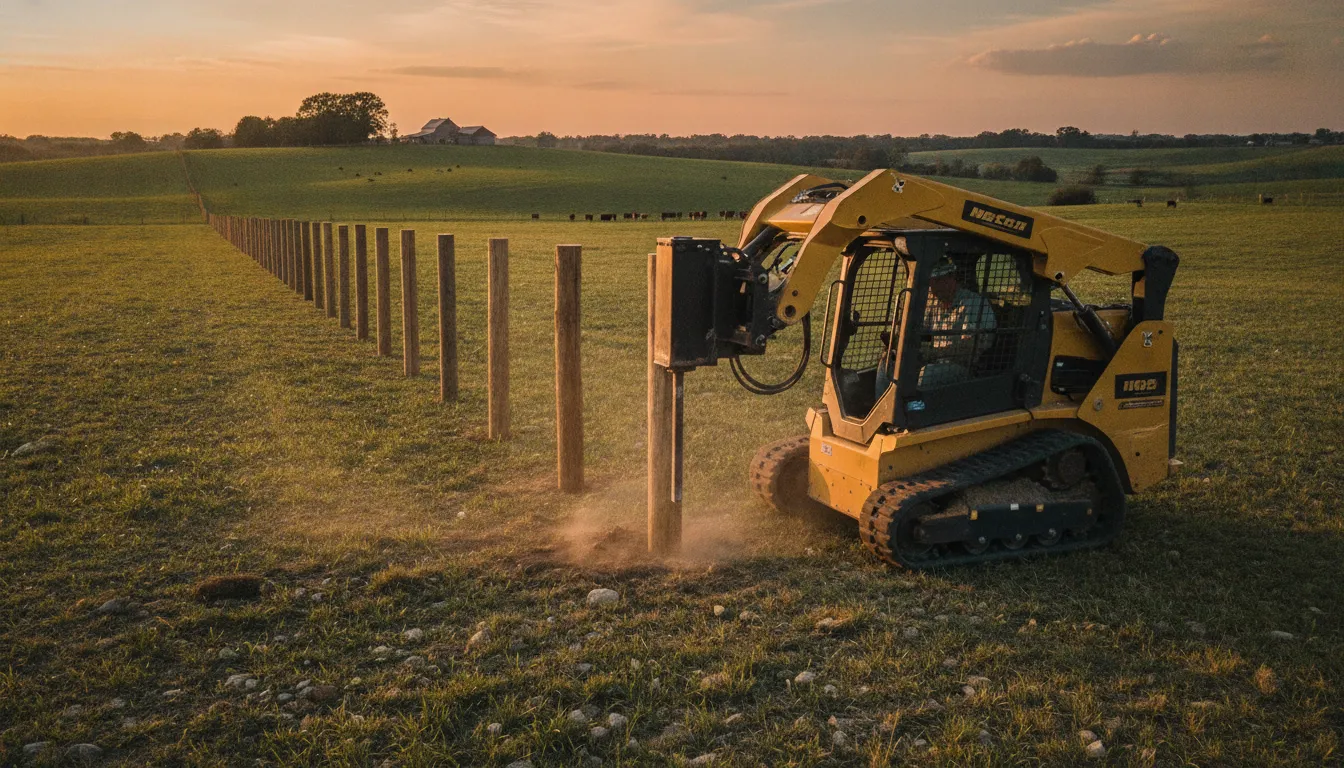
Terrain affects traction, machine stability, post alignment, and driving speed. Firm, level soil usually supports consistent production. Slopes, loose ground, buried rock, and wet areas require slower positioning and closer attention to post plumb, machine limits, and safe operating procedures.
Driving fence posts with a skid steer is a fast way to build a strong fence. But the ground under your tracks changes how well your machine works. The type of soil, the slope of the land, and hidden rocks all play a role in your speed. Using a skid steer post driver attachment helps you handle these shifts with less stress on your gear.
Impact of soil type on driving speed
Soft soil like sand or loam is the easiest to work with on most jobs. In these areas, the post goes down fast and stays straight without much force. Heavy clay is much harder to pierce because it holds onto the post as it goes in. You may need more hydraulic power to push through the thick layers of wet clay.
Hard ground or dry dirt can cause the post to bounce or skip. Many drivers use a cupped head with a small lip to stop the post from sliding off the center. These agricultural tasks often need you to adjust your pressure based on how the ground feels that day. This design helps you keep control even when the dirt is packed tight.
Frozen ground in winter also brings a hard task for fence builders. The top layer of frost acts like a hard shell that resists the point of the post. You might need to use a pilot bit or a heavier hammer to break through the surface. Once you get past the frost line, the driving usually becomes much easier.
Handling slopes and rocky ground
Working on a hill changes the balance of your machine. You must watch your balance to keep the loader from tipping. If the machine tips, you risk being pinned between the frame and the lift arms. Keeping your tracks or wheels on flat ground while you drive the post is the safest way to work.
Rocks are the biggest threat to your post and your driver. A large stone under the surface can bend a steel post or break a wooden one. If you hit a rock, do not keep pushing with full force. It is better to move the post a few inches than to risk a break. Some tools use a tilt function to help you find the right angle on uneven ground.
Ground that is too wet can also cause your skid steer to lose its grip. Deep mud makes it hard to keep the machine still while the driver is running. If you slide during the work, your post will end up crooked. It is often best to wait for a dry day if the terrain is very soft and slick.
Site prep for better fence lines
A clean fence line makes the whole job go smoother. Brush and tall grass can hide holes or stumps that might trip your machine. Clearing the path before you start helps you see exactly where each post needs to go. Good sight lets you line up the driver head for a straight hit every time.
Checking for wires or pipes in the ground is also a key step. You should always call your local power company before you put any metal in the ground. This keeps you safe and stops you from causing a big mess on your land. Once the path is clear, you can focus on building a fence that will last for many years.
Buying factors by type of user
The right post driver depends on workload, post material, terrain, loader capacity, and expected service demands. Contractors often prioritize production and durability, farms may need versatility across multiple fence types, and property owners may favor simple operation for periodic projects.
Choosing a post driver attachment for a skid steer depends on how you plan to use it. Jobs on a farm differ from work on a home lot. You must think about your workload, the type of soil, and how much care the gear needs to keep running well.
Compare post driver attachments for contractors, farms, and property owners.
Contractors and fence builders
Expert fence crews need a skid steer post driver that can run all day. Speed and power are the most key things for these users. A fast tool can deliver up to 900 blows per minute to drive posts into hard ground. This speed helps crews finish long fence lines on time and on budget.
Care is also a big deal for people who work for hire. You need a driver that is easy to fix while you are out in the field. Look for models with simple parts that you can get in a hurry. The total cost to own a tool includes the time it spends in the shop. Pros should pick heavy-duty builds that can take a lot of daily use.
Tilt and control parts are a must for those who build for a living. Some models can tilt 20 degrees to either side. This helps you keep posts straight when you work on steep hills. It also saves time because you do not have to move the machine as much. Easy controls help you set every post to the same depth for a clean look.
Farms and ranches
Farmers often use a skid steer post driver for many kinds of tasks. You might need to fix a broken line or build a new pen for your cattle. A tool that can handle many post sizes is very helpful on a farm. Many units have cupped heads that help keep the post from slipping while you drive it down.
Safety is a top concern when you work on a busy ranch. Heavy tools can lead to pinch or crush spots during use. These risks come from the strong hydraulic parts used for lifting and tilting the gear. It is vital to stay in the cab while the machine is running to avoid harm from these moving parts.
Terrain is another key thing to think about on the farm. A skid steer with its arms up has a high center of gravity. This makes it more likely to tip over on uneven slopes. Farmers should look for a driver that fits the weight of their skid steer loaders to stay safe and stable.
Power can grow with your needs on the ranch. You can use extra weight kits to add up to 200 pounds to some drivers. This can give you 60% more force for when the ground gets dry or hard. Having a tool that you can change to fit the job makes it a better value for your land.
Home lot owners
People with large lots may only use a skid steer post driver a few times a year. For these users, ease of use is the most key factor to think about. You want a tool that is easy to hook up to your loader and start right away. Simple parts and clear controls make the job go fast even if you are not an expert.
Storage and size are also things to keep in mind for home use. A smaller driver is easier to keep in a shed or barn when you are done. It also works better with small machines that have less hydraulic power. You do not need the biggest tool to fix a simple garden fence or to mark a lot line.
Total value over time is what matters most when you buy gear for your home. You want a tool that lasts a long time without a lot of extra work. Basic models often need less grease and care than complex ones. Buying a solid tool once is better than having to rent one every time a fence post needs help.
What should you check before driving the first post?
Before driving the first post, inspect the attachment, couplers, hoses, retaining hardware, and loader connection. Walk the fence line, identify utilities and obstacles, review the manufacturer's instructions, confirm safe clearances, and test the controls in an open area.
Before you start your fencing job, you must get ready. A quick check of your tools and the land helps you work faster. It also keeps you safe. You should always read the book from the maker before you use any new tool. Taking time to look at your site now stops big problems later. It makes sure your skid steer post driver attachment works well from the start.
Find the Lines and Walk the Land
The first step is to walk the fence line. Look for rocks, soft dirt, or steep hills. Knowing the ground helps you plan your path. You also need to know what is under the soil. Hitting a pipe or wire can be very bad. It can also cost a lot of money to fix. Always call for help to find buried lines before you dig or drive posts. Knowing how to prep your skid steer post driver saves time.
Check the slope of the land. Skid steer loaders can tip over more easily when the arms are up. This is because the machine has a high center of gravity with a load in the air. Find any spots where the ground is not flat. You will need to move slowly and keep the tool low in these areas.
Check the Tool and the Machine
Look over your machine and the driver unit. Check the hydraulic hoses for any leaks or cracks. Small leaks can turn into big breaks under high pressure. Make sure all bolts are tight and pins are in place. A loose part can fall off and hurt someone or break the tool. You should also check the oil levels in your loader to be sure it has enough power.
- Scan the fence line. Walk the whole area where you will work to find rocks or low spots.
- Mark all buried lines. Call to find pipes and wires before you drive any posts into the dirt.
- Check the hydraulic system. Look for wear on the hoses and check for any oil leaks on the driver.
- Pick the right head. Use a post head that fits the size and shape of the posts you are using that day.
- Set the machine spot. Park the loader on flat ground so the post stays straight as it goes down.
- Check the safety parts. Test the cab safety interlock systems to make sure they work before you start.
- Do a test drive. Drive one post in an easy spot to see how the ground reacts to the hammer force.
Safe work habits are the most important part of any job. High pressure systems create crush and pinch point hazards near the lift arms. Keep other people away from the machine while you work. Always stay in the seat with the bar down when the driver is running. These simple steps help you finish your fence without any big mistakes.
Maintenance that protects uptime
Post driver maintenance centers on frequent inspections, proper lubrication, clean hydraulic connections, secure fasteners, and prompt repair of worn parts. Following the manufacturer's service schedule helps reduce unplanned downtime and keeps the attachment ready for demanding fence-installation work.
A skid steer post driver handles intense force with every strike. Regular care keeps the unit safe and helps you avoid costly delays on the job site. Most upkeep focuses on parts that move or carry high pressure. By following a steady check list, you can find small issues before they stop your work. This keeps your machine ready for any tough task.
Browse post drivers and choose the right attachment for your loader.
Daily checks and safety steps
Before you start your machine, look for signs of damage on the main frame. Check that all pins and bolts are tight to keep the tool secure. Pay close attention to the skid steer post driver attachment mount plate for cracks in the steel. These units often deliver up to 49,000 lbs of impact force, so the structure must stay in top shape to handle the load.
A daily walk-around helps you spot problems early. Focus on these areas every morning:
- Tighten all mounting bolts and pins.
- Check the mount plate for weld cracks.
- Ensure safety locks and interlocks work.
- Look for worn spots on the drive head.
Verify that your safety systems work as they should. As shown in OSHA safety rules, loaders have safety locks to stop movement when you are out of the cab. Never bypass these parts during a check. Keeping these features in good repair helps prevent the risk of being pinned. This is vital since most incidents involve being stuck between the lift arms and the frame.
Hydraulic lines and wear parts
The hydraulic system is the heart of your post driver. Inspect hoses and fittings every day for leaks, cracks, or loose parts. Since these systems use high pressure to lift and tilt, even a small leak can lead to a big failure. Powerful hydraulics create strong pinch point hazards that can cause harm if the lines burst. Make sure all fittings are snug before you put the system under load.
Look at the cupped driving head to ensure the lip is still sharp. This lip helps you keep control and stops the post from slipping during use. If your model has a tilt system, check the pivot points for smooth motion. These tools can tilt up to 20 degrees in each direction to help you set plumb posts on slopes. Moving parts like these need a thin coat of grease to run smoothly and stay cool.
Cleaning and storage tips
Dirt and mud can hide wear and cause rust. Clean your driver after each use to clear away debris from the joints and the driving head. This makes it easier to spot leaks the next time you work. Keeping the tool clean also ensures that the hydraulic flow stays at the right level for the best power. A clean machine is easier to hitch to your skid steer loaders without getting grit in the couplers.
When you store your gear, pick a dry place away from the rain. Store the post driver in a way that protects the rods from dust. It is also wise to keep a log of all service tasks. Writing down when you change hoses helps you track the health of your gear. This log also proves the value of the tool if you ever decide to sell it. Clear notes show you took care of the machine.
Frequently Asked Questions
How fast can a skid steer post driver install posts?
These tools are much faster than manual labor. A strong hydraulic unit can deliver up to 900 blows per minute. This speed allows one worker to set miles of fence in a few days. According to Skid Pro, these drivers handle heavy tasks in tough conditions. Real speed depends on your soil and post type, but you can often finish a week of work in one afternoon.
What alternatives are there to a skid steer post driver?
If you do not want to use a hammer, an auger is a common choice. An auger drills a hole first, and then you set the post and fill the gap with dirt or concrete. This works well for large corner posts or gates. Manual post drivers are also a choice for small jobs, but they take much more effort. A hydraulic unit is best for long fence lines where speed and power are key to finishing the task.
Is a skid steer post driver worth the investment?
Buying a post driver is a big choice for any farm owner. If you have to set miles of fence, the time you save will pay for the tool fast. These units are built to last and can handle the stress of daily use on a job site. According to Purdue University, loaders are now used for many farm tasks like building fences and moving heavy gear.
Can I rent a skid steer post driver?
Many local equipment yards offer post drivers for rent. This is a good choice for one-time farm projects or small fence repairs. Rental rates vary by your area, but they are often much lower than the cost of buying a new tool. If you plan to build miles of fence every year, buying your own post driver attachment is usually a better long-term plan for your farm.
Ready to pick the best post driver for your fence?
Building a fence is a big job that can take a long time to finish. If you do not use the right skid steer post driver, you will spend too much time on hard work. This can lead to sore muscles and a project that stays open for weeks. You will also lose money on labor costs when the work takes longer than it should. Starting now with the right tool will help you get the job done fast and clean. You can save your strength for other big tasks on your farm or job site. Getting the best gear today ensures your fence is strong and straight without the extra stress. Do not wait until you are tired and behind your plan to make a change.
Ready to get started? Shop post driver attachments to contact an expert and find the right tool for your machine today.