

Skid Steer Cold Planer Attachment Buyer's Guide
Get the Attachment Your Project Needs
Shop proven, work-ready attachments that help you tackle any task with confidence.
LEARN MOREReplacing a section of damaged asphalt requires more than a simple shovel and patch kit. The right skid steer cold planer attachment turns demanding pavement removal into controlled, efficient work.
Compare skid steer cold planer attachments by flow, cutting width, and job requirements.
A skid steer cold planer attachment is a powerful milling tool designed to grind down asphalt and concrete surfaces with precision. These hydraulic tools turn your loader into a high performance milling machine capable of smoothing joints, removing stripes, or prepping for utility repairs. According to Blue Diamond Attachments, these units usually offer milling widths from 14 inches to 48 inches and reach depths up to 6.7 inches. Most models feature separate depth control and tilting drums to handle uneven ground or work along curbs. These units outperform walk behind tools by using your loader's high flow hydraulics and weight to keep steady pressure on the ground. This makes them the best choice for contractors who need to restore pavement or level frost heaves without renting a full size milling truck.
What is a skid steer cold planer attachment?
A skid steer cold planer attachment is a tough tool built to grind down asphalt and concrete. It fits onto the front of a skid steer or compact track loader. Large milling machines take up whole lanes, but this tool works in tight spots. It is a key tool for crews that need to fix roads or level a surface. It helps you remove old layers without the cost of a big road crew.
How the milling process works
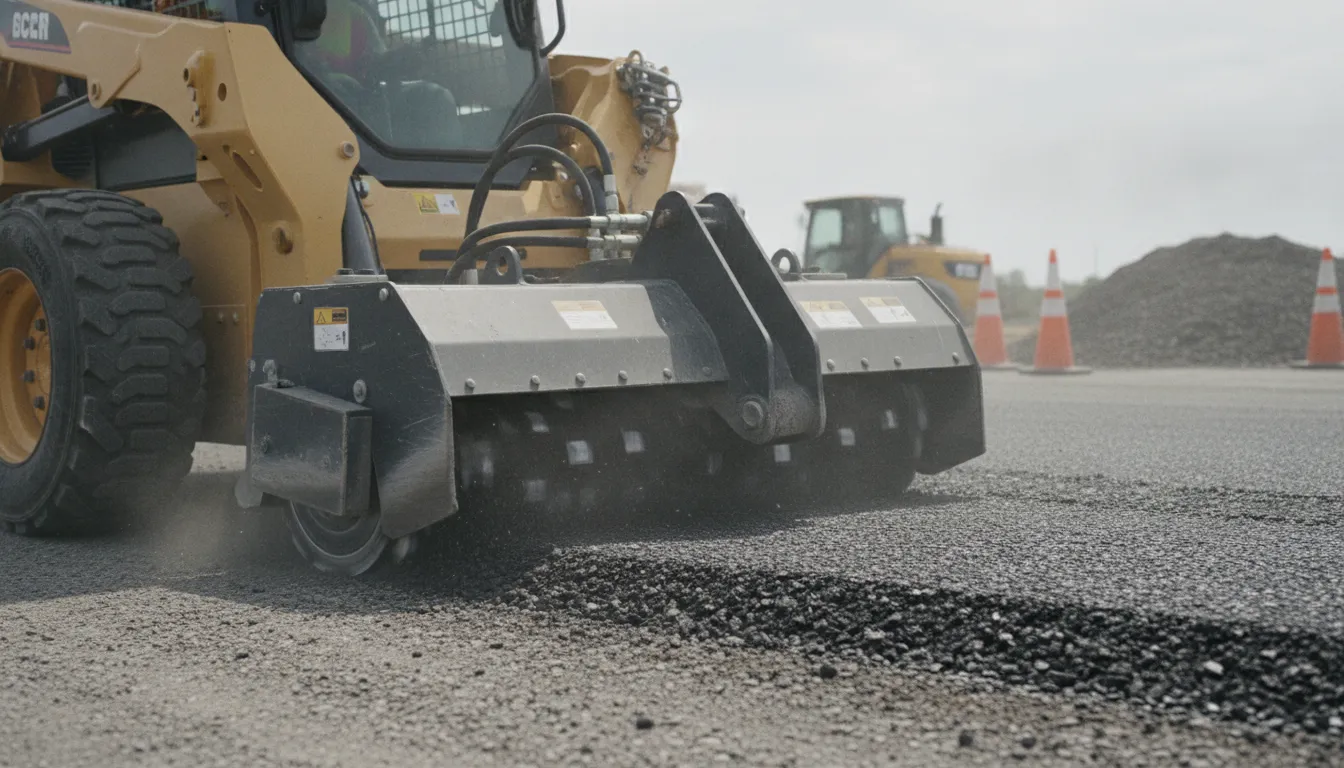
The main part of the unit is a heavy drum lined with sharp carbide teeth. When you start the tool, the machine's hydraulic system spins this drum at high speeds. These teeth strike the hard road and chip away the bits of stone. This method is called cold milling. It turns hard asphalt into small bits that you can sweep up. Using a skid steer loader guide is much faster than using hand tools like jackhammers.
Most cold planers use high-end parts to handle the heat and stress of the job. The drum sits inside a metal box to keep debris from flying. Many units also use water to keep the teeth cool and stop dust from spreading. This design makes the tool last for long hours on the job site. It is built to stand up to the hardest tasks you face.
Key parts and sizes
When you pick a cold planer, the width of the drum is a big deal. Most models come in widths from 14 to 48 inches. The depth of the cut is also easy to change. You can set it to dig from 4 to about 7 inches deep. These sizes let you match the tool to your job. You can shave a thin layer or dig deep into a patch.
Good tilt range is one more great feature. Many tools can tilt up to 12 degrees to the side. This tilt lets the drum follow the slope of a road. It also helps you work flat against a curb. Side-shift features let you move the planer to the edge of the machine. This helps you get close to walls without driving the skid steer into them.
Common jobs for cold planers
Cold planers are best for small road repairs. They are used to fix potholes and smooth out joints where new and old asphalt meet. You can also use them to remove road stripes. They are great for making a clean edge for a patch or milling near a drain. Because they are small, they reach areas that big trucks cannot fit into.
Safety is a big concern for any crew. Grinding road surfaces makes a lot of fine dust. This dust can have silica in it, which is bad to breathe. The CDC says that you must use engineering controls like water sprays to cut down on dust. Using these tools keeps the site safe while you get the work done fast.
Match the cold planer to your hydraulic flow
You must match your machine's power to your extreme-duty cold planer option. If the flow is too low, the drum will stall in hard asphalt. If the pressure is too high, you might damage the motor. Checking your flow rates is the first step before you buy or rent gear for your job.
Most loaders come with standard flow. This is fine for many tools, but cold planers are different. They need a steady stream of oil to keep the drum spinning against the push back of the road. Knowing your machine's limits will save you from a bad choice.
Standard and high flow power
Most cold planers need a lot of power to mill through road areas. Standard flow machines often give between 12 and 30 gallons per minute (GPM). These models work well for small jobs like fixing a pothole or making shallow cuts in a drive. They are lighter and easier to find for rent.
But for deep milling or large road jobs, you will need a high flow system. These machines put out 27 to 50 GPM. This extra oil flow lets the drum turn much faster. It also lets you use a wider drum, which helps you cover more ground in less time.
High flow tools use more extra hydraulic power to get the job done. This power helps the teeth bite into the ground without slowing down or stopping. If you want to finish the job fast and clean, a high flow setup is often the best choice for pro teams.
| Feature | Standard flow | High flow |
|---|---|---|
| Typical use | Small repairs | Deep milling |
Pressure and case drain needs
Pressure is just as vital as flow when you use a cold planer. High flow models can handle up to 4,500 PSI to keep the drum turning under a heavy load. This high pressure ensures that the motor has enough torque to rip through old asphalt and concrete without a hitch.
You also need to check for a case drain line on your machine. This third line is a small hose that sends extra oil back to the tank. It protects the motor seals from high pressure spikes that happen during work. Most high flow planers need this line to work safely over long hours.
A proper attachment connection is key to keeping your gear safe and running. Without a case drain, the back pressure can build up and blow out the motor seals. This leads to costly repairs and lost time on the job site. Always check your machine's manual for these specs before you start.
Checking machine match
Before you start your project, look at the spec plate on your loader or skid steer. It will list the max flow and pressure your machine can give to the tools. You should also make sure your hydraulic lines and couplers are clean. Dirty oil can clog the valves in your cold planer and cause it to fail.
It is also good to check the weight of the tool. A large high flow planer can be very heavy. Make sure your loader has the lift capacity to carry the tool safely across the job site. If the tool is too heavy, your machine might tip or lose steering power.
Regular care is needed for proper pavement structure widening and long term use. Keeping your hydraulic system in top shape ensures the drum stays stable while you mill the road. Always verify your machine's limits before you hook up a new tool to your skid steer.
How do you choose cutting width and depth?
Choosing the right size for your skid steer cold planer attachment depends on the job. You must balance the speed of a wide cut with the hydraulic power needed to turn the drum. Most units on the market offer widths between 14 and 48 inches. Larger drums cover more ground but need a high-flow machine to keep the teeth moving. If you use a drum that is too wide for your loader, the engine may stall or overheat.
Consider job scale and access
If you work in tight spots like gas stations or near curbs, a narrow drum is your best tool. A 14-inch or 18-inch model allows for clean work in small areas where a wide unit simply will not fit. Narrower units also put less stress on your loader's frame and arm. This helps you keep a steady pace without losing control. For large road repairs or parking lot work, a 40-inch or 48-inch width is better. These wider tools save time by cutting down on the total number of passes you must make to finish the area.
Match depth to pavement layers
The depth of your cut is just as vital as the width. Most skid steer cold planer attachment models reach depths from 4.3 to 6.7 inches. You should pick a depth that removes the old surface without hitting the dirt or stone base. Cutting too deep can ruin the strength of the whole road. If you are widening a lane, you must follow set rules to keep the new layers stable. Proper depth control gives you a flat surface for new asphalt to bond with. Using the right depth ensures the patch lasts as long as the first road.
Balance width with machine balance
A wide drum requires high hydraulic flow and a heavy machine to stay steady. If your skid steer is too light, the planer might bounce or skip across the hard asphalt. This creates an uneven finish that is hard to fix later. You should check your loader's weight limit and flow rate before you buy a new unit. Safety is also a major factor when choosing your setup. Milling creates fine dust that can harm your lungs over time. The CDC says using water spray kits helps control this dust. These kits keep the air clear and help the cutting teeth last longer by keeping them cool.
Adjust for slopes and curbs
Many jobs are not on flat ground. When you work on a slope or near a gutter, you need a tool that can tilt. Some models tilt up to 12 degrees to match the grade of the road. This feature is key when you need to mill a flush edge along a concrete curb. Without a tilting drum, you might leave high spots that cause water to pool. Water pooling can lead to cracks and potholes in the future. Choosing a unit with both the right width and a good tilt range ensures a clean result on any job site.
Choose the right drum and cutting teeth
The drum is the core of any high-flow cold planer model. It holds the cutting teeth and turns to mill the road. Choosing the right drum width and tooth type helps you finish jobs fast and keeps costs low. Quality cold planers use tough parts to handle the hard work of milling asphalt and concrete.
Select the best drum width
Drums come in many sizes to fit different jobs. Small drums, about 14 inches wide, work well for tight spots or small repairs. Large drums can reach 48 inches for big road projects. You must match the drum size to what your machine can handle. Using a drum that is too big can slow you down or hurt your loader.
Pick the right teeth
The teeth do the actual cutting. How close they are on the drum changes the finish of the cut. Close teeth leave a smooth surface. Wider gaps cut deeper and faster. Asphalt teeth are not the same as concrete teeth. Concrete is harder and needs stronger picks to last. All milling makes dust, so you must use water or tools to limit dust in the air.
Check for wear
Cutting teeth wear out over time. When teeth get dull, the drum has to work harder. This uses more fuel. You should check your teeth each day and swap them before they break. Keeping the drum and teeth in good shape is key for the stability of the road you are fixing. A well-kept drum makes a clean cut that is ready for new material.
How to select a cold planer for your skid steer
Choosing the right cold planer for your skid steer is a big choice. This tool turns your loader into a milling machine. It can help you repair roads, patch holes, or fix curbs. But not every tool fits every loader. You must look at the specs of your machine first. If you choose the wrong one, you might not get enough power. Or you could even break your hydraulic system. This guide will show you how to find the perfect match for your work.
Match hydraulic flow and pressure
To pick the best tool, start with your loader specs. A skid steer cold planer attachment needs the right amount of oil flow to work well. Most of these tools need a high flow system. This flow often ranges from 27 to 50 gallons per minute. High flow lets the drum turn with more force. This helps you mill through tough asphalt or hard concrete. If your machine has low flow, you will need a smaller model. These small tools usually use 12 to 30 gallons per minute. You must also check the hydraulic pressure. Some high flow models can reach up to 4,500 PSI. Using the wrong flow or pressure can damage your machine or the tool. Always check your loader's manual before you buy.
Choose the right milling size
The size of the cold planer drum dictates how fast you finish a job. You can find drums that are 14 inches to 48 inches wide. Wide drums cover more ground in one pass. But they also need more power from your loader. Think about the depth of the cut you need too. Some tools can cut as deep as 6.7 inches. For most road work, a cut of 4 to 6 inches is plenty. You should also look for a tool that can tilt. A tilt of 12 degrees helps you cut on uneven ground. It also lets you mill close to curbs. This makes the job much cleaner.
Check safety and dust controls
Milling creates a lot of fine dust. This dust can contain crystalline silica. Breathing this dust is very bad for your health. The CDC warns that you must use engineering controls to reduce dust on the job site. Some cold planers have water kits to keep dust down. Others use special shields to trap the fine bits. Make sure your tool has a way to handle this mess. You should also check the build quality. Look for premium parts that can stand up to hard use. A good tool often comes with a 1-year warranty to protect your buy.
Follow these steps to find the right tool for your loader.
- Check your skid steer's hydraulic flow and pressure ratings.
- Pick a drum width that matches your machine's power and your project needs.
- Confirm the maximum cut depth is enough for your typical jobs.
- Look for a model with side shift and tilt for better control.
- Verify the tool has dust control features to protect workers from silica.
- Check for proper attachment connection points to ensure a safe fit.
- Ask about the warranty and the cost of replacement teeth for the drum.
Beyond specs, you should look at the drum teeth. The teeth do all the hard work. They take a lot of wear when you mill rock and tar. Check how easy it is to swap out old teeth. A good drum lets you change them fast so you can get back to work. Some models also allow for side shifting. This lets you move the drum to the side of the machine. It is great for working next to walls or fences. It saves you from having to drive too close to a structure.
Where a skid steer milling attachment works best
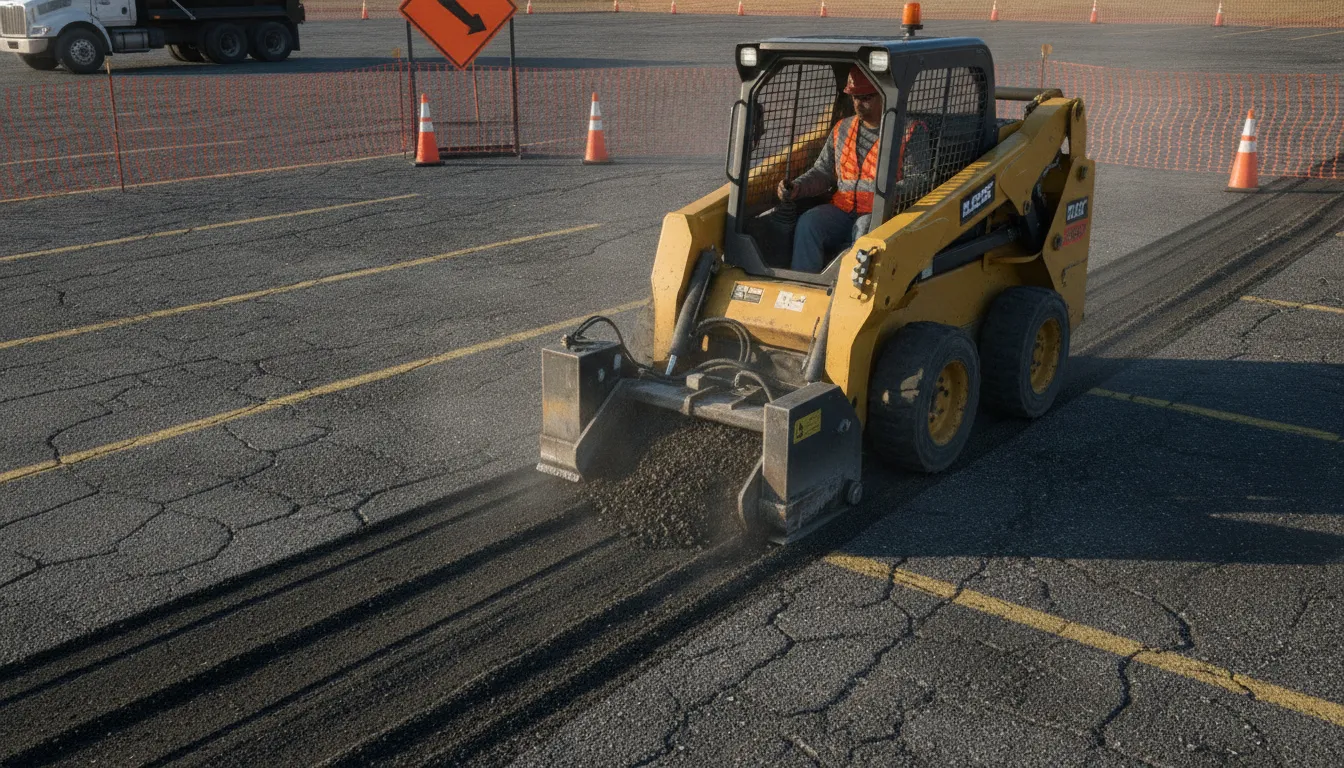
A cold planer and concrete shaver option is a top choice for small to medium road repair jobs. These tools help crews fix asphalt and concrete without the need for large milling machines. They work by using a drum with teeth to grind down the surface. This process makes it easy to remove old layers of road and prep the area for new material.
Common pavement repairs
One of the best uses for this tool is patch work. When a road has a pothole or a soft spot, you can use the planer to cut a clean edge around the site. This creates a solid base for the new patch to bond with the old road. It is also great for leveling high spots or bumps that form in the asphalt over time. Many crews use these tools to smooth out transitions between old and new pavement.
Utility cuts are another big task for these attachments. Before a crew can lay new pipe or wire under a street, they must cut through the hard surface. A cold planer can make a precise trench that is just wide enough for the job. This saves time and reduces the amount of material you need to replace later. For deep tasks, some models can reach a milling depth of up to 6.0 inches (Source).
Curb and edge work
Working near curbs and walls can be hard for large machines. A skid steer is small and easy to move, which lets it get into tight spots. Many cold planers can tilt up to 12 degrees to help follow the slope of a curb or gutter (Source). This allows the operator to mill right up to the edge of a structure without causing damage.
This precision is helpful for road widening and sidewalk projects too. You can use the attachment to shave down a specific area while leaving the rest of the road intact. This level of control helps keep the job site clean and efficient. It also helps with water drainage by creating the right slope on the finished surface.
When to use other tools
While a cold planer is strong, it is not the best fit for every job. For very large highway projects, a dedicated milling machine is often faster. Large machines have more power and can cover a wider area in one pass. But for city streets, parking lots, and utility work, the skid steer version is often the more cost effective pick.
Safety is also a key factor when using these tools. Milling can create a lot of dust, which may contain silica. It is important to use water kits or other controls to keep the air clean for workers. Organizations like NIOSH provide guidelines on how to manage dust and protect crews on the job (Source).
Operating and maintenance considerations
Getting the most from your skid steer cold planer attachment starts with daily care. These tools work in very tough spots. They grind through hard asphalt and concrete every day. This creates high heat and friction. If you do not watch your gear, it will break down fast. Good care helps your parts last longer and keeps your work site safe.
Daily checks and flow
You should check your tool before every shift. Look at the hydraulic hoses for any leaks or signs of wear. High-flow models can reach up to 4,500 PSI, so a small leak is a big risk. Make sure you have a proper attachment connection for your loader. Check that the drum turns freely and has no rocks or metal stuck inside it.
You must also check the hydraulic flow and pressure levels. Matching your tool to your skid steer output is vital for safety. If the flow is too low, the planer will not have enough power to mill. If it is too high, you might damage the seals or the pump. Follow the maker's guide to set the right depth and tilt for your own job.
Replacing planer teeth
The teeth on your drum take the most abuse. They are built with strong bits, but asphalt wears them down fast. Check every tooth for dull spots or cracks before you start a new run. Missing or broken teeth make the machine shake more. This can harm the drum or the hydraulic system over time. Quick repairs keep the machine steady and protect the road.
Most tooth changes are simple with the right tool. You should keep a full set of spare teeth in your truck at all times. Change them as soon as you see big wear on the tips. Using fresh bits makes the milling process much faster. It also lowers the load on your skid steer engine. This helps you save fuel and reduces the chance of a major break.
Dust and safe travel
Milling creates a lot of dust that can hurt your health. This dust often has silica, which is bad for your lungs. The CDC and NIOSH warn that silica contact can cause lung issues. You must use water to keep the dust down. Water also cools the teeth, which helps them stay sharp for a much longer time.
When you move the machine, always lift the planer off the ground. Do not travel with the drum spinning near people or other gear. Check that your skid steer can lift the weight of the planer. A heavy tool can make your loader tip if you turn too fast. Good road care needs a strong plan and clear safety steps to get the work done right.
Browse available cold planers and narrow your options before choosing a model.
Frequently Asked Questions
What is the most profitable skid steer attachment?
Profitability depends on local demand, utilization, operating cost, and the jobs your crew can win. A cold planer may expand a paving contractor's service range, but buyers should calculate expected usage and tooth-replacement costs before investing.
Can I rent a skid steer cold planer attachment?
Many equipment rental yards carry cold planers for short-term projects. Confirm the attachment's required hydraulic flow, pressure, couplers, case drain, and operating weight before renting it for your skid steer.
What is the price range for a skid steer cold planer attachment?
Pricing varies by manufacturer, drum width, hydraulic requirements, features, and condition. Compare current product pricing and include replacement teeth, hoses, water kits, and maintenance in your total ownership-cost estimate.
What is the best skid steer cold planer attachment?
The best cold planer matches your machine's hydraulic output and rated operating capacity while providing the cutting width, depth, tilt, and side-shift your typical projects require.
Ready to pick the best skid steer cold planer attachment?
Picking the wrong tool for your paving or repair job can lead to very slow work times and may cause bad damage to your machine. You can stop these big delays and get back to your work plan by choosing a new tool that fits your flow and depth needs now. If you do not act today, you risk losing money on jobs that take too long while your crew stays stuck with gear that fails.
Ready to shop cold planer attachments? Browse the cold planer collection to compare available options and find a model that fits your machine and next paving project.