

The Complete Guide to Skid Steer Mulcher Attachments
Get the Attachment Your Project Needs
Shop proven, work-ready attachments that help you tackle any task with confidence.
LEARN MOREDense brush and standing timber can turn a simple land clearing job into a long and costly project. A skid steer mulcher solves this problem by turning thick vegetation into fine debris in seconds. This makes site preparation much faster for any task.
Looking for the ultimate clearing power? Explore our full collection of high-performance skid steer mulchers for sale at eSkidSteer today.
A skid steer mulcher is a powerful attachment that shreds trees and brush into a fine layer of mulch in one pass. These tools mount to a machine and use high-speed cutting heads to grind vegetation into small pieces that stay on-site to improve the soil. Operators use them for site prep because they remove the need for hauling debris or burning brush. According to the U.S. Forest Service, these tools are used to grind vegetation to reduce fuel height and prepare sites for new planting. By choosing the right head, you can clear land with less labor than old methods. This tool makes vegetation control fast on any job site.
Modern skid steers are highly versatile tool carriers. By swapping attachments on the standard quick-attach plate, you can quickly transition your loader to handle a wide range of jobs, such as using a heavy-duty skid steer concrete claw for demolition work, or a specialized feed pusher attachment for livestock feed management. To learn more about selecting the right carrier machine, refer to our ultimate guide to skid steer loaders. However, when it comes to aggressive land clearing, forest thinning, and brush mitigation, nothing matches the raw processing speed and efficiency of a dedicated forestry mulcher. To see how this tool can streamline your next clearing project, let's look at what these attachments are and how they operate.
What Is a Skid Steer Mulcher?
A skid steer mulcher is a heavy-duty, high-performance attachment designed to grind standing timber, dense underbrush, and stubborn vegetation into an organic layer of ground cover. Commonly referred to as a forestry mulching head, this attachment transforms a standard skid steer loader into a highly efficient, single-operator land-clearing machine. Instead of using traditional felling and hauling methods, which require chainsaws, excavators, and dump trucks, forestry mulching cuts, processes, and distributes organic material in a single, continuous pass. This not only dramatically reduces labor costs but also eliminates the need to burn debris piles or haul brush to a landfill.
How Forestry Mulcher Attachments Work
Operating as an auxiliary hydraulic attachment, a forestry mulcher draws power directly from the carrier machine's hydraulic pumps. This pressurized fluid drives a heavy-duty hydraulic motor, often a variable-displacement piston motor, which spins a weighted steel cutting rotor or disc at high RPMs. As the operator drives the skid steer forward, the spinning cutting head shreds brush and saplings on impact. High-end mulchers utilize specialized counter-knives within the rotor housing to double-process the wood, refining the material into a consistent, finely shredded mulch that is ejected downward. According to the USDA Forest Service, this process is highly effective for reducing hazardous fuel loads, improving soil moisture retention, and mitigating soil erosion.
Disc vs. Drum Cutting Designs
While all mulching heads achieve the same basic goal, they utilize distinct cutting mechanisms. Disc mulchers feature a large, horizontally spinning steel disc equipped with rotatable cutting teeth along its perimeter. This design excels at rapid felling and bulk clearing in open spaces. Drum mulchers, on the other hand, utilize a horizontal cylindrical drum with teeth arranged in a spiral pattern. The drum spins toward the machine, pulling vegetation into the cutting chamber to produce a much finer, highly uniform mulch that degrades quickly. Your choice of cutting head should align with your carrier's hydraulic capacity and the specific vegetation you need to process.
The Practical Benefits of Forestry Mulching
Integrating a forestry mulcher into your land management workflow offers significant ecological and economic advantages. Traditional land clearing typically strips the topsoil, leaving the ground vulnerable to severe erosion and weed infestation. Conversely, forestry mulching leaves the soil's root structure intact and leaves behind a protective blanket of organic mulch. This mulch layer acts as a natural barrier, suppressing weed germination, retaining soil moisture, and slowly releasing nutrients back into the earth. Additionally, because the driver operates from within a sealed, climate-controlled cab equipped with a heavy-duty Forestry Door and falling object protective structures (FOPS). Forestry mulching is significantly safer than manual clearing methods involving chainsaws and hand-fed wood chippers.
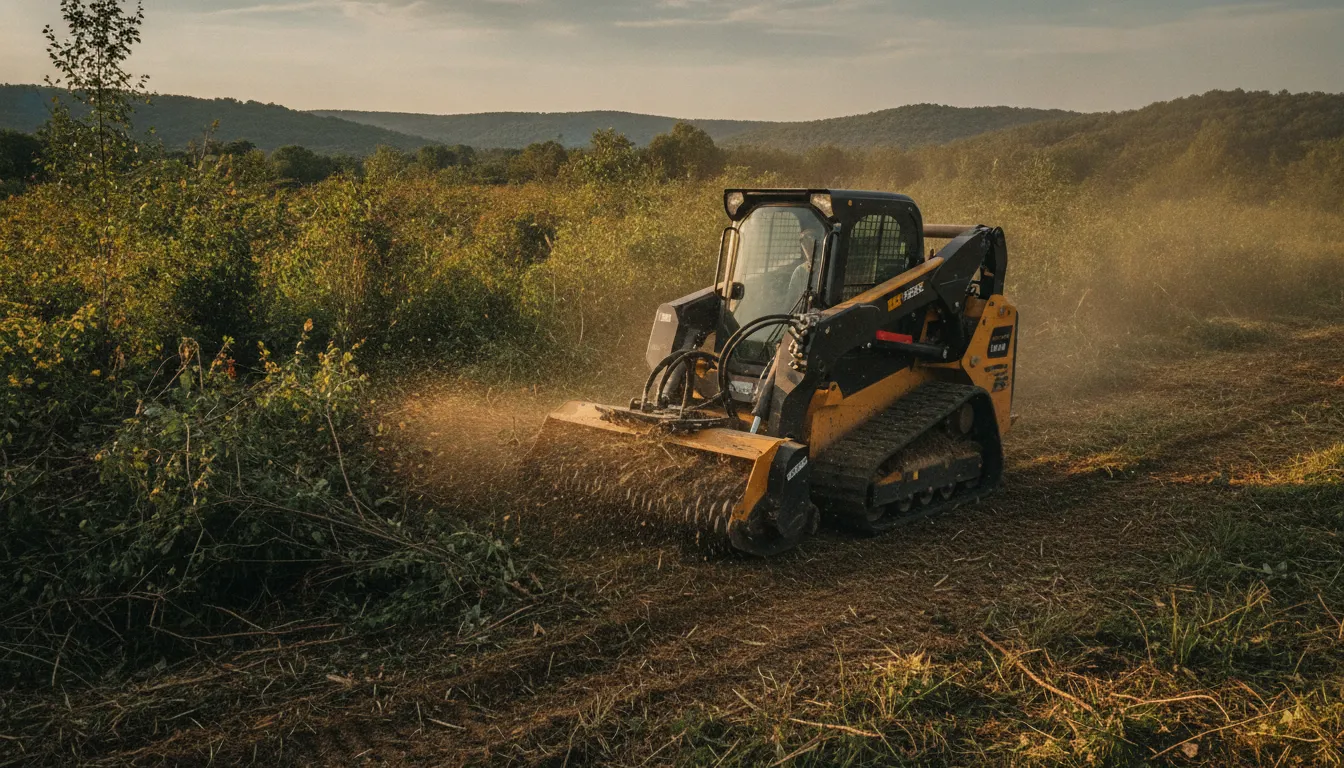
Types of Skid Steer Mulcher Attachments: Disc vs. Drum
A skid steer mulcher is a strong tool used to clear land and manage brush. These attachments grind trees and plants into small bits on the spot. Most owners choose between two main designs: disc mulchers and drum mulchers. Each type uses a different cutting action and works best for set jobs.
Disc Mulchers for Fast Brush Clearing
Disc mulchers use a large, heavy disc that spins like a top. This upright shaft design uses speed and weight to cut through plants. You can find good disc mulcher attachments that work well for clearing tall grass and small trees. They are very fast when working in open areas with light brush.
These tools are great for cutting down wood. However, they are usually kept to trees between 6 and 8 inches thick, as per the U.S. Forest Service. While they cut fast, they often leave behind larger chunks of wood. This makes them better for first clearing than for creating a smooth look.
Drum Mulchers for Heavy Timber and Fine Finish
Drum mulchers use a side-to-side tube or drum covered in teeth. As the drum spins, the teeth shred wood into a fine mulch. If you need a good work tool, the Bradco Series II Drum Mulcher is a top choice. It gives a clean look and can handle thick wood better than a disc.
Side-to-side shaft heads can cut down much larger trees. Some models can take down wood up to 30 inches wide. These machines are also safer in some ways because they throw wood down or forward rather than out to the side. They are the best pick when you need to turn big logs into a smooth carpet of mulch.
Choosing the Right Mulcher for Your Job
Picking the right tool depends on your land and your goals. Disc mulchers save time on large lots with many small trees. Drum mulchers are better for forest work where you need to remove big trees and leave the ground looking neat. You should also think about your skid steer's power, as drum mulchers often need more flow to run well.
Cost is also a factor when buying a drum mulcher attachment or a disc model. Discs are often cheaper to buy and keep up because they have fewer moving parts. Drums may cost more but they can do more types of work. Make sure to check your skid steer's hydraulic specs before you buy any new head.
Safe Use and Upkeep
Using a mulcher needs a safe machine and a careful hand. Flying wood is a big risk when the head is spinning fast. You must have a strong cab with a door to keep you safe from flying bits. Proper safety guards are a must for any mulching job. Keeping the teeth sharp will also help you work faster and put less stress on your machine.
| Feature | Disc Mulcher. | Drum Mulcher. |
|---|---|---|
| Cutting Speed | Very Fast. | Medium. |
| Mulch Quality | Rough and Chunky. | Fine and Smooth. |
| Max Tree Size | Up to 8 Inches. | Up to 30 Inches. |
| Tooth Durability | High. | Medium. |
| Safe Path | Throws to the Side. | Throws Forward/Down. |
Hydraulic Flow Requirements: Can You Run a Forestry Mulcher on a Skid Steer?
You can run a forestry mulcher on a skid steer if the loader has enough power. Most people want to know if their machine can handle the load. A forestry head takes a lot of power to spin its heavy rotor. A skid steer carrier needs a strong hydraulic system to keep the teeth moving through brush. If the flow is too low, the head will stall. Most mulchers need high-flow power to work well and stay cool.
Standard and high flow systems
Standard flow usually runs between 15 and 25 gallons per minute (GPM). This works for buckets, but it is often too weak for a Blue Diamond disc mulcher. Using a big head on low flow causes the rotor to spin slowly. This makes it hard to cut anything larger than small brush.
High-flow systems are the standard for forestry work. These systems push 30 to 45 GPM of fluid through the lines. This extra volume gives the mulcher the speed it needs to grind wood. High-flow machines can handle thicker trees and denser brush. They also recover faster after a big cut so you can keep moving.
Pressure and case drains
Flow is just one part of the puzzle. You must also think about the pressure, which is measured in pounds per square inch (PSI). Most high-end mulchers need 3,000 to 4,000 PSI to work well. Higher pressure allows the teeth to bite into hard wood without slowing down. If your PSI is too low, the tool will lose power when it hits a tough spot. This can make the job take much longer than it should.
Most high-flow heads also need a case drain line. This third hose carries extra oil back to the tank. It keeps the motor cool and stops pressure from building up. Without a case drain, a spike in pressure could blow out the motor seals. This would cause a big mess and cost a lot to fix. Make sure your skid steer has this third line if the tool needs it. It is a simple way to protect your machine.
True hydraulic horsepower
To see how fast you can clear land, you should find the hydraulic horsepower. You find this by multiplying GPM and PSI, then dividing by 1,714. This number tells you the real work your machine can do. These tools grind vegetation into small bits that stay on the ground. More horsepower means you can turn large trees into fine chips in less time. It is the best way to compare two different loaders.
High power also lets you keep a steady pace. Most operators drive between two and four miles per hour when they clear land. Having the right flow means you do not have to stop or slow down as much. This keeps your day fast and protects the engine from heat. Always choose a machine that has more than the minimum needs of the head. This helps your gear last for years of hard work.
Buying Considerations: Teeth Options, Cutting Width, and Maintenance
Buying a skid steer mulcher is a big step for your business. You must match the tool to the type of land you clear most often. The right gear helps you work fast and keeps your costs low. Most buyers focus on three things. These are the teeth, the cutting width, and how easy the unit is to fix. A good choice here ensures your skid steer mulcher stays in the field and out of the shop.
Choosing the Right Teeth
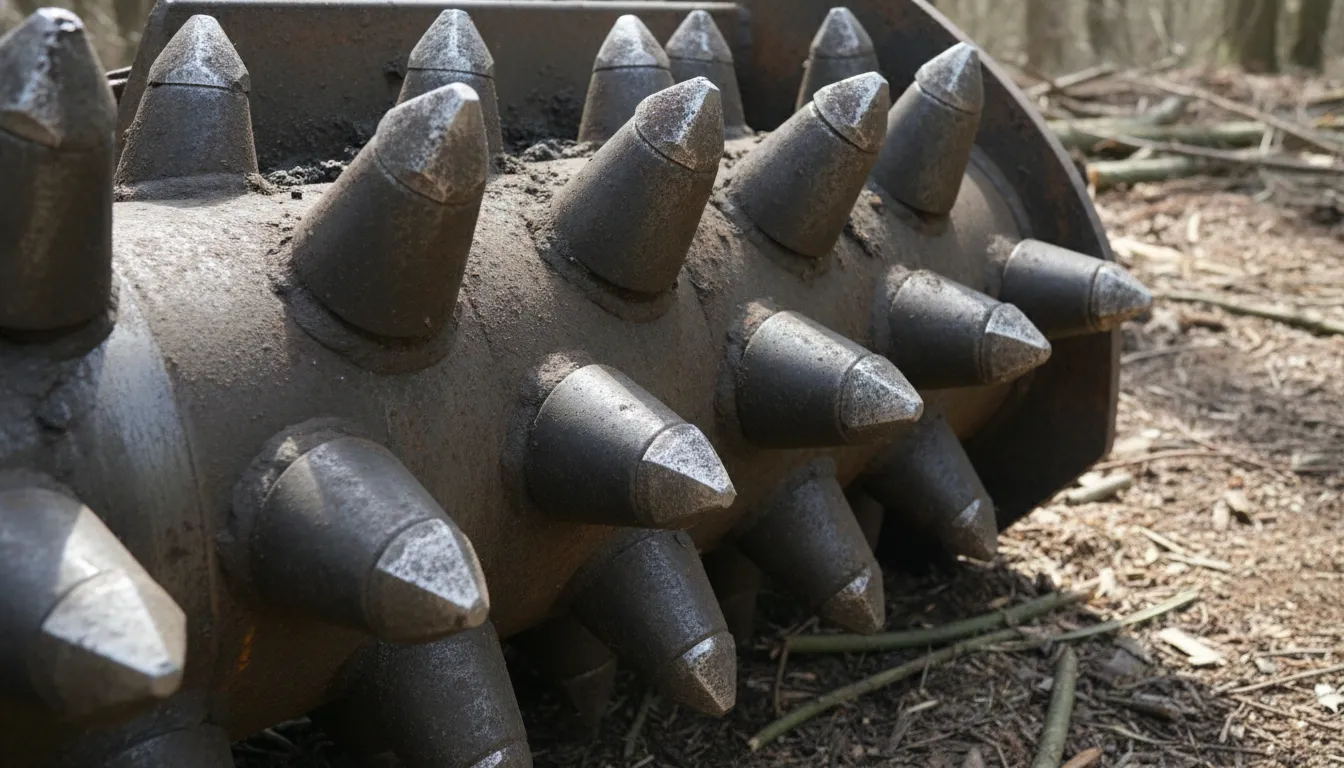
The teeth on your machine do all the hard work. You can pick from a few main types based on your soil. Fixed carbide teeth are very tough. They stay sharp for a long time, even in hard soil. Some units use reversible carbide hammers to clear thick brush with ease. If you pick a disc style, you may use QUADCO disc teeth. These disc mulcher tools can fell trees and turn them into fine chips very quickly.
Width and Capacity
Cutting width is a key part of your choice. Most people pick between 60 and 72 inches. A wider head clears more land in one pass. But a smaller head needs less power from your skid steer. You also need to think about the size of the wood. Vertical shaft heads are often set to trees up to 8 inches wide. If you have big trees, a horizontal shaft drum may be better. Those drum units can handle wood up to 30 inches wide. Always check that your machine has the flow and weight to handle the head you buy.
Daily Maintenance and Care
Keep your tool in top shape to avoid costly downtime. Daily checks keep the machine safe and ready for work. Hard rocks are a big risk for any user. Rocky ground can speed up tooth wear and even create fire hazards. Follow these steps to keep your mulcher running well:
- Check for loose teeth every morning before you start. Tighten any bolts that feel weak to keep the head balanced.
- Look at the edges of the teeth to see if they are dull. Sharp teeth cut better and use less fuel than dull ones.
- Clean out debris from the head and the cooling parts. Dust and wood chips can build up and cause the unit to get too hot.
- Grease all the points shown in your manual to keep parts moving well. This stops metal from rubbing on metal, which causes heat and wear.
- Watch for cracks or leaks in the hoses and the body. Catching a small leak now saves you from a big break in the field.
- Test the safety gates and shields to make sure they stay in place. Flying debris is a major risk, so you need your guards to work right.
Good care makes your tool last for many years. It also makes your work look better to your clients. A well-kept machine creates an even mulch that covers the soil well. This layer of mulch helps stop new weeds from growing back too fast. It also helps the soil hold on to water and prevents soil loss from rain.
Top Skid Steer Mulcher Brands: Bradco, Blue Diamond, and More
Choosing a brand is just as vital as picking the head for your work. Top names build tools using high-grade American steel. These brands focus on low care and high output to keep your machine in the field. At eSkidSteer, we offer a full range of skid steer mulcher options from these top makers to suit any flow rate or job size.
Bradco Mulching Tools
Bradco by Paladin is a leader in the gear world. They are known for making tools that can handle tough brush and trees. Their disc mulcher attachments use a high-speed disc to cut through wood. This tool is great for felling trees and clearing large plots fast. It uses the weight of the disc to keep up speed even in dense growth.
For more control, the Bradco Series II mulcher uses a drum style. It creates a fine mulch that stays on the soil. This drum mulcher is built to last with a frame made of tough steel. It also has a motor that matches the flow of your machine. This helps the tool work well without causing extra heat or wear.
Blue Diamond Attachments
Blue Diamond is another top name found at eSkidSteer. They build their tools to be simple but very strong. The Blue Diamond disc mulcher is a top pick for land owners. It can process trees up to 6 inches in diameter. Since it has no belts or chains, it needs very little work to stay in top shape. It is a true "plug and play" tool for your skid steer.
If you need more power, the Blue Diamond heavy duty drum mulcher attachment is the right choice. It is made for high flow machines and thick woods. This tool uses a spiral tooth pattern to cut wood into small bits. It is a great choice for forest work where safety is a big deal. Proper safety gear like FOPS structures are needed to protect you from flying bits of wood during use.
Fecon Forestry Mulchers
Fecon is globally recognized as a premier manufacturer of heavy-duty forestry mulching equipment. Known for their legendary Bull Hog drum mulchers, Fecon attachments are built with exceptional durability and structural reinforcement. Their mulching heads are designed to handle high-flow skid steers and process severe vegetation up to 8 inches in diameter. Fecon's tool-holder options allow operators to switch easily between carbide teeth and knives to match specific ground conditions.
FAE Mulching Attachments
FAE offers high-end, premium-quality mulching attachments engineered for professional land clearers and commercial contractors. Their skid steer forestry heads feature robust gear-driven systems, variable-displacement motors, and specialized rotor designs that deliver incredible torque. FAE heads are highly valued for their ability to produce an ultra-fine mulch finish and grind stumps below grade with minimal wear and tear on the carrier machine.
Denis Cimaf High-Performance Heads
Denis Cimaf specializes in industrial-grade, blade-style brush cutters and drum mulchers. Unlike many competitors that rely on hammer or carbide teeth, Denis Cimaf's signature heads use heat-treated steel planer blades. This unique cutting action delivers extremely fast felling speeds and superior fuel efficiency, making them a favorite for demanding right-of-way clearing and utility projects.
Loftness Specialized Mulchers
Loftness engineering focuses on specialized vegetation management attachments with advanced design features like their Battle Ax rotor. This unique rotor design features built-in depth gauges, which prevent the head from taking too large of a bite and stalling the engine. Loftness drum mulchers are highly efficient, performing exceptionally well on both high-flow and medium-flow skid steers.
Finding the Right Match
Each brand has its own perks. Bradco offers great speed and many model choices. Blue Diamond focuses on easy care and long life. Fecon and FAE deliver heavy-duty commercial performance, while Denis Cimaf and Loftness feature innovative cutting and rotor technologies. Most skid steers and tractors can carry these heads as long as the hydraulic flow matches. You should check your machine specs before you buy to make sure the head will fit and run well. Picking a brand that uses common parts will also help you get back to work fast if you ever need a fix.
Frequently Asked Questions
How much does a skid steer forestry mulcher cost?
Buying a new skid steer mulcher is a big cost for any farm or land clearing business. Prices usually start around $15,000 for a small model and can go up to $50,000 or more for heavy units. A high-quality tool like the Bradco Disc Mulcher costs about $35,800. These costs change based on the size of the head and how much oil flow your machine can give.
What size trees can a skid steer mulcher handle?
The size of tree a mulcher can take down depends on the type of head you use. Most vertical disc mulchers can safely cut through wood between 6 and 8 inches thick. According to the USDA Forest Service, drum heads can handle much larger trees up to 30 inches wide. However, felling very large trees can be risky for the driver and the machine.
Is it safe to run a mulcher on a standard skid steer?
Safety is the key part of running a mulcher. These tools spin very fast and throw wood chips in every way. You must have a strong safety cage on your machine to protect the cab from flying bits of wood. The Forest Service notes that flying debris is the main safety worry for drivers. Always check that your machine has the right guard before you start work.
How fast can you clear land with a mulcher?
A skid steer mulcher is one of the fastest ways to clear brush. Most drivers move at a speed of 2 to 4 mph while the head is working. To get a clean look, you should overlap each pass by 10 to 15 percent. The Texas A&M Forest Service says this makes sure all plants are cut. This method leaves a smooth carpet of mulch on the ground.
Can you use a skid steer mulcher on rocky ground?
Running a mulcher on rocky ground is not safe for the tool. Rocky land can speed up tooth wear and damage the head. According to the USDA Forest Service, rocks can create spark hazards, which increases fire risks. If you must work in rocks, you should use fixed carbide teeth. You should also raise the head to avoid hitting the ground.
Ready to find the perfect skid steer mulcher attachment?
If you wait to upgrade your gear, you will lose out on fast work and high profits while using tools that eat your daily gains. Every day you use an old or weak tool is a day you spend too much on fuel and labor for slow results on site.
A new mulcher lets you clear thick brush in half the time it takes now so you can take on more jobs and grow. Starting now means you get ahead of the job list and keep your crew moving with the best power and speed for your machine. Do not let other teams get the best work while you wait to get the right tool to keep your work on track today.
Ready to find the perfect skid steer mulcher attachment? Call (972) 839-1703 to find the perfect skid steer mulcher attachment for your machine.