

Skid Steer Salt Spreader Guide for Winter Crews
Get the Attachment Your Project Needs
Shop proven, work-ready attachments that help you tackle any task with confidence.
LEARN MOREWinter operations get expensive when crews reload too often, scatter material beyond the pavement, or discover that a full hopper exceeds the loader limits. The right skid steer salt spreader keeps material flowing, matches the route, and gives the operator enough control to treat surfaces consistently.
Shop skid steer salt spreaders for your winter operation.
Choose a skid steer salt spreader by matching hopper capacity to your route, confirming the material it can handle, and checking your loader hydraulic flow and lift capacity. Look for adjustable spreading controls, corrosion-resistant construction, and easy access for cleaning. The best fit reduces reloads without overloading the machine.
This buying guide explains the practical checks that help contractors and property-maintenance crews choose confidently, calibrate accurately, and protect the attachment through the season.
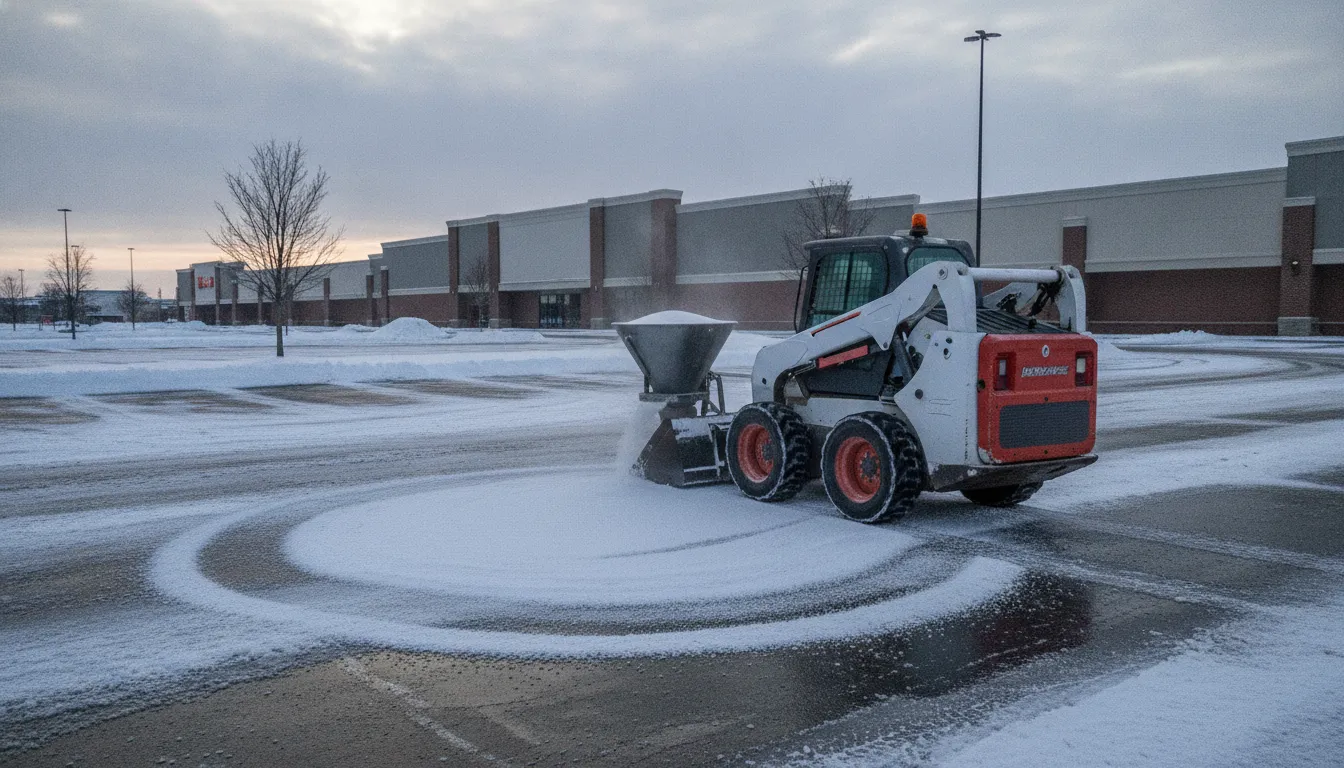
How to choose a skid steer salt spreader
Picking the right skid steer salt spreader attachments for your work depends on your route and loader size. A small yard needs a different tool than a big lot. You must match the spreader size to how much ground you plan to cover before you need more salt.
Think about your route size
Big lots and city roads often need large V-box units to keep working without a stop. For these jobs, a Heavy Duty Material Spreader helps you do more in less time. If you work on small paths or tight spots, a tailgate model is a better fit because it is easy to move.
Matching the spreader to the size of your route is a key part of working fast. It cuts down on time spent for a reload. When you pick a unit that holds enough salt for the job, you can finish with fewer breaks. This helps you stay on track when the snow falls.
Look at loader limits and flow
You must check how much weight your skid steer can lift. Salt is heavy, and a full bin can put a lot of strain on your machine. Using a quick-attach mount lets you switch tools fast. This makes your skid steer more useful during winter storms.
Hydraulic units are often more reliable than electric ones because they give a more even flow. This helps when you need to put down salt at a high rate over a large area. Many users prefer a hydraulic pump to allow for high rates and steady flow.
Choose the right spread pattern
Think about where the salt needs to go. Drop spreaders are best for thin walks or spots near plants because they drop salt right below the unit. This helps you avoid wasting salt and protects the area near the path.
If you need to cover wide spots fast, a broadcast unit is the best choice. It throws salt in a wide arc to coat big zones in one pass. To get the most out of your salt, think about pre-wetting. This helps salt stick to the road and can lower salt use by 25 to 30 percent.
Match hopper capacity to your winter route
Choosing the right skid steer salt spreader attachments starts with looking at your route. You want to match the amount of salt your machine can carry to the size of the lots you clear. A small tank means more trips back to the pile. But a tank that is too large for your machine can make it hard to steer and slow you down.
Choose the right hopper size
The size of the tank tells you how much work you can do before you need to stop. Small tanks are great for tight paths and small shop lots. Large tanks allow you to clear big parking lots without stopping for a fill. Picking the right size helps you stay on the job longer and keeps your cost low.
You must also think about the weather when you pick your size. When the ground gets deep cold, you will need to put down more salt to keep the ice from forming. This is because salt works less well as the heat level drops. A bigger tank gives you the extra salt you need for those deep cold nights without adding extra trips.
Plan for loaded weight
A full Heavy Duty Material Spreader adds a lot of weight to the front of your machine. You must make sure your skid steer can carry the load safely. Check your machine's lift limit before you buy a spreader. A load that is too heavy can cause your machine to tip or stress the hydraulic system.
The way the weight is spread out also matters for how your machine handles. A wide spreader can change your balance when it is full, making it harder to turn in tight spots. You should test how your machine feels with a full load in a safe spot first. This helps you know how the tool will act on the job.
| Hopper Type | Best Route Size | Load Weight | Main Benefit |
|---|---|---|---|
| Small Tank | Driveways and paths | Light to medium | Easy to move |
| Medium Tank | Small shop lots | Medium | Good balance |
| Large Tank | Big parking lots | Heavy | Fewer stops |
| Pro Grade | High-use routes | Extra heavy | Top work time |
Cut down on reload time
Filling your salt takes time that you could use for cleaning more lots. You can stretch your size by using salt that is now wet. Adding brine to your salt makes it stick to the ground better so it does not bounce away. This can cut your salt use by up to 30 percent.
Using a quick-attach system also helps with your timing. These systems let you switch from a bucket to a spreader in just a few minutes. This keeps your machine busy and helps you end your route faster. When you plan your route and your size well, you can save money and keep your buyers happy all winter long.
Which ice-control materials can the spreader handle?
Most skid steer salt spreader models handle many types of de-icing materials. But each material acts in its own way inside the hopper. Rock salt is the most common choice. It is easy to find and works well in most units. You should check the grain size to make sure it flows through the gate without jamming the spinner.
Handling treated salt and bagged blends
Treated salt is often coated with liquids to work in deep cold. This coating makes the salt sticky. Sticky salt can lead to bridging. Bridging happens when the material forms an arch over the hole and stops the flow. Using a Heavy Duty Material Spreader with a mixer helps break up these clumps. Research from the University of Washington shows that wet salt sticks to the road better. This reduces waste and saves money.
Bagged ice melt blends are common for walkways. These blends often have small grains that flow very fast. If you use these in a spinner unit, you may need to adjust the gate to stop over-use. For the most exact work, a drop-style skid steer salt spreader attachment is often the best tool for the job.
Managing moisture and flow
Moisture is the biggest enemy of a smooth job. When salt gets wet, it clumps together. It may even freeze into a solid block. This is very true for fine things like sand. Always keep your material dry before you load it. If you must spread damp sand, make sure your spreader has a shaker to keep it moving toward the spinner.
Free-flowing things like dry salt or small gravel are easy to use. They pour like water and give a steady spread on the road. Even with these, you should watch how much you use. When the road gets colder, you may need to apply more salt to melt the ice. Data from the UConn T2 Center shows that colder roads need more salt to stay safe.
Check for the right match
Before you buy bulk salt, make sure your machine can handle it. Some units are built only for dry salt. They might fail if you use heavy, wet sand. Check the book for the max weight and size. Going over these limits can hurt the motor or the mount. Picking the right material keeps your gear working well for a long time.
Evaluate spreading controls and calibration
The best skid steer salt spreader attachments give you full control over how much salt you use. You should look for systems that let you change the feed rate and the spinner speed on their own. This helps you put the right amount of salt in the right spots without wasting any. Good controls allow you to work faster and keep costs low during a big storm.
Separate feed and speed controls
Most new spreaders use hydraulic power from your machine. These systems are often better than electric ones because they can handle higher flow rates for thick salt. When you control the auger and spinner apart, you can treat narrow paths or wide lots with the same tool. You can slow the spinner down to keep salt on a sidewalk or speed it up to cover a parking lot.
Cab controls are a must for any busy driver. You should be able to make changes without getting out of your seat. This saves time and keeps you warm while you work. Look for a dial that is easy to use even when you are wearing heavy gloves.
Tuning your machine for the job
Checking your settings is the only way to know how much salt you are dropping. If you do not test the machine, you might throw too much or too little. This leads to ice patches or wasted money. You should check your settings at the start of every season to keep things running well. You should also check them if you switch to a new type of salt.
- Clean the hopper and the spinner to make sure nothing is stuck inside.
- Set your cab controls to a mid-range speed for both the feed and the spinner.
- Run the machine for one minute while catching the salt in a large bucket.
- Weigh the salt in the bucket and subtract the weight of the empty bucket.
- Check this weight against the size of the area you need to cover.
- Adjust your settings and repeat the test until you hit your goal.
Adjusting for the weather
You must change your salt rate based on how cold the ground is. When the pavement gets colder, you need more salt to melt the ice. Easy cab controls make these quick changes simple for the driver. When it is very cold, salt stops working as well, so you may need to mix in sand for grip.
Using pre-wetted salt is another way to save money and time. This method helps the salt stick to the road so it does not bounce into the grass. Experts say that pre-wetting can help you use up to thirty percent less salt on every job. It also helps the salt start melting the ice faster than dry crystals alone.
What hydraulic and electrical requirements matter?
When you pick a skid steer salt spreader, you must match it to your machine. The right fit makes sure the tool works well and lasts a long time. You need to check three main areas: the fluid system, the power lines, and how it connects to the loader. If these do not match, you may face slow work or broken parts.
Hydraulic flow and system pressure
The fluid system of your loader drives the motor on the spreader. Most spreaders use the standard flow from your machine to spin the disc. It is key to know the gallons per minute your loader can give. If the flow is too low, the salt will not spread far enough. If it is too high, you could break the motor or the hoses.
Research shows that hydraulic pumps allow for higher rates of salt use over electric models. This makes them a top choice for heavy snow and ice. A steady flow of fluid keeps the motor spinning at the right speed. This helps you cover the ground without wasting salt or stopping to fix jams.
Picking a Heavy Duty Material Spreader makes sure your system can handle the stress of cold weather. These tools are built to work with the pressure of modern skid steers. Always check your loader manual to see the peak pressure it can hold. Matching this to your tool will stop leaks and keep your machine safe.
Electrical controls and wiring
Modern spreaders need power to talk to the controls in your cab. This wiring lets you start and stop the flow without leaving your seat. Most units use a simple plug that fits into the loader's power port. You should check if your loader has a 7-pin or 14-pin plug before you buy a tool.
Good wiring lets you change the spread width on the fly. You can narrow the path for a sidewalk or widen it for a large lot. This control saves money by using only the salt you need. You want a harness that is tough enough to handle ice, salt, and mud. Look for wires that are sealed and tucked away to avoid snags during work.
Mounting and machine fit
Most skid steer salt spreader attachments use a standard quick-attach plate. This plate lets you hook up the tool in seconds. It makes your loader more useful because you can switch from a plow to a spreader fast. This ease of use is a big plus during long winter shifts when every minute counts.
You also need to think about the weight of the spreader when it is full. Salt is heavy, and a large hopper can tip a small machine. Check the lift limit of your loader to make sure it can carry the load safely. A good rule is to keep the weight within the safe limit shown in your loader guide. This keeps the machine steady and protects the tires and arms from too much stress.
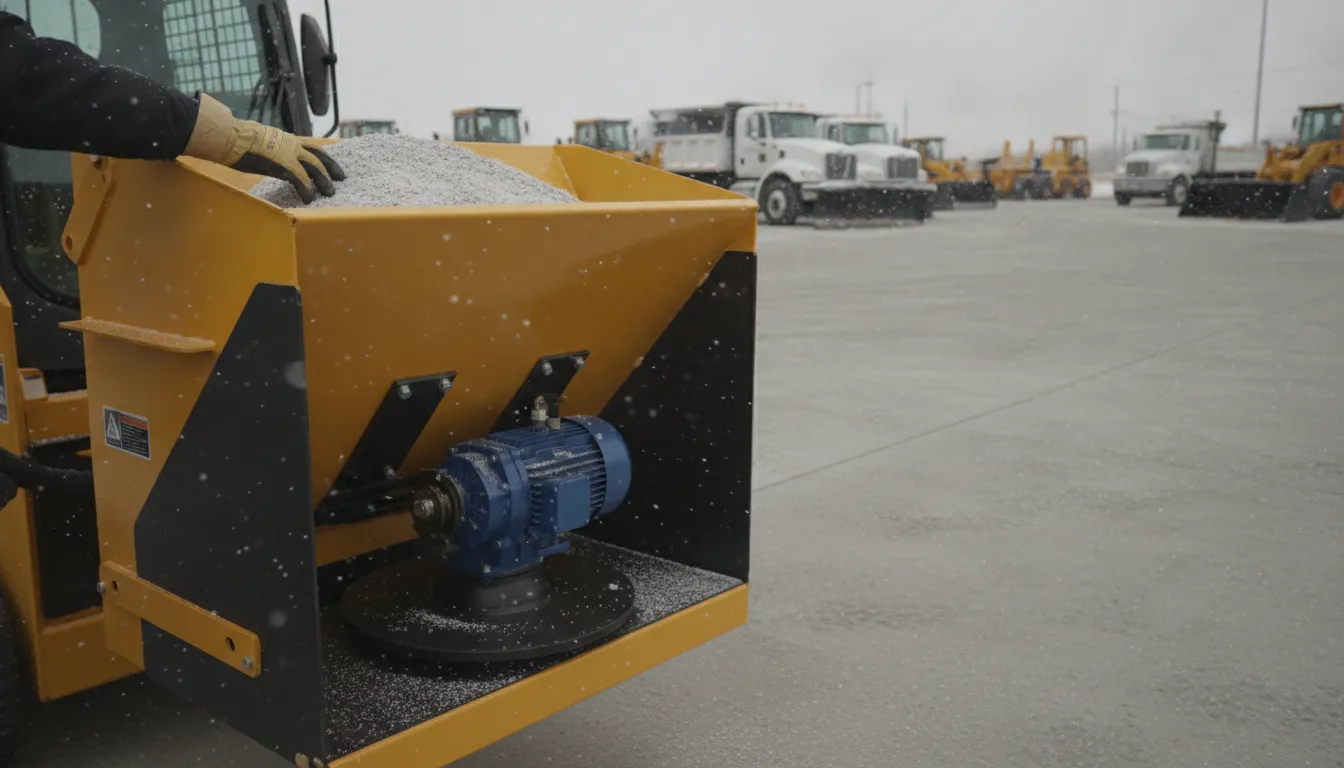
Build a maintenance routine that protects the spreader
Salt is very hard on metal parts. If you do not clean your tools, rust will start to form quickly. A good care plan helps your unit last for many years. You should check your machine before, during, and after every big winter storm. This keeps the unit ready to work when the next freeze hits.
Stop rust with regular cleaning
The best way to stop rust is to wash the unit after every shift. Use warm water and soap to remove all salt dust from the frame and the hopper. Pay close care to corners where salt can hide. Once it is clean, let the machine dry fully before you put it away. Wet salt is much more harmful than dry salt, so drying is a vital step.
Some crews use pre-wetted salt to help with the work. Using pre-wetted salt can reduce total salt usage by as much as 30 percent. This is helpful because less salt ends up on your machine and more stays on the road. It saves money and makes your cleanup job much easier at the end of the day.
Check hydraulic and moving parts
Your skid steer salt spreader attachments rely on strong parts to move heavy loads. You should look for leaks in the hoses and check all the fittings. A small leak can lead to a big failure during a storm. Make sure the motor and the spinner plate move freely. If you hear grinding sounds, you may need to add grease to the bearings.
Many owners prefer hydraulic systems because they are very tough. Experts find that hydraulic salt spreaders often provide more steady flow than electric models. This strength is key when you are working in sub-zero temps. Checking the fluid levels each week will keep the system running at its best. If the fluid looks dark or dirty, it is time to change it.
You must also check the hopper for any stuck salt. If the salt gets wet and then freezes, it can block the flow of the load. Use a shovel or a brush to clear out any clumps before you start your route. A clear path for the salt means you will get an even spread across the whole lot. This prevents you from having to stop and fix jams in the middle of a job.
Store your unit for the off-season
When the winter ends, you must prepare the spreader for long-term storage. Give it one final deep clean to remove any leftover salt. Apply a thin coat of oil or a rust-prevent spray to any bare metal parts. This creates a shield against moisture in the air. Store the unit in a dry place, off the ground, to keep it away from puddles.
Grease all the moving parts before you park it for the summer. This prevents the metal from seizing up while it sits idle. Cover the hopper to keep out dust and pests. If you take care of these small tasks now, your spreader will be ready to go as soon as the first snow falls next year. Proper care saves you from costly fixes and keeps your business moving.
Pair a spreader with snow-removal attachments
A skid steer is a powerful tool for snow clearing because it can change jobs fast. You can use a skid steer salt spreader with other tools to finish your work in one trip. This mix helps you clear ice and snow without moving your machine to a new lot. It saves time and fuel for your business. It also means you do not need to bring a second machine to the site. Having one loader that does it all is a smart move for your fleet.
Pair with snow pushers and blades
Most crews start with a snow pusher or a blade to move large piles. You can mount these on the front of your loader to clear the path. Once the pavement is clear, you can use a spreader to treat the surface. This order keeps the salt from getting buried under new snow. It ensures the salt hits the ground where it can melt ice fast. If you salt before you plow, you waste money and gear. Plowing first makes the salt work much better on the cold ground.
Using a quick-attach system makes it easy to switch tools. You can drop your plow and pick up your salt spreader in just a few minutes. This use is key for winter work where time is money. For best results, always plow snow to the downhill side of the lot. This stops melted snow from flowing back onto clear areas and freezing again. It also keeps your salt from being washed away by runoff. Good snow spots are the first step in a safe winter plan.
Use buckets and brooms for detail work
Buckets are great for moving snow away from walls or loading it into trucks. Brooms work well for clearing light snow from sidewalks or paths. After you use these tools, a small salt spreader can add a fine layer of grit. This helps make walking paths safe for people. It also cuts the need for hand salting, which is slow and hard on workers. Most large lots have tight spots where a big plow cannot go. Using a bucket first lets you clear those spots so the spreader can reach them.
The Heavy Duty Material Spreader is a good choice for these jobs. It can handle salt or sand with ease. It is built to last through many cold winters. Using the right tool for each task makes your whole fleet more helpful. You can clear curbs, drains, and walkways with care. This full plan keeps the whole site safe for cars and foot traffic alike. It shows your clients that you look at the small details.
Optimize your route order
Planning your route helps you cut tool changes. Try to clear all snow with your plow or pusher first. Then, switch to your spreader to finish the whole route. This saves you from getting out of the cab too often. It also keeps your machine running and making money. You can also plan your route to end near your salt pile. This makes it easy to refill and keep moving. A clear plan makes every winter storm easier to handle. It keeps your crew on task and your costs low.
Frequently Asked Questions
What are the benefits of a hydraulic salt spreader over electric types?
Hydraulic models are often more reliable for heavy commercial work in extreme cold. According to research from the University of Washington, many agencies switch to hydraulic pumps to allow for higher application rates and more consistent material flow. These systems use the machine's own power to handle heavy or wet salt that might stall a smaller electric motor during a long winter shift.
Can I use a skid steer salt spreader for other materials like sand or fertilizer?
Yes, many high-quality units can spread sand, small gravel, and fertilizer. However, you must check the weight and flow rate of the material first. Heavy or damp sand needs a strong motor and often a shaker or mixer to prevent clumping. If you use the spreader for fertilizer in the spring, make sure to wash the hopper thoroughly afterward, as fertilizer can be just as corrosive as road salt.
Are skid steer salt spreaders compatible with all loader types?
Most modern spreaders use a standard universal quick-attach plate that works with almost any skid steer or compact track loader. This mounting style allows for versatile machine use during winter operations by letting you switch from a snow blade to a spreader in minutes. Always verify that your machine has the correct hydraulic flow rate and lift capacity to handle the weight of the spreader when it is full of salt.
How much does a new skid steer salt spreader cost?
Prices for new attachments vary based on hopper size, material, and control features. Small tailgate-style units for residential work are the most affordable, while large V-box or hydraulic hopper spreaders for big parking lots cost much more. When you set your budget, remember to include the cost of the hydraulic hoses and any in-cab control kits needed to run the unit. A durable unit saves money over time by reducing repair costs.
Ready to find the right salt spreader for your machine?
Browse salt spreaders and compare the right fit for your machine.
Winter storms will not wait for you to get your gear in order. If you wait for the ice to hit, tools may be sold out, which can cost you money and cause you to lose jobs. Scrambling during a rush often leads to a tool that does not fit your machine well, but acting now lets you pick the right tool. You will be ready to work when the first snow falls, which keeps your crew safe and your business moving all winter long. Do not let the rush of the season catch you off guard this year.
Ready to shop salt spreaders? Contact our team to shop salt spreaders.