


Forklift Bucket Attachment: Uses and Fit
Get the Attachment Your Project Needs
Shop proven, work-ready attachments that help you tackle any task with confidence.
LEARN MORE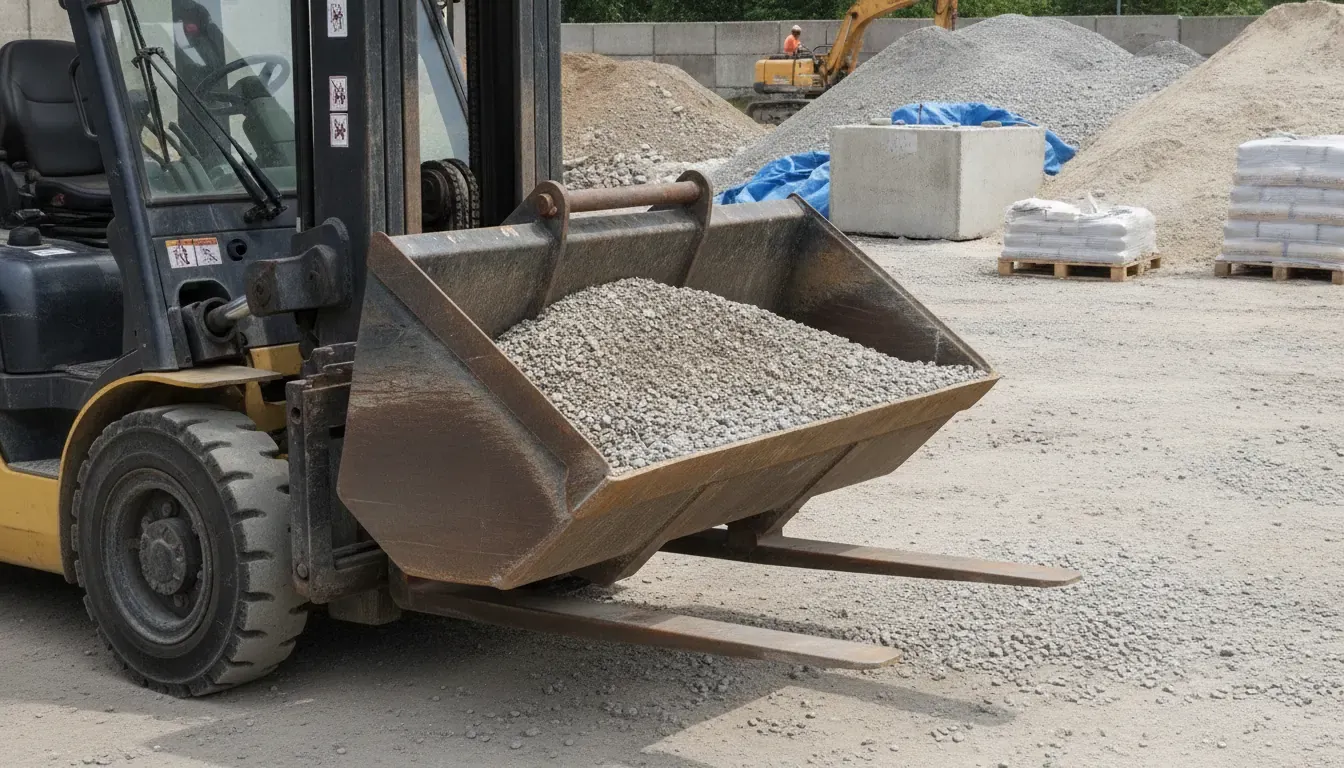
A forklift bucket attachment turns a compatible forklift or telehandler into a practical tool for scooping, carrying, and dumping loose material. It can help with aggregate, dirt, debris, snow, and other material-handling jobs that are outside the normal role of pallet forks. The right choice depends on more than bucket width. You need to compare the attachment interface, fork or quick-attach requirements, operating capacity, load type, and the machine's own documentation before ordering.
Shop forklift and telehandler bucket attachments at eSkidSteer
This guide explains how forklift-mounted buckets work, where they fit in a material-handling plan, and which specifications deserve close attention when you compare options.
What Is a Forklift Bucket Attachment?
A forklift bucket attachment is a bucket designed to mount on a forklift's existing forks or on a compatible quick-attach carrier. Instead of lifting a pallet or long load directly on fork blades, the attachment provides a contained scoop for loose material. Depending on its interface and design, the bucket may be carried on the forks or connected directly to the machine's boom.
That distinction is important because the phrase forklift bucket can describe more than one mounting style. A slip-on-forks bucket uses fork pockets and additional retention hardware. A quick-tach bucket uses the host machine's approved carrier or boom interface. Both can support material handling, but they are not interchangeable simply because they have similar bucket shapes.
A bucket attachment is not automatically a digging bucket. Many forklift-mounted designs are intended for loading, transport, cleanup, and controlled dumping. Before using one to engage compacted ground or hard material, confirm that the manufacturer specifically allows that application. A forklift, its attachment, and the material being moved must be evaluated as one system.
What Are Forklift Buckets Used For?
Forklift buckets are most useful when the job requires a short-range scoop-and-carry cycle and the material is loose enough to enter the bucket without aggressive excavation. Common applications include:
- Aggregate handling: Move gravel, sand, or similar loose material around a yard, plant, or construction site.
- Debris cleanup: Gather light debris or loose waste where a bucket is more efficient than individual fork handling.
- Snow and seasonal cleanup: Push or carry loose snow when the attachment and machine are approved for the conditions.
- Material transfer: Load material into a designated pile, container, or work area using a controlled dump cycle.
- Warehouse or yard work: Sweep, collect, and relocate loose material around storage and staging areas.
The best application depends on the bucket's capacity, construction, cutting edge, retention system, and the forklift's rated capacity at the relevant load center. A larger bucket may appear more productive, but filling it with dense material can exceed the practical limit of the host machine before the bucket is physically full.
Which Forklift Bucket Mounting Style Fits Your Machine?
Start selection by identifying how the bucket connects to the machine. This is the first filter because a bucket with the wrong interface cannot be made compatible by choosing a different width.
Slip-on-forks buckets
Slip-on-forks buckets slide over the forklift blades through built-in fork pockets. The pockets must accommodate the fork length, cross-section, spacing, and heel position required by the attachment. Retaining pins, chains, hooks, or other specified hardware may be part of the retention system. Follow the exact product instructions rather than assuming that the bucket is secure because it sits on the forks.
These buckets can be a useful option when the forklift has suitable forks and the job calls for a removable material-handling tool. They can also simplify switching between pallet work and loose-material work, provided the attachment can be installed and secured according to its instructions.
Quick-tach buckets
Quick-tach buckets connect to a compatible carrier or boom rather than sliding over standard fork blades. This can be the correct route for a telehandler or a machine equipped with a matching quick-attach system. The current Star Industries product listing includes both quick-tach and slip-on-the-forks configurations and identifies certain options for Gehl Dynacarrier, JCB QFit, and Pettibone quick-tach interfaces. Confirm the exact carrier and option details in the current listing before ordering.
Do not treat the presence of a quick-attach plate as proof of universal fit. Confirm the carrier type and machine requirements in the attachment documentation. If you are converting between interfaces, review the available telehandler adapters and the exact product specifications before selecting an adapter-based setup.
How Do You Check Fork and Attachment Fit?
Fit is a measurement exercise. Before you order, gather the forklift or telehandler model, the attachment interface, fork dimensions, and any carrier information shown on the machine or in its documentation. Then compare those details with the product listing.
- Identify the host machine: Record whether the equipment is a standard mast forklift, rough-terrain forklift, or telehandler. Note the make, model, and any relevant attachment carrier.
- Measure the forks: Check fork length, width, thickness, and spacing. A fork pocket must accept the actual fork blades, not just a nominal fork class.
- Check the fork-pocket layout: Confirm pocket length, opening dimensions, and center-to-center spacing. Closed pocket ends, heel clearance, and the position of the fork carriage can affect fit.
- Confirm retention hardware: Determine whether the design requires retaining pins, a chain and grab hook, a latch, or another locking method. Verify that the host machine provides an appropriate connection point where the instructions require one.
- Check clearance: Consider the bucket's back, sides, cutting edge, and dump path. Make sure the attachment can be raised, carried, and dumped without contacting the carriage, boom, load, or surrounding structures.
eSkidSteer's telehandler fork-slot bucket listing is an example of why interface language matters. A fork-slot design should be evaluated by the slot and fork requirements shown in the product information, not by a broad assumption that any telehandler fork will fit.
How Do Capacity and Load Center Affect Selection?
Capacity is not just the bucket's stated volume. The attachment itself has weight, and that weight becomes part of the load carried by the host machine. The material adds more weight, and the distance from the fork face or carriage changes the load moment. As the load moves farther forward, the machine's usable capacity can be lower than the capacity shown for a different load center.
Use the forklift or telehandler load chart, data plate, and manufacturer's operating instructions as the authority for the actual machine. Compare at least these values:
- Attachment weight
- Rated machine capacity at the intended load center
- Bucket volume or material capacity
- Material density and likely fill level
- Lift height and travel conditions
- Front axle, carriage, fork, and tire limitations identified by the manufacturer
Do not fill a bucket to its rim simply because the bucket has available space. Dense aggregate can reach the machine's practical limit before a wide bucket is full. Conversely, a light material may not need the same bucket profile as a dense material. The selection should start with the material and the machine's rated limits, then move to bucket dimensions.
Adding an attachment also changes the machine's handling characteristics. Keep the load low while traveling, avoid abrupt movements, and use the operating practices specified for the host machine and attachment. If the product documentation requires additional retaining hardware or a safety chain, install it before operation. When the setup falls outside the manufacturer's stated use, stop and obtain a qualified equipment review.
What Bucket Dimensions Should You Compare?
Width is visible, but it is only one part of the specification. Compare the dimensions that affect both productivity and fit.
| Specification | Why it matters |
|---|---|
| Overall width | Sets the working path and the amount of material the bucket can address in one pass. |
| Bucket height and back profile | Affects visibility, clearance, and how irregular loads sit during transport. |
| Depth and forward projection | Influences usable volume and the distance of the load from the carriage or carrier. |
| Fork-pocket dimensions | Determines whether a slip-on attachment can accept the actual fork blades. |
| Bucket capacity | Provides a volume reference, but does not replace a weight and load-center review. |
| Attachment weight | Reduces the capacity available for the material and affects machine balance. |
| Cutting edge and side construction | Helps indicate whether the design is intended for cleanup and loading or for a more demanding material-handling environment. |
eSkidSteer's Star Industries listing shows why model-level review matters. The product page presents multiple quick-tach and slip-on-the-forks configurations with different widths, capacities, and weights. Select the exact option after checking the machine and material rather than relying on the broad product title.
How Do You Choose Between a Forklift Bucket and Other Attachments?
Choose a forklift bucket when the job centers on loose material that needs to be scooped, carried, and dumped. A bucket provides containment and can reduce repeated manual handling around a yard or work area.
A bucket may not be the best answer when the main task is lifting stable palletized goods. In that case, standard or heavy-duty pallet forks may provide a clearer load interface. eSkidSteer carries a range of attachments, and its clamp-on bucket forks are a separate attachment type with a different use case and fitment review.
Likewise, a dedicated skid steer bucket is not automatically a substitute for a forklift bucket. Skid steer attachments commonly use a universal quick-attach carrier, while forklift buckets may be built around fork pockets or telehandler-specific carriers. If your machine is a skid steer, compare the machine-specific options in the skid steer attachment collection instead of assuming that a fork-mounted product will transfer.
For a telehandler, distinguish between a fork-slot bucket and a quick-attach bucket. eSkidSteer's telehandler quick-attach dirt bucket is a different interface path from a fork-slot model. That distinction should guide the product search before you compare width or capacity.
What Should You Ask Before Ordering?
A short pre-order checklist can prevent the most common fit and application mistakes. Confirm:
- What exact machine will carry the attachment?
- Is the machine a forklift or a telehandler, and which attachment interface does it have?
- Will the bucket mount on the forks, a quick-tach carrier, or another approved connection?
- What are the actual fork dimensions, spacing, and usable length?
- What material will be moved, and how dense is it likely to be?
- What bucket width and volume support the job without creating an oversized load?
- What is the attachment weight, and how does it affect the machine's load chart?
- Which pins, chains, hooks, latches, or other retention components are required?
- Can the host machine carry, raise, travel with, and dump the intended load within its documentation?
- Does the product listing identify the model or carrier requirement that matches your equipment?
When a product has multiple configurations, record the exact model or option you are considering. A general bucket title may represent several widths, capacities, weights, and interfaces. The option-level specification is the part that determines whether the attachment is appropriate for the machine.
Compare forklift bucket models and select the right configuration
Frequently Asked Questions
What does a forklift bucket attachment do?
It provides a bucket for scooping, carrying, and dumping loose material from a compatible forklift or telehandler. The attachment can support material handling and cleanup, but the machine and attachment must be used within their documented capacity and interface requirements.
Can a bucket attachment fit any forklift?
No. Fit depends on the mounting style, fork-pocket dimensions or carrier type, fork length and cross-section, retention hardware, machine capacity, and the product's approved applications. Confirm the exact machine and attachment specifications before ordering.
Is a forklift bucket used for digging?
Many forklift buckets are intended for loading, transport, cleanup, and dumping loose material rather than aggressive excavation. Use the manufacturer's documentation to determine whether the specific attachment supports ground engagement, and do not assume that a bucket's shape makes it a digging attachment.
How do I choose the right forklift bucket size?
Start with the material, machine load chart, attachment weight, load center, required working width, and fork or carrier fit. Select the exact model only after confirming that the host machine can carry the attachment and the intended material at the planned lift and travel conditions.
Browse telehandler and forklift attachment options at eSkidSteer.