


Telehandler Bale Spear: Complete Buyer's Guide
Get the Attachment Your Project Needs
Shop proven, work-ready attachments that help you tackle any task with confidence.
LEARN MOREMoving heavy round or square bales becomes more demanding when the load must travel beyond a loader's normal reach. A well-matched telehandler bale spear helps an operator pierce, support, carry, and stack those bales while working within the machine's rated limits. The right choice depends on more than tine length. Bale format, actual bale weight, load center, carriage connection, boom position, and the jobsite all affect which attachment fits the work.
Shop telehandler bale spear options for your bale-handling setup.
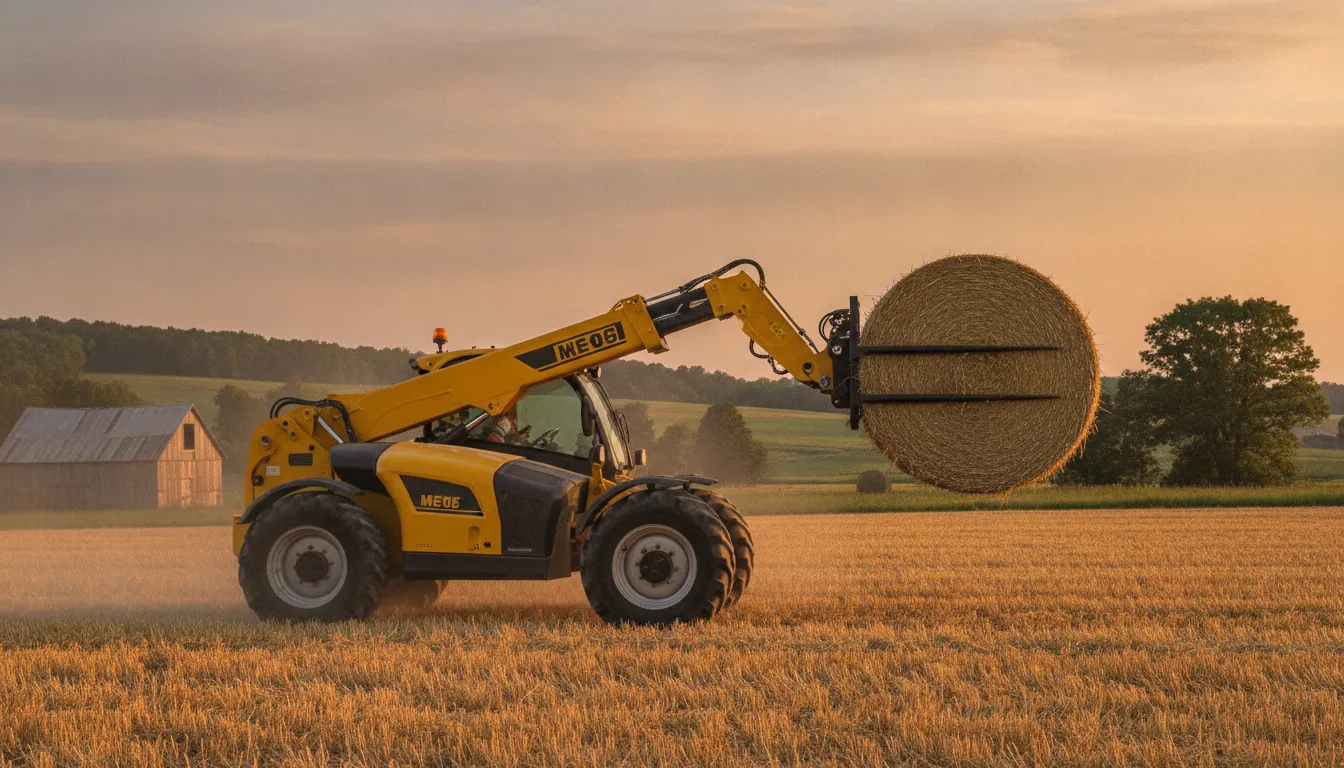
A telehandler bale spear is a heavy-duty attachment built to move large round or square hay bales using a long-reach machine like a telehandler. These tools often use a triangle design with one large upper spear and two smaller lower tines to keep hay bales steady during fast transport. High-quality steel models support weights up to 3,500 pounds, and OSHA safety rules say operators must follow load limits to keep loads balanced and prevent tipping. Your choice of spear depends on the hay bale type, as round bales usually need 49-inch tines while square bales often need four separate tines. This custom tool makes hay work faster and safer for any large farm by allowing for secure stacking and easy transport at extreme lift heights.
What is a telehandler bale spear?
A telehandler bale spear is a tough tool used to lift and move large hay bales. It hooks to the front of a telehandler boom. This tool makes it easy for farmers to stack, load, and feed hay with great care. Because hay is heavy, having the right telehandler attachments is key to a fast and safe job.
The spear uses long, sharp spikes called tines to pierce the center of a bale. These tines are made of strong steel to hold the weight of the hay. Unlike a bucket or fork, a spear keeps the bale from rolling or sliding off. This design helps save the crop and ensures the load stays stable while moving across bumpy fields or yards.
Basic design and main parts
Most top-grade spears use a triangle layout to keep bales in place. This setup often has one large top spear and two smaller spikes on the bottom. The top spear, often a conus 2 tine, does the main lifting. These main spikes are usually 44 to 49 inches long. The lower spikes help stop the bale from spinning or shifting while you move it.
Quality units use tough steel for the side plates. This makes the frame strong but keeps the weight low, with many standard spears weighing about 240 pounds. Some models also have a 70-degree back angle. This slight tilt helps hold the bale against the carriage so it does not fall forward when you stop.
Round vs square bale needs
The type of hay you move changes how many tines you need. For round bales, one top tine and two bottom ones are usually enough to keep things steady. If you need to drop hay into a feeder, you might use two shorter 40-inch tines instead. Square bales often need more support because they are wider and longer.
Moving square bales often needs at least three tines for a safe lift. Many users prefer four tines to make sure the load is fully secure. Proper support is vital because the outer six inches of a round bale can hold up to 35 percent of the total hay. Saving this layer reduces waste and helps keep your feed high in quality.
The reach advantage of telehandlers
Using a Haugen telehandler bale spear gives you more reach than a standard skid steer. Telehandlers can lift bales much higher and reach further forward into trailers or stacks. This is helpful when you need to stack hay in tall barns or reach across a large truck bed from one side.
Safety is key when you use the boom to lift hay. Users must always follow the load rating charts for their specific machine. Never go over the rated load and always keep hay balanced. Keeping the load steady prevents the machine from tipping when the boom is fully stretched out.
How many tines do you need for round and square bales?
The number of tines on your telehandler bale spear changes how you handle hay. You must pick a setup that keeps the load steady and safe. Proper tine counts help you move bales without dropping them or harming the hay.
Picking tines for round bales
Moving round bales often needs a triangle setup. This layout uses one long top tine and two short bottom tines. The top tine is mostly 44 to 49 inches long. This main spear pokes the center of the bale to lift it. The two bottom spears help to stop the bale from spinning or sliding. A single spear might pierce the bale, but it will not stop it from turning. When a bale spins, it can fall off the spear.
Most spears use conus style tines. For round hay, you often need a conus 2 tine. These are strong enough to hold the weight of a full bale. If you plan to use a feeder, you might switch to conus 1 tines. These are smaller but work well for dumping hay in tight spots.
Round bales are dense, but their outer six inches can hold much of the hay. Harming them can lead to waste. Using Haugen telehandler bale spears with the right tines keeps the bale whole. The triangle design is the most common for telehandlers. It gives you three points of contact. This setup makes it easier to stack bales high in a barn. For feeding, you might use two shorter tines to dump hay into a feeder easily.
Tine setups for square bales
Square bales need more support than round ones. Most workers use at least three tines for square hay. Four tines are even better for moving more than one bale at once. This extra support keeps the flat sides of the bales from tilting. Big square bales are very heavy. Using four tines helps spread the weight across the whole spear frame. This stops the tines from bending under a heavy load.
When you use a telehandler bale spear, make sure the load is even. It also stops the bale from sagging on the ends. If you stack bales, a flat row of tines is easier to slide in and out of the stack. Safety is key when lifting heavy hay. You must stay under the rated lift limit of your machine to avoid a tip-over.
Staying safe on the job
Every spear needs to match the weight of your bales. You should always check the load charts in your cab before you start. These charts tell you how much weight you can lift at many heights. Keeping the load balanced is the best way to stay safe. Telehandlers can reach high and far. But as you extend the boom, your lift limit drops.
By OSHA safety rules, you must never go over the rated load. Also, wear your seatbelt every time you run your telehandler. Always keep your load close to the machine when you move. This keeps the center of gravity low. A balanced load is much less likely to tip the machine over on uneven ground. Small steps like this prevent big crashes in the field or yard.
| Feature | Round Bales | Square Bales |
|---|---|---|
| Min Tines | One long, two short | Three to four |
| Main Tine Size | 44 to 49 inches | 39 to 49 inches |
| Layout | Triangle | Flat row |
| Primary Goal | Stop spinning | Hold flat sides |
How do bale weight and rated capacity affect your choice?
Picking the right telehandler bale spear starts with two numbers. You need to know how much your bales weigh. You also need to know what your machine can lift. If you guess, you risk hurting your tool or starting a wreck. Safety is the key part of moving hay on a farm.
Check your machine load charts
Telehandlers use a boom to reach high spots. As you extend the boom, your lift limit changes. This makes a telehandler different from a plain forklift. You must look at the load chart in your cab. This chart shows how much weight you can safely lift at many heights. OSHA rules state that you must keep these load rating charts in sight while you work.
Using a telehandler bale spear means you are adding weight to the tip of the boom. The weight of the spear and the hay both count. Check your telehandler attachments guide to see how the tool fits your machine. Never lift a load that is heavier than the limit for your boom angle. If you go over the limit, the back wheels could lift off the ground.
Account for the load center
Rated lift also depends on where the weight sits. This spot is the load center. Most spears have a rating based on a 30-inch load center. This means the weight should be close to the frame. If you have long bales, the center of weight moves further away. This makes the load feel heavier to the machine.
You must keep the load level and safe. OSHA reminds drivers to never exceed the rated load for any reason. If the center of the bale is too far out, the boom might bend. It could also cause the machine to tip forward. Always push the spear all the way into the bale. This keeps the weight as close to the machine as you can.
Match spear ratings to bale weights
Before you buy, find the weight of your largest bales. Wet hay is heavier than dry hay. A large round bale might weigh 1,500 pounds, but a wet one could reach 2,500 pounds. You need a tool that can handle these heavy loads every day. Expert tools like Haugen telehandler bale spears are built for this work.
Some spears can support up to 3,500 pounds at a 30-inch center. Choosing a spear with a high rating is a good move. It ensures the metal tines will not snap under stress. It gives you a safe buffer for the heaviest bales in the field. Always check the specs on the spear before you make a choice.
Verify carriage fit before buying
A telehandler bale spear must fit your machine very well to work. A loose or wrong fit can lead to dropped loads or damage to your tool. Before you buy, you need to check how the spear connects to your lift arm.
Check mounting plate and coupler types
Most modern lifts use a quick-attach system to swap tools fast. But not all plates are the same. You must match the mounting plate on the spear to the coupler on your machine. Some use a standard hook-and-pin style, while others have unique shapes. Always ask for the plate type to ensure a solid fit.
If you are looking for specific brands, Haugen telehandler bale spears offer plates for many common lift models. Buying a spear with the right plate saves you from needing an extra part later. It also keeps the weight close to the lift for better balance.
Inspect pins and locking parts
Once the plate matches, look at how it locks in place. Strong pins and secure locks prevent the spear from shifting during use. Check that the locking pins are easy to reach but stay tight under pressure. A good lock keeps the spear steady when you tilt or extend the boom. This is vital for safety when moving heavy hay.
Clear view and safety rules
You must be able to see clearly from the cab when using a spear. A well-made frame should not block your view of the tines or the bale. OSHA rules say that needed load rating charts must stay in sight of the driver at all times. Being able to see these charts helps you stay within safe limits while you work.
Check the backrest design as well. Some spears have a 70-degree back angle to help tip the bale toward the machine. This angle keeps the bale secure as you drive. Before you pay, ask if the frame allows you to see the tip of the spear easily. This helps you line up your shots and avoid hitting walls or other gear.
A clear view also helps you watch for other workers. You should always look for people nearby and follow site speed rules. To learn more about how to use these tools, check out our guide on telehandler attachments. Safe fit and clear sight lines make your job much easier.
How to set up and handle bales safely
Safe work starts before you ever lift a bale. You must check your tools to see if they are ready for the job. Using telehandler attachments the right way helps stop accidents. It also keeps your work on track. Always wear your seatbelt when you use a telehandler. This keeps you safe during a tip-over event.
Pre-use checks and setup
Look at the frame and tines for cracks or bends before you start. Check that the pins are locked. The tool must be firm on the machine. You should also look at your load charts. Operators must keep these charts in view at the controls for safe lifting. Make sure your machine can handle the weight of the hay you need to move.
Clean any dirt from the spears so they go into the bale with ease. Make sure your work area is clear of people. When you work with Haugen telehandler bale spears, check the hitch style. A good fit stops the tool from moving when you lift a big load.
Safe handling steps
- Approach the bale. Drive toward the middle of the bale on flat ground. Keep the spear level and low to the dirt as you move.
- Spear the bale. Drive the tines into the center of the bale. Push until they are all the way in. This helps hold the weight and stops the bale from falling.
- Lift and tilt. Raise the bale just enough to clear the ground. Tilt the tines back. This keeps the load against the frame so the machine stays steady.
- Travel with care. Keep the bale low to the ground while you drive. Watch for people and follow all site speed limits.
- Stack or unload. Line up the bale with the stack. Raise the boom slowly. Watch for overhead hazards like power lines or roof beams.
- Set the load. Lower the bale into place and level the spears. Back up slowly. Pull the tines out of the hay without moving the bale.
- Park the machine. Lower the tool to the ground once you finish. Turn off the engine and set the brake before you leave the cab.
Stability and load limits
Do not lift more than the load limit for your machine or spear. Going over these limits can make the machine tip over. Keep your loads balanced for safety. A single spear can hold a lot of weight, but you must still check the load chart for your boom angle.
Watch for soft ground or hills when you carry hay. These can change how the machine leans. Stay away from the edges of ramps while you work. Taking these steps helps you move hay fast and keeps everyone safe.
Features that improve durability and daily use
A good telehandler bale spear must handle heavy loads every day. It needs a strong frame and tough tines to last for many years. Choosing a tool with the right build helps you work fast. It also keeps your machine in good shape for a long time. High-quality parts ensure that your gear does not fail when you need it most.
Strong frame and backrest design
The frame is the most key part of telehandler attachments. Top models use thick steel for the side plates to stop bending or warping. A wide backrest helps hold the full weight of the bale. It keeps the hay from falling back toward the cab while you drive or lift. This shield protects both the driver and the machine from loose bits.
Good design also makes it easy for you to see your work clearly. OSHA rules say that load rating charts and warnings must stay in plain view from the seat. A well-built frame has open spots so you can see the spear tips. This helps you line up the tool with the bale on your first try without hitting the ground.
Quality tines and support setup
Many pro tools use a three-point setup for the tines. This plan often has one large top spear and two small spears on the bottom. This triangle layout keeps the bale steady and stops it from spinning. It helps when you move hay across rough ground or up to high stacks. You can carry large round bales with more trust using this strong base.
Most Haugen telehandler bale spears use tines you can swap if they break or wear out. Good tines can lift very heavy loads without breaking. Some large spears can hold up to 3,500 pounds at the center. Using spears with a steep back angle also helps grip the bale. This tilt keeps the load snug against the frame during a move.
Maintenance and daily checks
Daily checks keep your tools safe and working well. Before you start, see if the tines are tight in their spots. Look for any cracks in the metal frame or the welds. Always make sure you have enough overhead clearance when you lift hay. This stops the spear or the load from hitting roofs, beams, or power lines in the yard.
Store your spear in a dry spot to stop rust on the steel. Rust can make the tines weak over time. Keeping the tool clean makes it easy to find small flaws like chips or bends. Fix these small issues before they turn into big breaks that stop your work. Grease any pins as the maker says to do. These simple steps keep your spear ready for the next big job.
Telehandler bale spear buying checklist
Picking the right tool for your machine makes work faster and safer. You need a spear that fits your bales and your telehandler. Use this guide to find the best match for your needs.
Match the spear to bale size
Round and square bales need varied tine setups to stay safe. If you move round bales, look for a conus 2 tine that is 44 to 49 inches long on the top. You also need at least two tines on the bottom to keep the bale steady. Square bales are harder to hold and often need three or four tines for a secure grip. Using the right telehandler bale spear stops hay from falling or shifting during transport.
Proper storage is also key to keeping your hay good. The outer six inches of a round bale can hold up to 35 percent of the total hay. Losing this layer to rot means a lot of waste for your farm. Net wrap or B-wrap can help shed water better than twine. Using a top-grade storage method helps keep the hay dry until it is time to feed.
Check weight and load limits
Your telehandler has strict limits on how much it can lift. You must never go over the rated load capacity set by the maker. OSHA rules state that you should keep load charts in sight at the control station. This helps you stay safe while you work. Always wear your seatbelt to stay safe if the machine tips over, based on OSHA safety standards. Keeping the load balanced is the best way to prevent mishaps on the job.
Spears also have their own weight ratings. A large 49-inch spear might hold 3,500 pounds at a 30-inch load center. Smaller spears used for support may be rated for 1,700 pounds. Make sure the spear you buy can handle the heaviest bales you move. A standard spear attachment often weighs about 240 pounds. Add this weight to the weight of your bale when checking your machine's total lift limit.
Look for durable builds
Bale spears go through a lot of stress every day. Look for frames made from tough parts like Grade 50 steel. High-end tools often use 3/8-inch side plates for extra strength. A 70-degree back angle also helps keep the bale tight against the frame. Check for a good warranty before you buy a new spear. Some makers give a 24-month warranty that covers any flaws in the metal or work.
Check these points before you buy:
- Make sure the mount fits your exact telehandler model.
- Check that the tines are long enough to go deep into your bales.
- Check that the spear can lift your heaviest loads.
- Look for grease points that make the tool last longer.
The Haugen bale spear product page provides a useful starting point for reviewing an available attachment. Confirm its current specifications against your machine and bale-handling needs before ordering. Always check your overhead clearance before you lift a bale. Watching for people on the ground also keeps your job site safe. Following these steps helps you get the most out of your telehandler.
Compare telehandler bale spears before your next bale-moving job.
Frequently Asked Questions
How do I prevent hay spoilage when moving bales?
You can reduce waste by using net wrap or B-wrap. These shed water better than twine. The University of Minnesota says the outer six inches of a round bale holds up to 35 percent of the hay. Keeping this layer whole stops rot and waste. Use a sharp, clean spear to pierce the bale without tearing the wrap. This keeps your hay fresh and saves you money on feed.
Does a telehandler bale spear come with a warranty?
Warranty coverage varies by manufacturer, model, seller, and type of use. Review the current product listing and written warranty terms before buying. Confirm the coverage period, exclusions, claim process, and whether wear items such as tines are included. If a warranty detail is not shown, ask the seller for the applicable terms before placing the order.
What tines should I use for dumping bales into a feeder?
Choose a tine layout that securely supports your bale size and works with the feeder opening. Shorter support tines may be easier to withdraw in tight spaces, but the correct setup depends on bale weight, attachment specifications, and the telehandler's rated capacity. Confirm the tine dimensions and approved configuration before use, then place the bale slowly without contacting the feeder.
What materials are used to construct a high quality bale spear?
A tough bale spear should use heavy-duty steel to handle the stress of lifting hay. Many top units use Grade 50 steel for the side plates. This high-grade metal keeps the frame from bending. You should also look for a thick mounting plate that fits your machine. Quality tools use strong welds and thick tubes to hold the tines in place. This build helps the spear last through many seasons of moving large bales.
Ready to find your next telehandler bale spear?
Moving heavy bales with the wrong tools leads to broken spears and wasted hours in the field. When your gear fails during a busy day, it costs you more than just a repair bill. Failing to upgrade now keeps you from finishing chores on time and forces you to play catch up. Starting today with the right spear means you will have a tool that lasts and helps you work faster. Your machine has the power for big loads, but it needs a tough spear to move hay safely. Getting a new spear now helps you avoid the risk of bent tines and keeps your farm moving.
Ready to contact our team? Shop telehandler bale spears to find the best tool for your machine today.