


Skid Steer Work Platform Attachment Buyer's Guide
Get the Attachment Your Project Needs
Shop proven, work-ready attachments that help you tackle any task with confidence.
LEARN MOREFalls from height remain a leading cause of injury in construction and industrial maintenance. A skid steer work platform attachment can provide a guarded work area for overhead tasks, but only when the platform, loader, operator, and jobsite procedures are suitable for the work.
Shop skid steer work platforms at eSkidSteer to compare available platform options.
A skid steer work platform attachment is a secure cage that mounts to a loader to create a safe work area. These tools are needed for jobs like painting, siding, and building repairs where workers need firm footing. According to OSHA standards, these platforms must have safety parts like rails, non-slip floors, and locking gates to protect workers. Picking the right tool means matching the weight of the platform and the crew to the lift limit of your machine. Using a platform that is too heavy for your loader can cause the machine to tip over. Good platforms also include spots to clip safety belts and a standard mount for fast and easy setup. This helps your crew stay safe and follow rules while they work high above the ground.
What is a skid steer work platform attachment?
A skid steer work platform attachment is a tool made to lift people to high spots safely. It turns your loader into a stable place to stand and work. This tool connects to your machine with a universal quick attach system. It is much safer than using a ladder or a simple scaffold. It gives you a strong floor and rails to keep you safe while you do your job.
When you select the right skid steer attachments, safety should be your first thought. A work platform is more than just a metal box. It is a work area built for your team. OSHA defines a platform as a work surface that is higher than the ground. These tools must meet strict rules for how they are built and how much weight they can hold.
Many people try to use crates or wooden pallets to reach high places. These poor ways of lifting often fail and cause bad falls. A real platform is built from strong steel with solid welds. It uses the same locking pins that keep your bucket in place. This solid link means the platform will not tilt or slide off the forks. By using a tool built for the task, you protect your staff and follow site safety rules.
Strong build and safety parts
A good platform has a few main parts that make it safe. It starts with a thick steel base that fits your loader arms. The floor of the platform should have a non-slip surface to keep you from sliding. This helps you stay steady in wet or dusty work spots. Strong guardrails surround the area to stop falls. Most models also have a gate that locks. This keeps you inside the cage while the loader moves you up to the work height.
Safe lift vs. poor tools
Lifting staff with forks or buckets is very risky. A real safety loading platform attachment is made just for this task. It has clear spots where you can clip a safety harness. This setup is much more stable than a wobbly ladder. It lets you bring tools and parts up with you so you don't have to climb up and down. You can use it for many tasks like painting a barn or fixing high roof lines. It also works well for cleaning high windows or checking lights on a tall pole.
Common tasks and weight limits
Most people buy these tools for site upkeep. They are great for jobs that need a stable place to stand for a long time. You might use one to prune high trees or fix signs. But you must never use them to lift heavy gear that the tool is not made for. Using the platform as a lift for heavy parts can strain the metal and cause a break. Always check the weight limit of the platform and your loader before you start. This keeps your machine stable and your team safe on the ground.
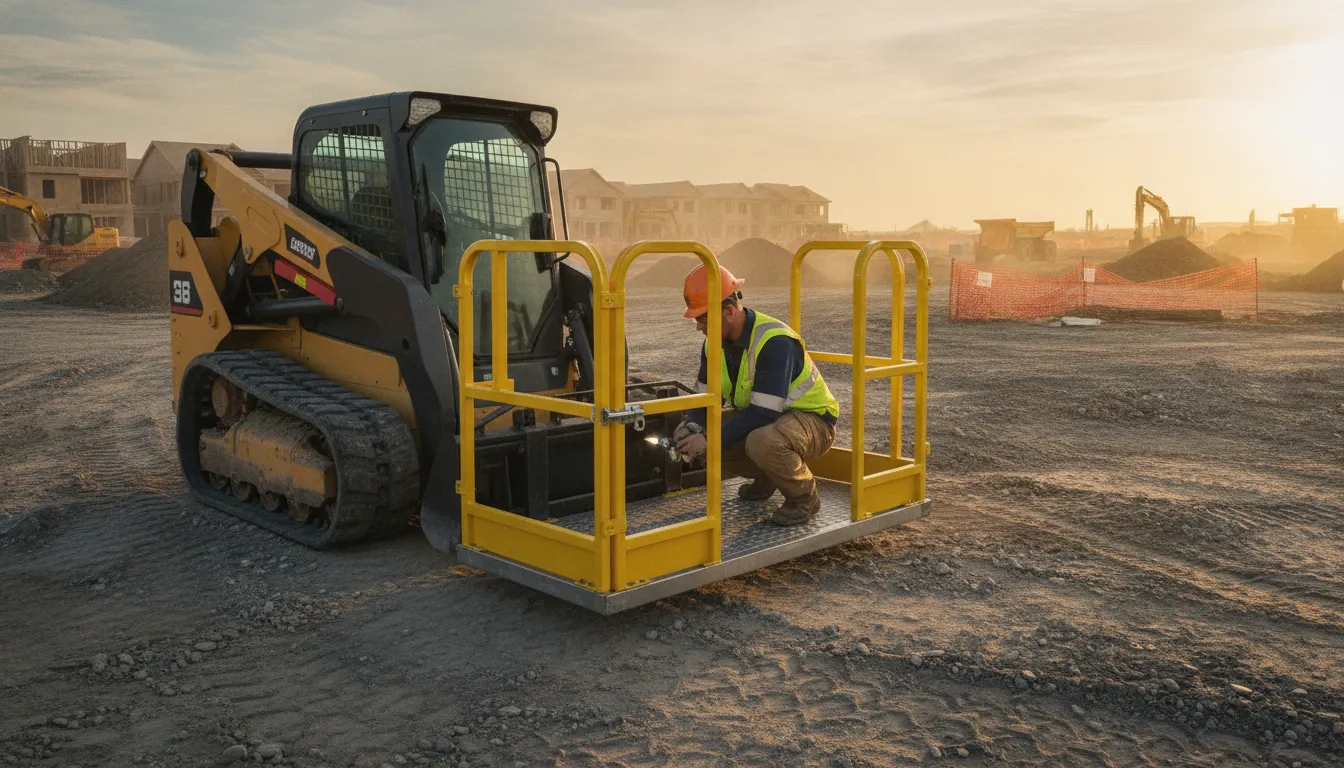
Compare dimensions, capacity, and machine limits
Choosing the right skid steer work platform attachment starts with a look at your machine and your job. You must find a balance between the size of the deck and what your skid steer can lift. If the platform is too big or too heavy, it can cause the machine to tip or fail. This puts all people on the deck in great danger. You need to know the limits of your gear to keep your site safe and run a smooth job.
Most buyers look for a tool that fits many tasks. But a single platform may not work for every machine in your fleet. You should check the weight of the platform when it is empty and when it is full. This helps you avoid putting too much stress on the loader arms and the hydraulic lines. Modern loaders include safety features to keep the arms from moving by mistake. A well-fit attachment makes the work go fast and keeps the machine from wearing out too soon.
Size and deck space
The deck size tells you how much space your crew has to work. Small decks are good for tight spots like narrow alleys or inside small barns. They help you get close to the wall without hitting anything. Larger decks give more room for tools and parts but need a big machine to stay steady. You should select the right skid steer attachments based on the space you have on your job site. A deck that is too wide might hit walls or trees while you move.
Think about the depth of the deck as well. A deep deck allows people to move around without stepping on each other. It also provides a better spot to keep gear like drills, paint cans, or siding panels. Check that the guard rails do not block your view or make it hard to reach the work. A good deck size makes the day better for the person in the air and the person in the cab.
Rated load and weight limits
Every platform has a rated limit that you must never exceed. This limit includes the weight of the people, their tools, and any items they carry. According to OSHA safety standards, these limits help ensure the platform stays safe while high in the air. Always check the data plate on your attachment before you start work. Overloading the deck can lead to broken parts or a sudden fall.
Rated load is not just about the weight of the people. You must also count the weight of the attachment itself. If your skid steer can lift 2,000 lbs and the platform weighs 800 lbs, you only have 1,200 lbs left for the load. This is a key point that many people miss. Always leave a bit of a buffer so you do not push the machine to its final limit.
| Platform Type | Typical Width | Weight Limit | Best Use Case |
|---|---|---|---|
| Compact | 36 to 48 inches | 500 lbs | Small repair jobs |
| Standard | 60 to 72 inches | 1,000 lbs | Painting and siding |
| Heavy Duty | 96+ inches | 1,500+ lbs | Large masonry work |
Machine balance and weight limits
The weight of the platform itself adds to the total load on your loader arms. You must know the lift limit of your machine to avoid a tip-over. Heavy attachments can shift the weight far forward when you raise the arms. Always check that the platform is locked to the universal quick attach system before use. Reach and height limits also change based on how much the attachment weighs.
When you lift a load high, the machine becomes less steady. The center of weight moves up and out. This is why you must follow the load chart for your own loader model. Never move the machine while the platform is high in the air unless the rules say you can. Knowing these limits keeps your team safe and helps you finish the job with no issues. A safe crew is a fast crew.
Which platform features support safer work?
Basic fall protection
A safe skid steer work platform attachment needs strong walls to keep people safe. Guardrails are the most vital part of these units. They must be tall enough to stop a person from falling over the side if they trip. A secure gate is also a key feature for any safe deck. The gate should have a lock that stays shut even if the machine shakes. This stops it from opening by mistake while high in the air.
Toe boards are another big part of a safe workspace. These are short walls at the base of the rails. They stop tools and parts from sliding off the edge. This protects the crew working on the ground below from falling objects. The OSHA rules for scaffolds show that these units are work surfaces high above the ground. These surfaces must meet strict build standards to keep everyone safe.
Stable deck and mounting
The floor of the platform must be safe to walk on in all weather. A non-slip deck prevents slips in wet, icy, or dusty spots. This is vital because building sites are often messy or muddy. You also need to check how the unit joins the machine. A universal quick attach system must lock the unit into place. You should always check the pins to make sure they are fully set before anyone gets on the deck.
Anchor points are also a key part of the design. These are spots where a person can clip their safety belt or harness. You should use a harness if the job or site rules ask for it. This adds one more layer of safety. Regular checks of the welds and frame help find cracks or rust before they become big risks. Keeping the floor clear of oil and debris also helps prevent trips and falls.
Weight limits and manuals
Never guess how much weight a platform can hold. Every skid steer work platform attachment has a rated weight limit from the maker. This number tells you the most weight it can lift safely. This includes the weight of the people, tools, and parts on the deck. Using too much weight can cause the skid steer to tip over. This creates safety considerations for skid steer attachments that you must watch closely.
You must read the user manual for the machine and the unit. These books tell you how to mount and use the gear. OSHA says you must follow manufacturer instructions for testing and care. This includes checking the hydraulic fluid levels and the locking pins. Doing a dry run with no people on the deck can help you find jerky moves. This keeps the gear in good shape and the crew safe from harm.
How do you verify mounting compatibility?
Before you buy or use a skid steer work platform attachment, you must check if it fits your machine. A poor fit can lead to safety risks or machine damage. Use this checklist to confirm that your loader and the new platform will work together safely.
Check the mounting interface
Most modern loaders use a universal quick attach system to swap tools fast. You should look at your loader's faceplate to ensure it matches the attachment. If your machine is older, you might need an adapter to bridge the gap between different styles.
Verify lift capacity
Each loader has a rated operating capacity (ROC). You must not exceed this limit when you add the weight of the platform and the people on it. OSHA standards state that platforms must be rated for specific weights to keep workers safe. Overloading your loader can cause it to tip or fail.
- Review machine specs: Find the ROC in your loader manual to see how much weight it can lift safely.
- Calculate total weight: Add the weight of the skid steer work platform attachment to the weight of your tools and crew.
- Inspect the interface: Clean the quick-attach plate and pins to ensure a tight, secure connection.
- Consult both manuals: Read the user manual for your skid steer and the attachment to find specific mounting tips.
- Perform a dry run: Lift the empty platform to check for jerky moves or loose parts before anyone gets on.
- Check site rules: Make sure your platform meets all local job site safety and weight rules.
Inspect hydraulic needs
Some work platforms have hydraulic features for tilting or rotating. You will need to check your loader's hydraulic flow and pressure to match the tool. You should also look at the fluid levels to keep movements smooth and predictable. This ensures you can select the right skid steer attachments for your specific work needs.
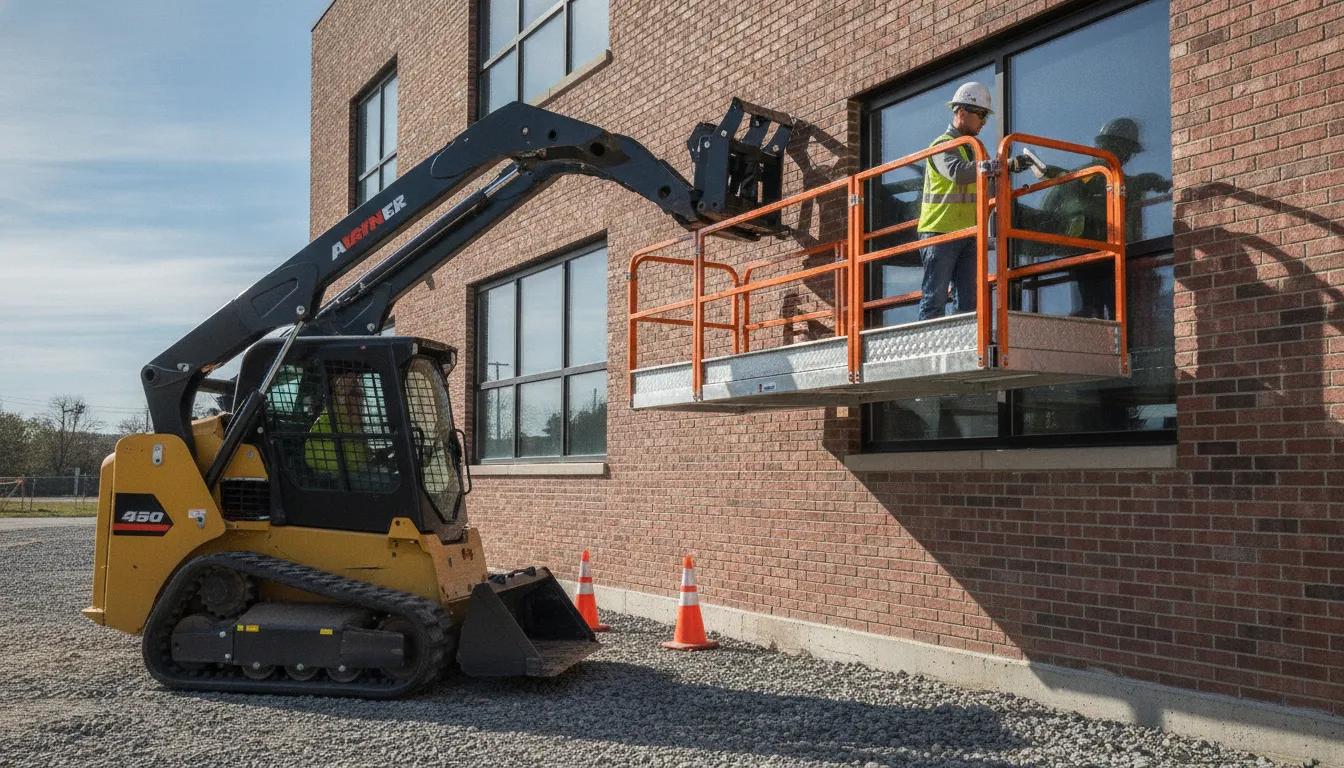
Common applications and important limits
A skid steer work platform attachment gives your team a steady place to stand while working up high. These tools are helpful for many jobs that need extra reach. They turn your machine into a handy tool for upkeep and light repair. But you must know the right way to use them. These attachments have clear limits that you should never cross.
Common jobs for work platforms
Many crews use a skid steer work platform attachment for basic upkeep on a site. They are great for painting tall walls or fixing warehouse lights. They also work well for cleaning gutters and trimming trees in areas where a lift cannot fit. Using one of these platforms is often safer and faster than using a long ladder on soft ground.
For most farm or small shop tasks, a platform gives you the room you need for both tools and people. It helps you keep your gear close at hand so you do not have to climb up and down. While these tools are handy, they do not replace full scaffolding for large build jobs. You must also check safety tips for skid steer attachments before you buy one for your machine.
Weight and reach limits
Every skid steer has a limit on how much it can lift. If you put too much weight in the air, the machine can tip forward. This creates a huge risk for the worker on the platform. You must count the weight of the platform itself, the workers, and any gear they carry. OSHA needs these attachments to meet scaffold safety standards for load limits and build quality.
A heavy load held high in the air makes the machine less stable. Even moving over a small rock can cause the skid steer to shake or tip. You should always check the lift rating of your exact machine model. Never assume that a small skid steer can handle a large platform with two workers and heavy tools. Staying within the weight limit is the best way to keep your crew safe on the job.
Key site safety rules
There are strict rules you must follow when a person is on a raised platform. You should never drive the skid steer while the platform is up. The driver must stay in the seat while a worker is in the air to prevent the arms from moving. If the driver needs to get out, they must lower the platform all the way to the ground first. This prevents falls if the hydraulic lines fail or the arms drop at once.
Some job sites have very strict rules about lifting people. You might be needed to use a safety harness or a cage with high rails. In some cases, site rules will force you to use a lift that was built only for people. Knowing these site rules helps you avoid fines and keeps your project on track. Always check that your attachment is locked to the machine before anyone steps into the basket.
Safety checks before each use
Using a skid steer work platform attachment requires a strict check of your gear. You must put safety first before you lift any crew members. OSHA rules say you must follow the guide from the maker for all tests and upkeep.
This helps keep everyone safe on the job site and stops harm. Always check that the machine and the platform work well as one before you start the job.
Read the user guide for both the machine and the tool. Make sure the loader can handle the weight of the platform and the crew. If you use a tool that is too heavy, the machine might tip over.
This creates a big risk for those on the platform. Also, never lift more people than the rated limit. Going past the load limit can strain the frame and cause a break.
Inspect the machine and tool
Check the universal quick attach system to see if it is clear of dirt or mud. The platform must be locked tight before anyone steps on it. Look at all the bolts and pins to make sure they are tight to the right specs.
If you have a model that folds, check that the locking pins are in place and safe. Check that the loader's safety bar works and is in the down spot during use.
Look at the floor of the platform for any damage. It should have a non-slip surface to stop falls in wet or dusty spots. Clean off any oil, mud, or tools that could make someone trip.
Check the welds and the frame for any cracks or rust. The guardrails must be strong and meet the standard height rules for your site. The gate should also have a latch that stays shut while the crew is high in the air.
Secure the work area and site
The machine must stay on flat, level ground at all times. Soft soil or slopes can make the loader shaky when the arms are up. Look up to find any power lines before you lift the arms.
You must keep a safe gap from all lines to avoid an electric shock. Keep other people away from the work zone. Make sure no one walks below the raised platform while it is in use.
Federal rules define a platform as a work surface that is higher than the floor. They say that bosses must keep up and test all safety devices on the gear.
Many machines have safety locks that stop the arms from moving if the driver is not in the seat. Never try to break or skip these safety locks. Doing so can lead to big harm or even death for those on the ground or the platform.
Test the controls and talk
Run a test lift with an empty safety loading platform attachment first. This dry run helps you find any odd moves or leaks in the oil lines.
Check your fluid levels before you start the machine. Use the controls slowly to keep the move smooth and steady. Sudden jumps can throw a crew member off their feet or cause them to fall.
Talk to your crew about how you will signal each other. Use hand signals or radios to stay in touch while the platform is up.
The driver should never leave the seat while people are on the raised platform. Always park the machine and set the brake before anyone gets on or off at ground level. Following these steps helps you stay safe and get the job done right.
How to choose the right work platform
Buying the right platform is about more than just finding a flat place to stand. You must make sure the tool fits your loader and meets your safety goals. Picking the wrong one can lead to falls or harm to your machine.
Before you buy, check your loader's limits and the needs of your job site. A good choice keeps your crew safe and helps you finish the job fast. Always check if the model is safe and strong.
Know your machine lift limit
Every skid steer has a limit on how much weight it can lift safely. You must find this number before you buy a skid steer work platform attachment. If the platform is too heavy, your machine could tip over.
This puts anyone on the platform in great danger. It can also hurt your loader's arms or the lines that move the boom. Machine builders give you these ratings to help you avoid a risky tip.
OSHA rules for scaffolds often apply to these tools. These rules cover the load limits and build quality of the work surface. Always check that your loader can handle the weight of the platform and the crew.
Verify attachment fit and specs
A tight fit is the most key part of using a platform. Most new machines use a standard quick attach system to hold tools. You should check that the platform locks onto your machine's plate with no gaps.
If the fit is loose, the platform might shift while it is high in the air. This can scare your crew and cause the loader to become shaky. It is key to check the pins and locks each time you use it.
Read the books for both your loader and the new tool. These guides show you how to mount and test the attachment the right way. A good dealer can also tell you if a platform will work with your exact model.
It is best to ask these questions before you spend your money. Taking this step helps you select the right skid steer attachments for your work. You should also check the tool's width to ensure it fits through your gates.
Look for key safety features
Safety parts are not just extras when you work off the ground. A high quality platform will have strong rails to keep people from falling. It should also have a floor with a surface that is not slick.
This is very helpful in wet or dusty spots where boots can slide. A gate that locks is another must-have to stop people from stepping off by mistake while the tool is up. Look for units with clear safety labels and load charts.
- Strong guardrails that meet site rules.
- Non-slip floor plates for better grip.
- Secure gates with a locking latch.
- Points to tie off a safety harness.
Some buyers only look for the lowest price, but that can be a risk. A cheap platform might lack the strong welds or safety locks that protect your team. Spending more on a well-built tool keeps your crew safe and helps the tool last.
You can check the skid steer work platform collection at eSkidSteer to find tools that meet these high standards. Good tools are a smart move for the health of your business and your team.
Frequently Asked Questions
What is a skid steer work platform attachment?
A skid steer work platform is a metal cage that connects to your loader. It creates a safe spot for workers to stand while doing high jobs. You use it for tasks like painting, fixing roofs, or cleaning gutters. This tool often takes the place of tall ladders or shaky scaffolding on a job site. It provides a stable floor that moves up and down with the machine arms. This helps you reach high spots quickly and safely.
What safety features should a skid steer work platform have?
Good platforms must have strong guardrails and a floor that is not slippery. They also need points to clip in a safety harness and a gate that locks. These parts help stop people from falling while the lift is high in the air. According to OSHA, loaders have built-in safety systems to stop the arms from moving by mistake. You must keep these features in good shape to prevent accidents and keep everyone on the site safe.
How do I pick the right work platform for my skid steer?
Start by checking how much weight your skid steer can lift. You must choose a platform that fits within this limit to keep the machine from tipping over. Look at the size of the floor and the type of quick-attach system your loader uses. It is vital to read the user manual for both the machine and the platform. This helps you make sure the tools work well together. Picking the right size ensures a stable work area for your team.
What are the OSHA rules for using skid steer work platforms?
OSHA sees these tools as raised surfaces and often applies scaffold safety rules to them. You must follow the guide from the maker for all tests and upkeep. Never try to bypass or break the safety locks on your machine. Employers need to train workers on how to use the lift and how to wear safety gear. Always keep the loader on level ground when the cage is up. This prevents the machine from falling and keeps workers out of harm.
Shop skid steer work platforms
The right platform starts with a close match between the attachment, the carrier, the task, and the rules for your site. Confirm every key detail with the platform maker and your skid steer manufacturer before you buy or use the attachment.
Shop skid steer work platforms from eSkidSteer and compare the available options for your equipment and work needs.